US Tea Tariffs 2025–2026: Rates by Country and What Changed
Plain tea has paid no reciprocal US tariff since Nov 13, 2025. Chinese tea pays 7.5% under Section 301, down from 152.5% in April 2025. Rates and data.
50 articles on brewing each tea type, where tea comes from and the teaware worth buying
Plain tea has paid no reciprocal US tariff since Nov 13, 2025. Chinese tea pays 7.5% under Section 301, down from 152.5% in April 2025. Rates and data.
Cold brew tea uses 8-12 g of leaf per liter: 4-6 h in the fridge for sencha, 6-8 h for white and oolong, 8-12 h for black. Drink it within 3 days.
Darjeeling has four flushes: first (Mar-Apr) floral, second (May-Jun) muscatel, monsoon (Jul-Sep) plain, autumn (Oct-Nov) coppery. Output: 5.6M kg in 2025.
Oolong runs from about 8% to 85% oxidation: Baozhong 8-15%, Ali Shan 15-25%, Dong Ding 25-30%, Oriental Beauty 50-70%. Roasting is a separate later step.
Green tea turns bitter when catechins and caffeine over-extract. Brew sencha at 70-80 °C for about 30 seconds and gyokuro at 50 °C, and use soft water.
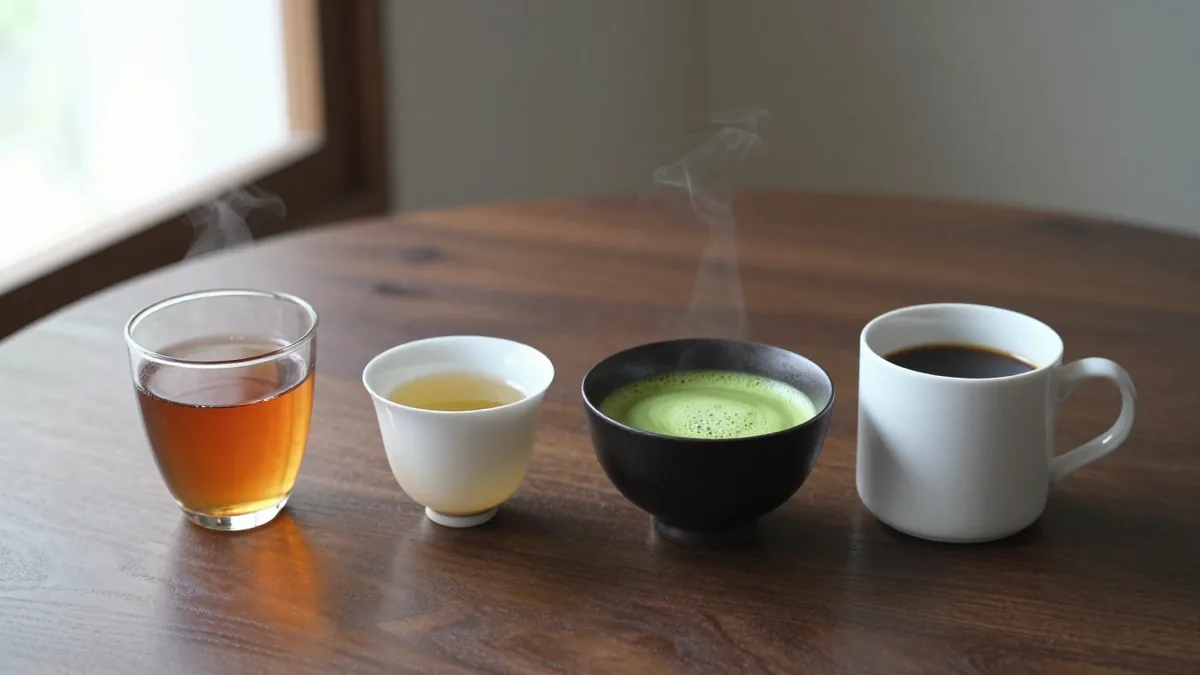
Brewed black tea has about 47 mg of caffeine per 8 oz and green tea about 28 mg, vs 95 mg for coffee. Steep time moves tea caffeine more than tea type does.
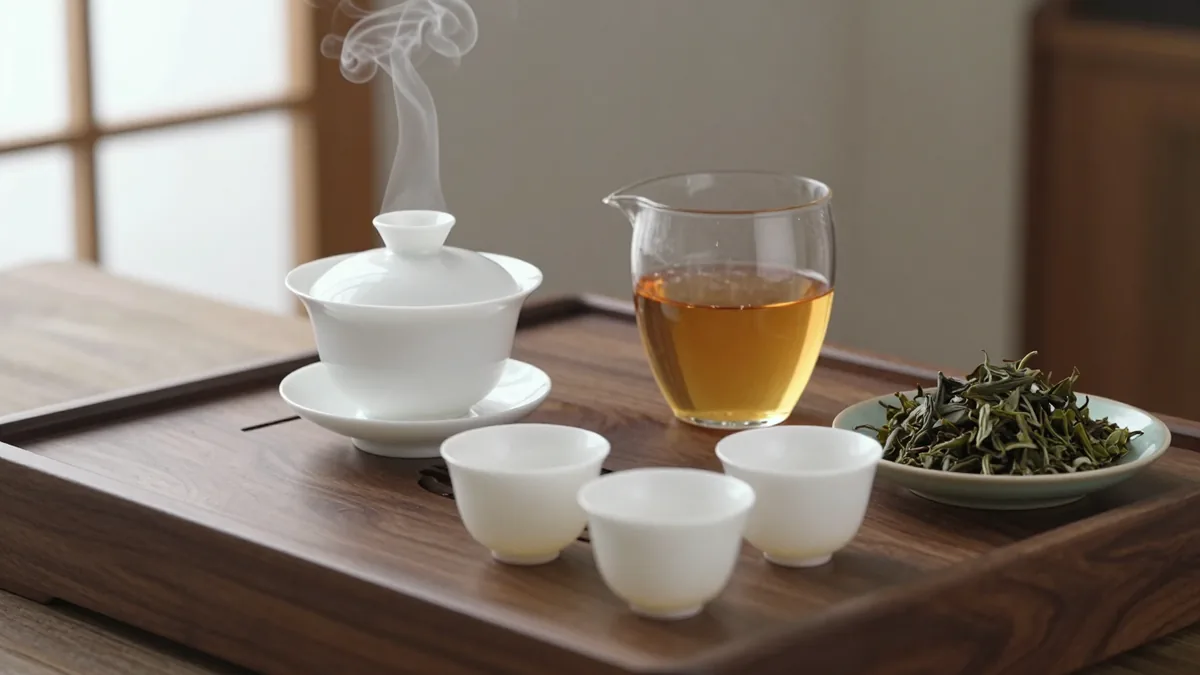
Gongfu brewing uses 3 to 6.7 g of leaf per 100 ml, water at 80 to 100°C and 5 to 25 second first steeps. Timings for 7 tea types from 5 vendor guides.
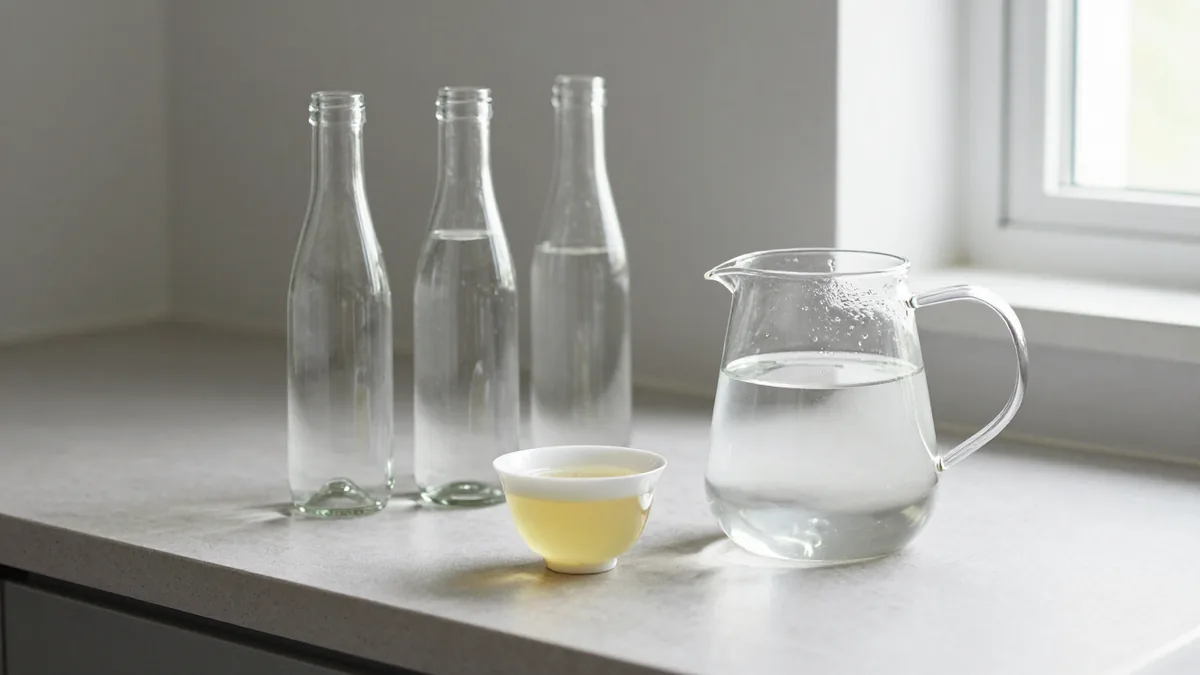
Brew tea with soft water at 30–80 mg/L hardness. Volvic (~70) and Crystal Geyser (38) fit; Evian (~307) is very hard; pure water gives more bitter green tea.
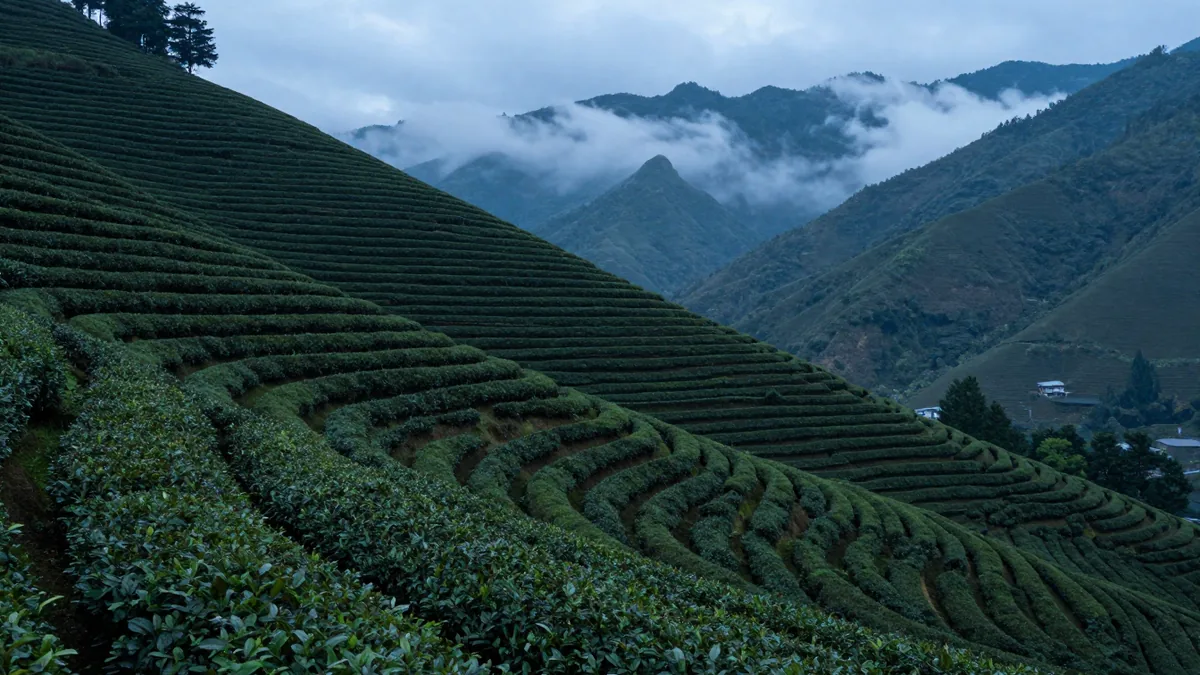
Gaoshan oolong grows above 1,000 m. Our catalog medians: Ali Shan $0.39/g, Li Shan $0.60/g, Da Yu Ling $0.78/g; a 7 g Li Shan session costs $4.20.
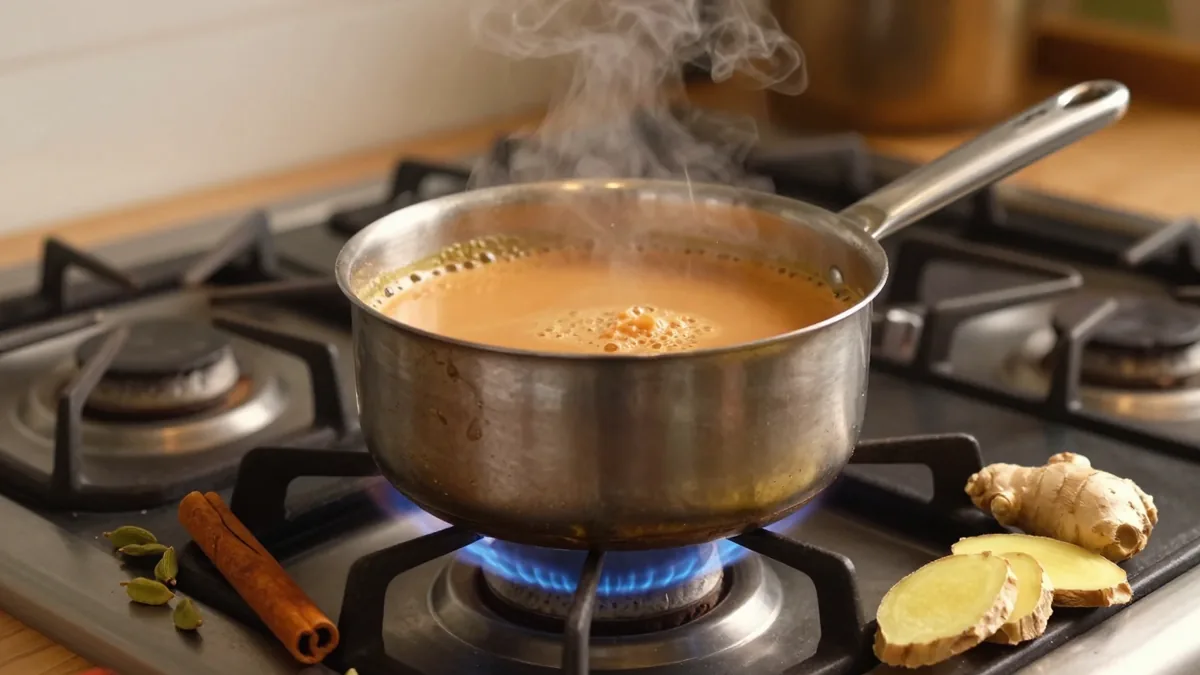
Six recipes compared: 2 parts water to 1 part milk, 1.5 tsp black tea and 2 cardamom pods per cup. Homemade costs $0.33 to $0.64 a cup with Assam.
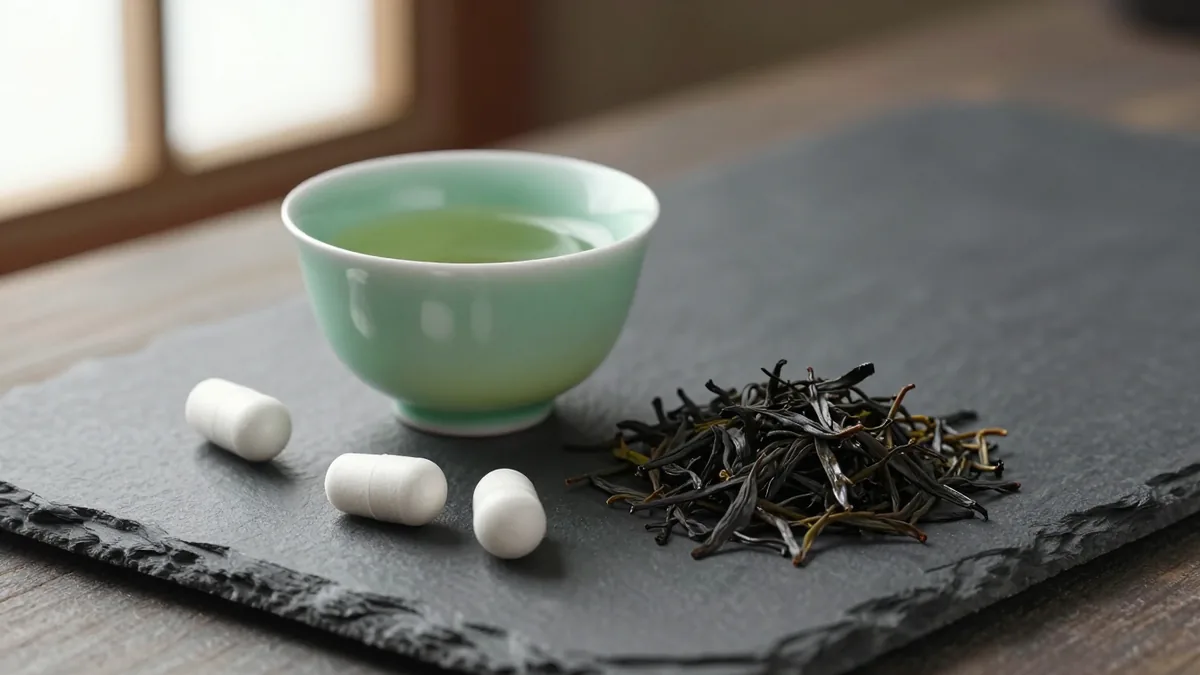
Trials gave 50-250 mg theanine with 40-160 mg caffeine and found short attention gains. A cup of bagged black tea holds about 24 mg, so 100 mg is about 4 cups.
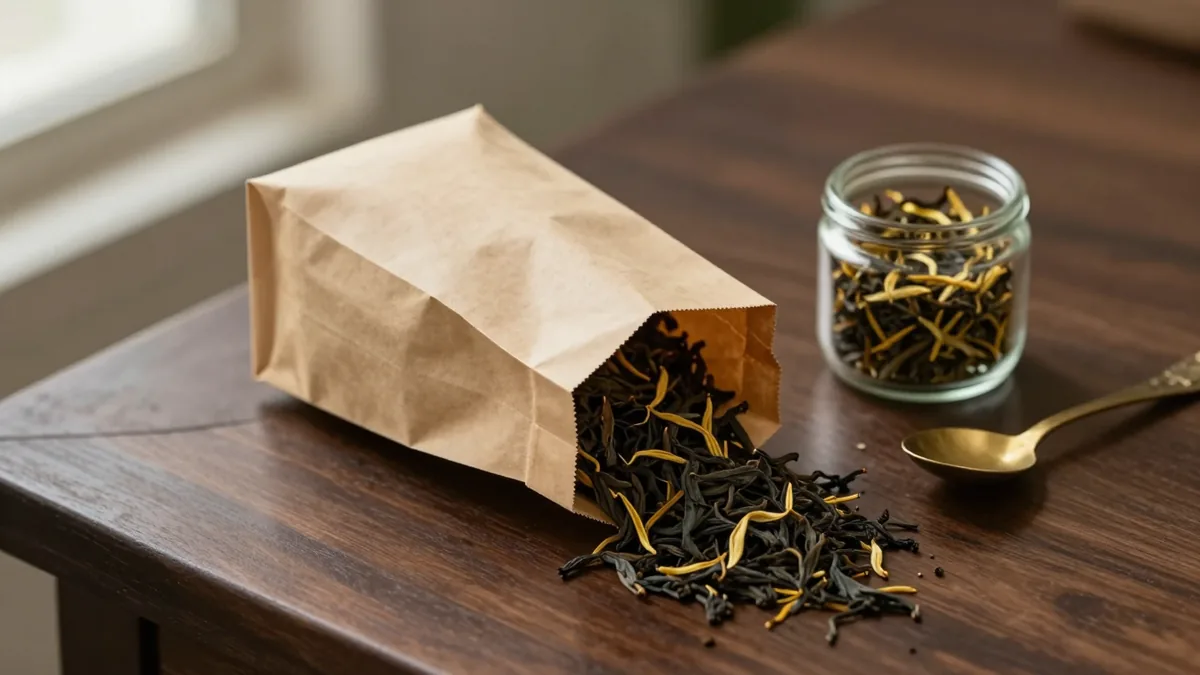
Grade codes like FTGFOP describe leaf size, not flavor. Check harvest year, origin and seals: 55% of 7,306 catalog teas print a year, 26 print a grade.
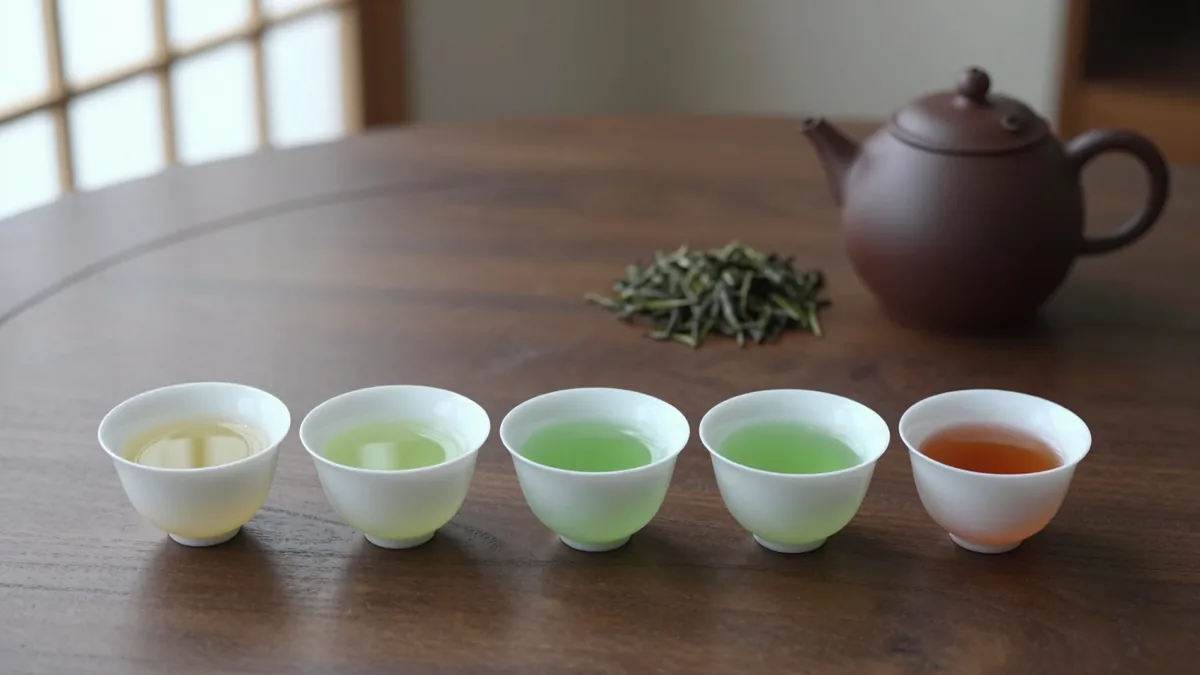
Sencha grows in sun, kabusecha is shaded about 7 days, gyokuro about 20, and hojicha is roasted. Brew temps from 50 to 100 °C and catalog prices per gram.
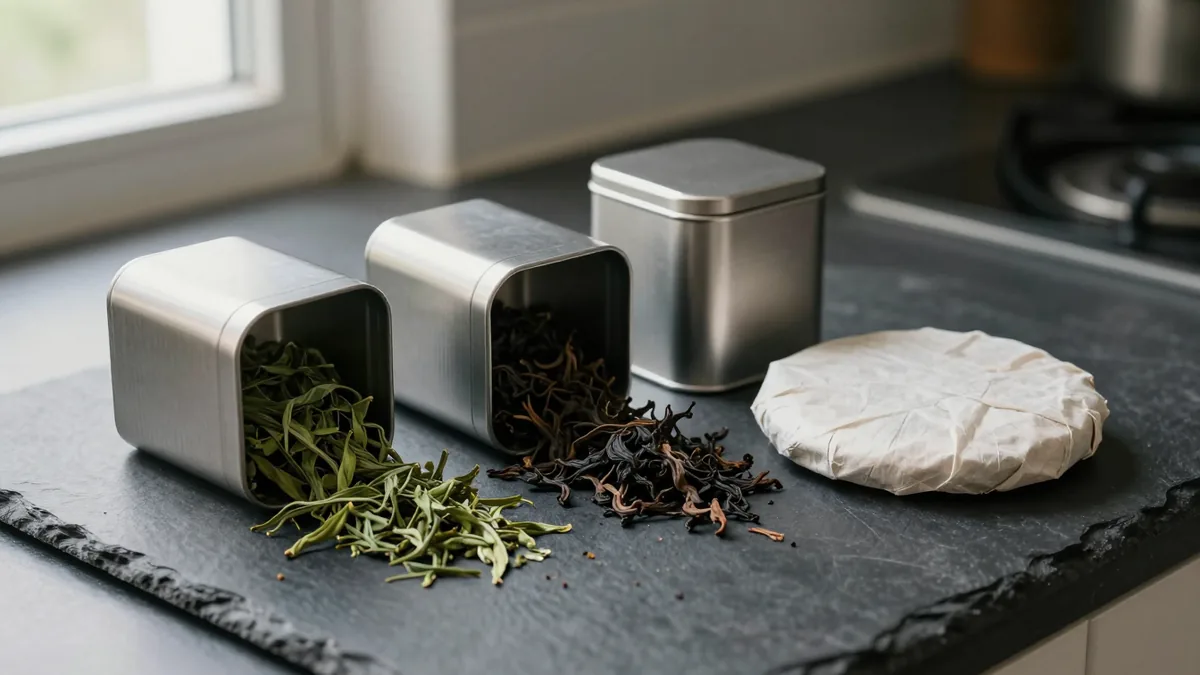
Store tea airtight, dark, dry and below 25 °C. Green tea lasts 6–12 months, black 12–24; freeze only sealed bags; keep puer at 60–70% humidity.
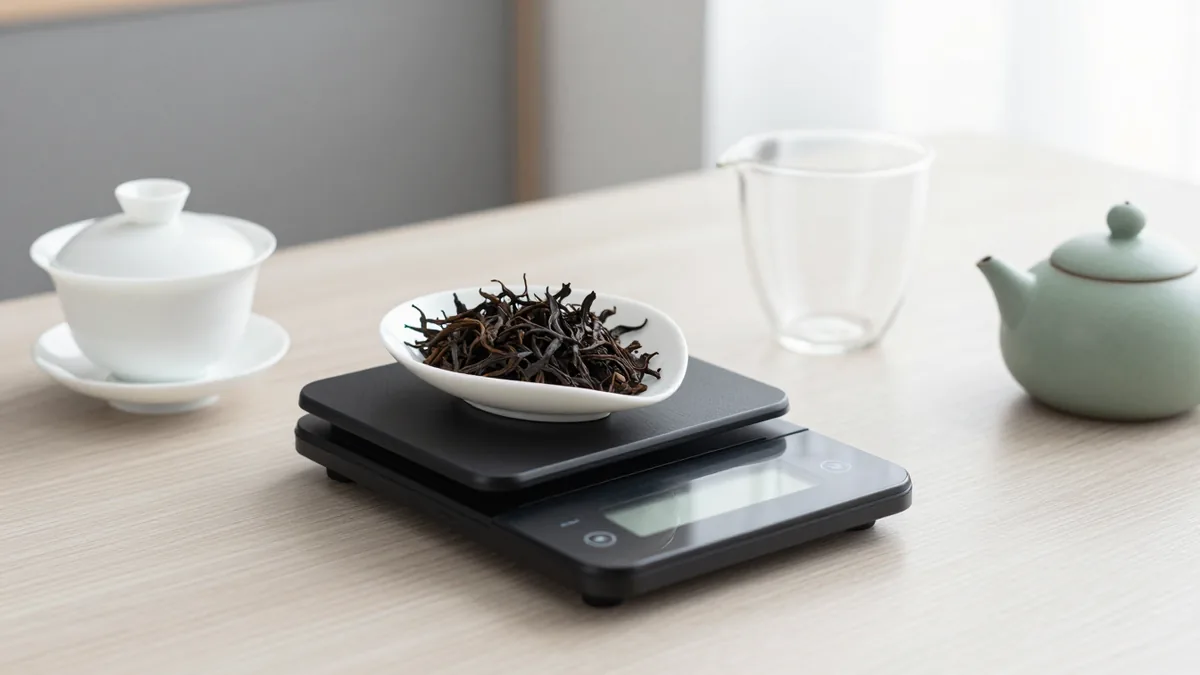
Use about 1 g of tea per 100 ml for a Western mug (2.5 g per 8 oz), 2 g for ISO tasting, 3-7 g for gongfu, 3.3 g for usucha matcha and 1 g for cold brew.
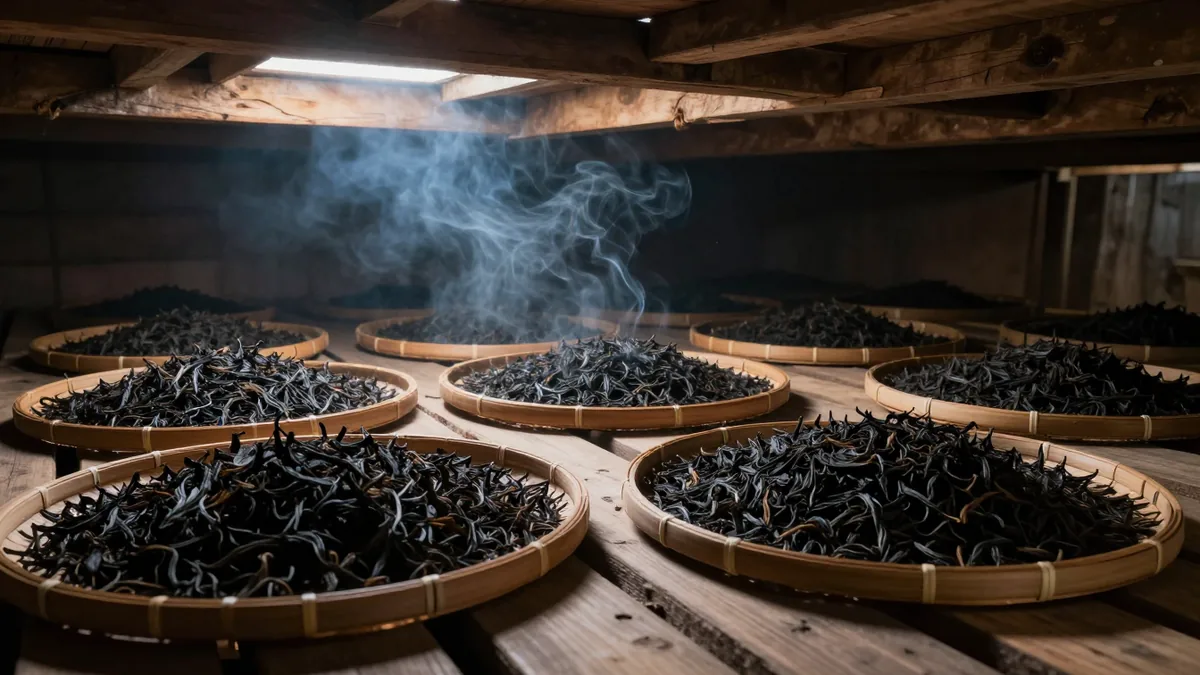
Lapsang souchong is Wuyi black tea smoked over pine. Our catalog: 46 listings, median $0.34/g vs $0.26/g for all black tea. Brewed tea tested low in PAHs.
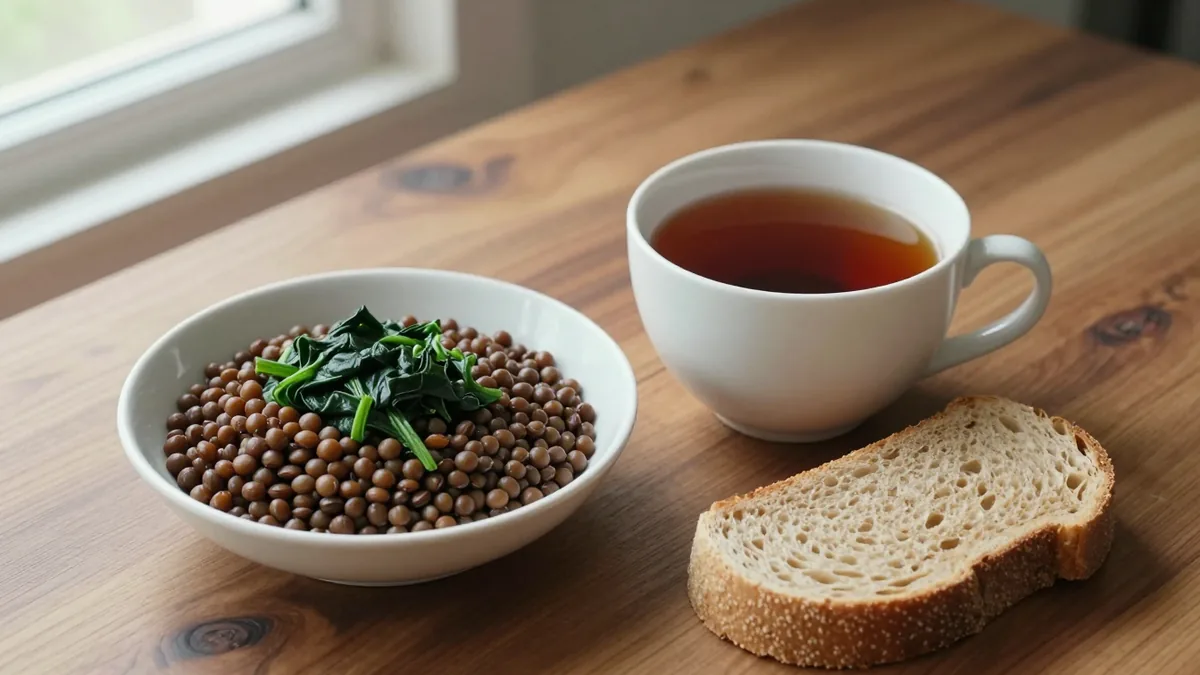
Black tea cut non-heme iron absorption from a meal by 79-94% in isotope studies. Tea 1 hour after eating halved the effect. No link to stores in healthy adults.
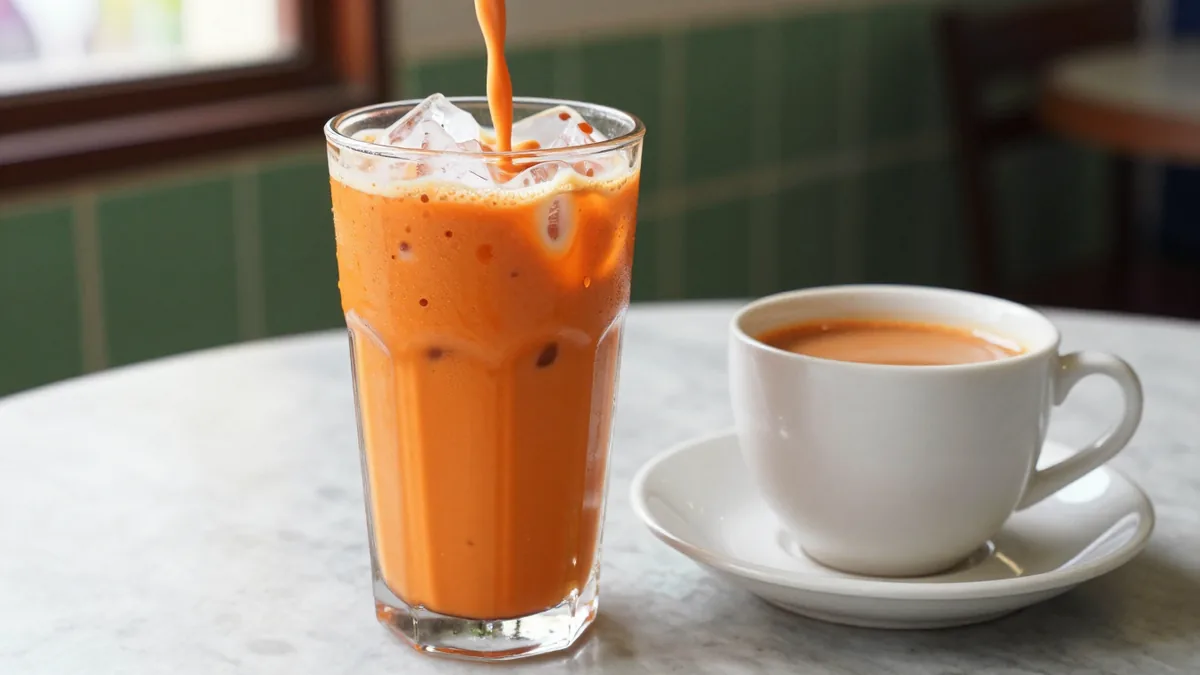
Thai iced tea uses about 6 g of dyed tea mix per 100 ml plus condensed milk. Hong Kong milk tea uses 2 g per 100 ml, simmered, pulled, with evaporated milk.
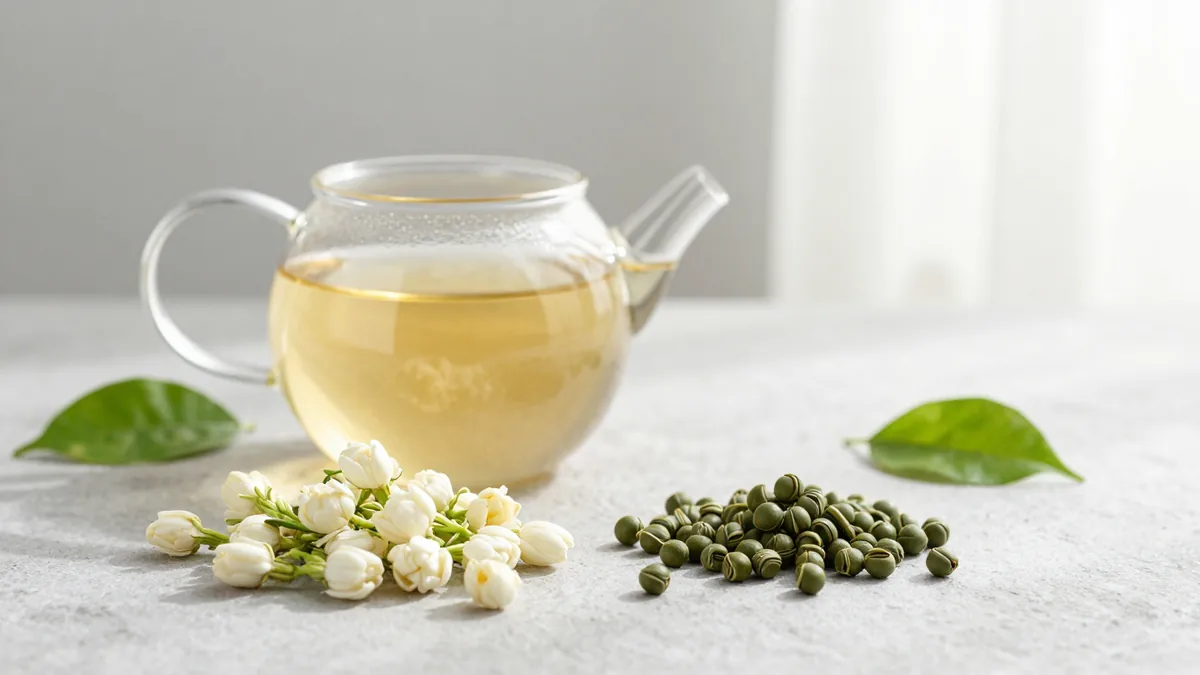
Jasmine tea is dry tea piled with fresh jasmine buds overnight, then sifted and dried; vendors repeat it 5-10 times. Hengxian grows over 80% of China's jasmine.
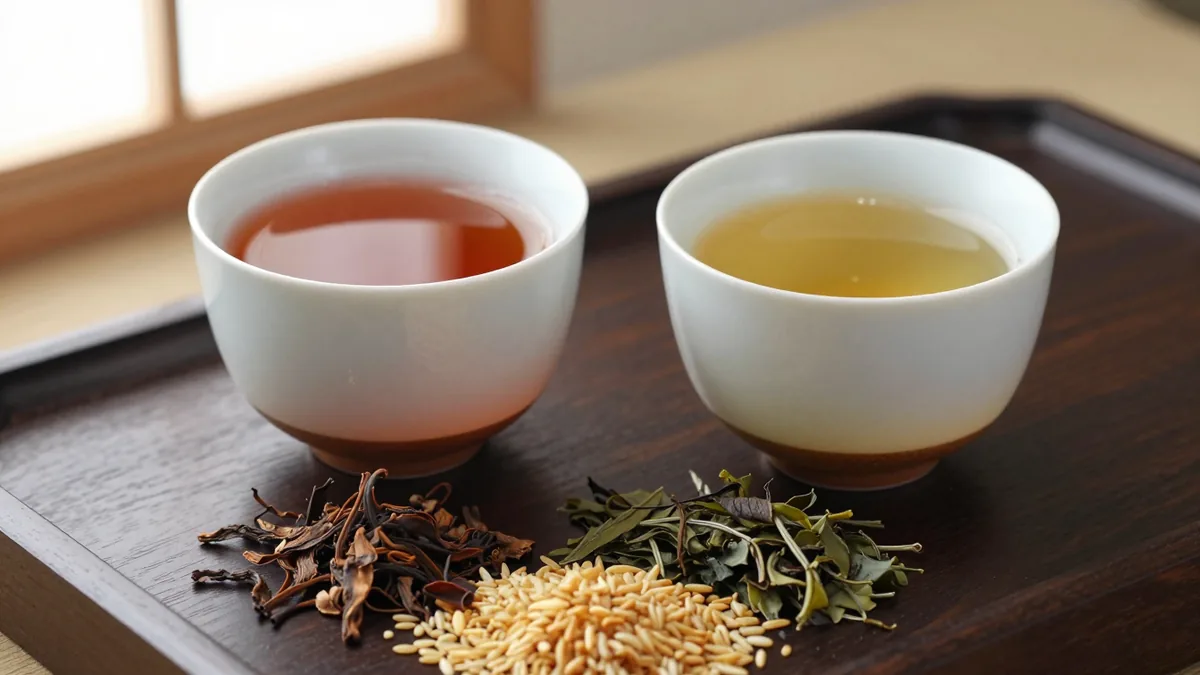
Hojicha is green tea roasted at 160-180 °C: it keeps most caffeine (26 vs 28 mg) but loses 60% of catechins. Genmaicha is about half roasted rice.
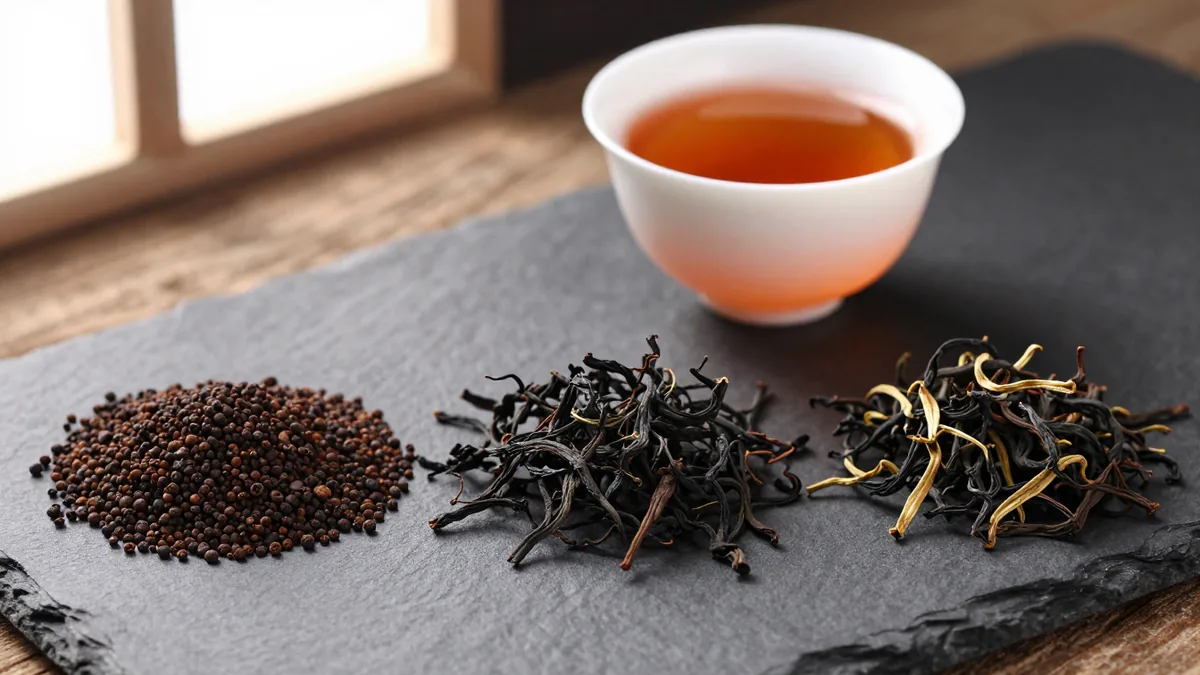
Assam is lowland, malty and mostly CTC; Ceylon is orthodox and graded by elevation; Kenya is highland CTC and exported 653 million kg in 2025.
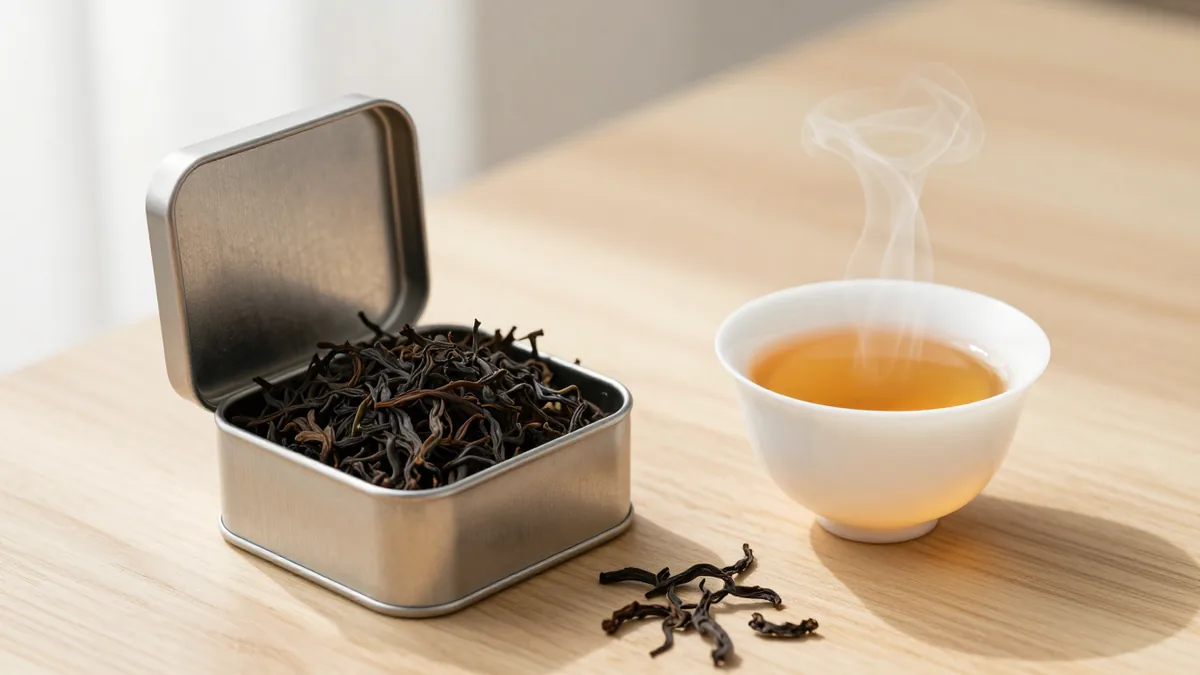
Decaf tea keeps about 2 mg caffeine per cup. CO2 removed 98% of caffeine and 87% of green tea catechins in one study. A 30-second home rinse does not decaf.
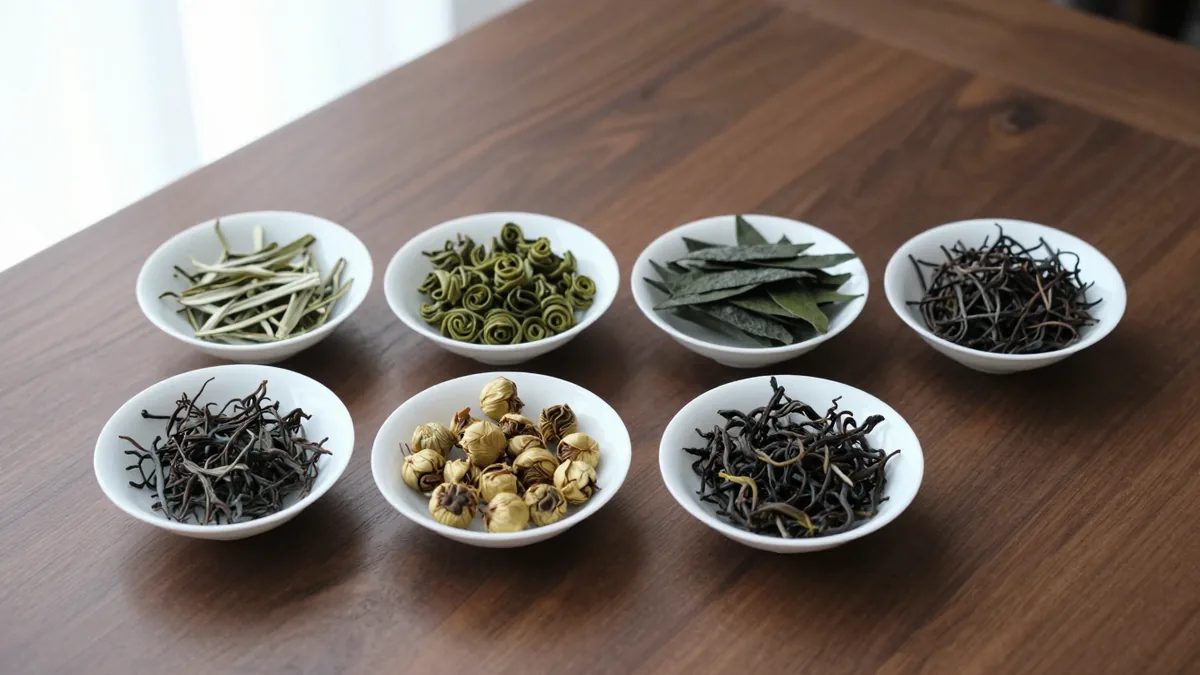
China has no official ten famous teas list. Four published lists name 15 teas; 5 appear on all four. Catalog medians run $0.21–$1.22 per gram.
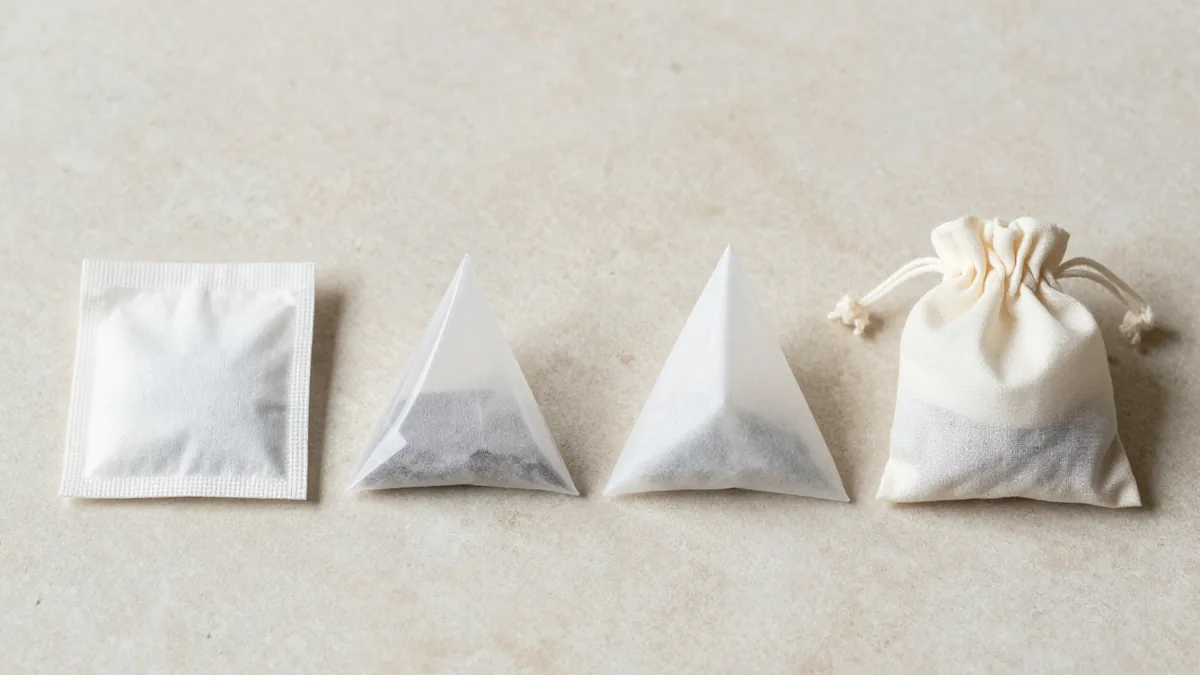
Paper, nylon, PET and PLA tea bags compared. Studies report 106 to 15 billion plastic particles per bag; regulators find no proven health risk.
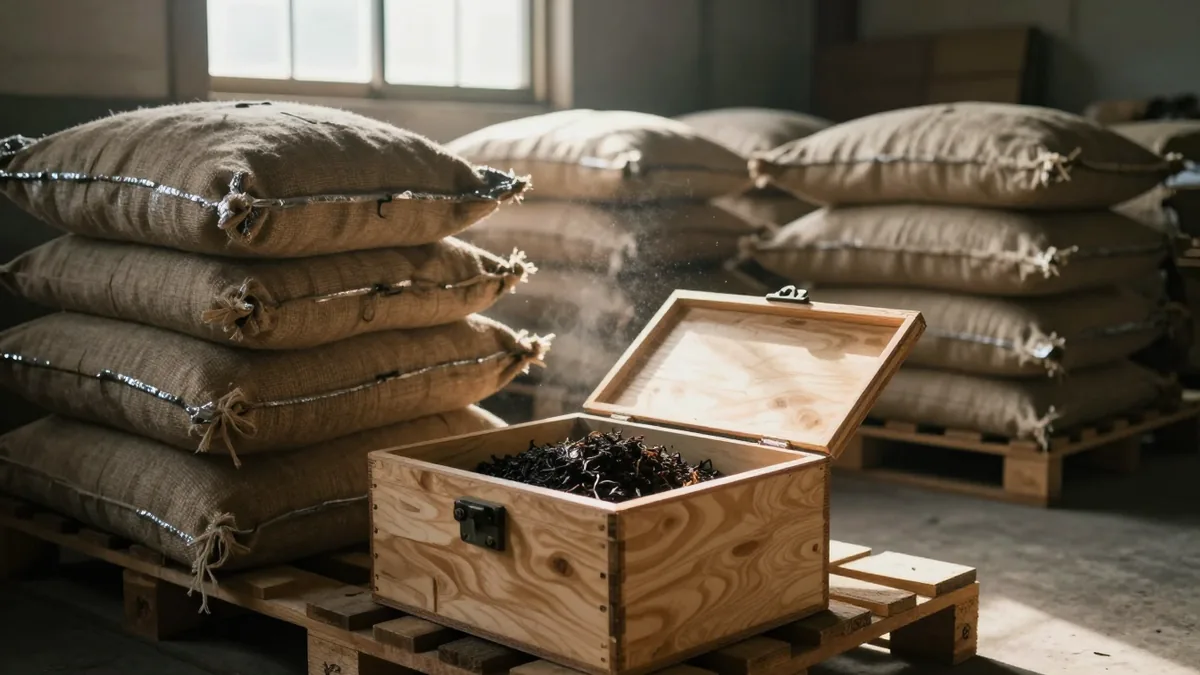
US tea imports hit $620.4M in 2025 (111,950 t), up 32% in value since 2015 on Japanese green tea. Americans drink about 86 billion servings a year.
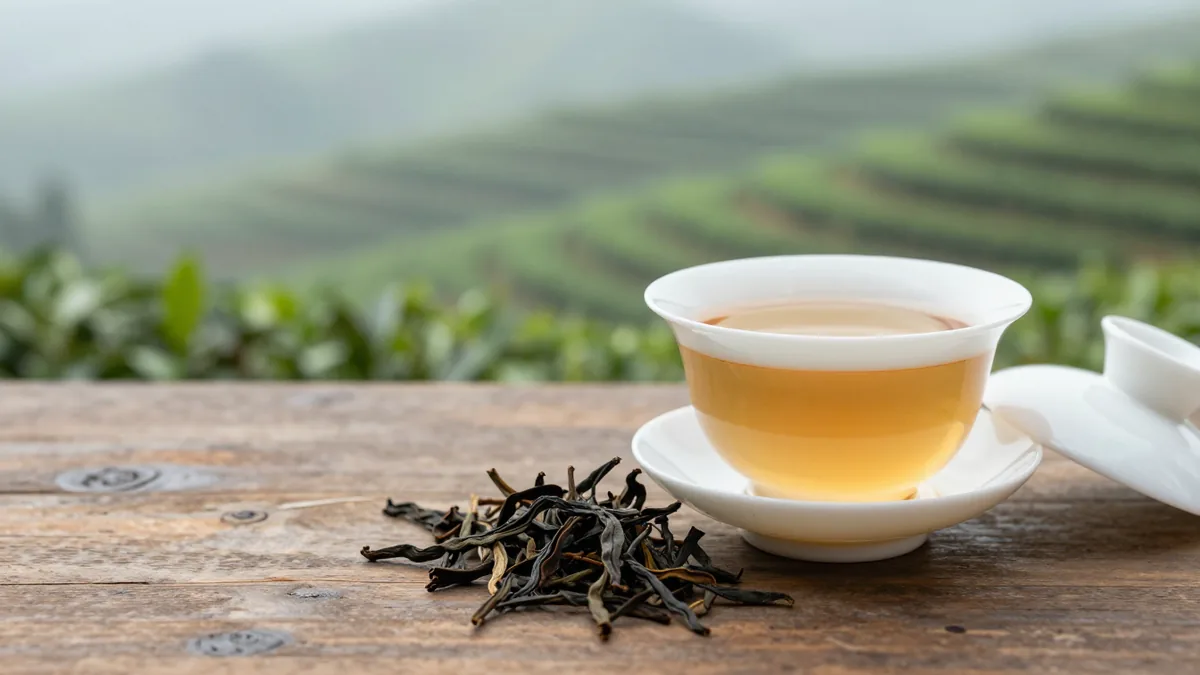
Dancong oolong is sold under 10 signature aroma names plus cultivar names. Our catalog lists 196 at a median $0.62 per gram, 1.4x the oolong median.
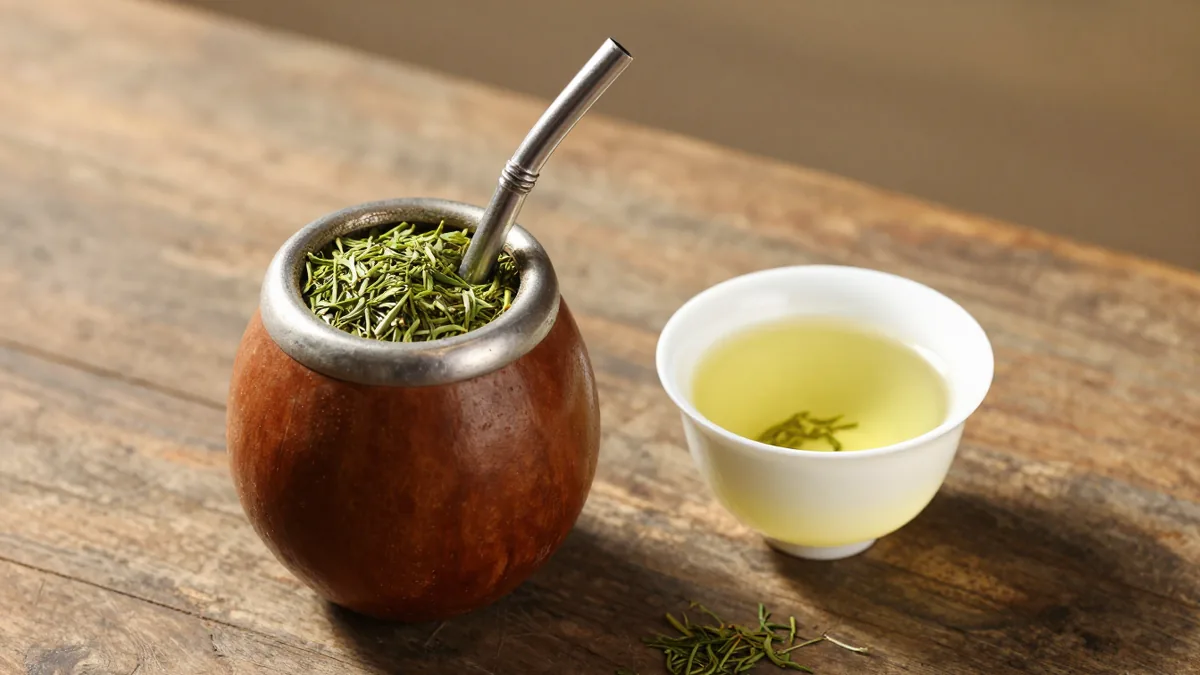
A 350 mL chimarrão gourd has about 91 mg of caffeine, a 200 mL cup of green tea about 40 mg. Per 100 mL they are close; mate uses about 50 g of leaf.
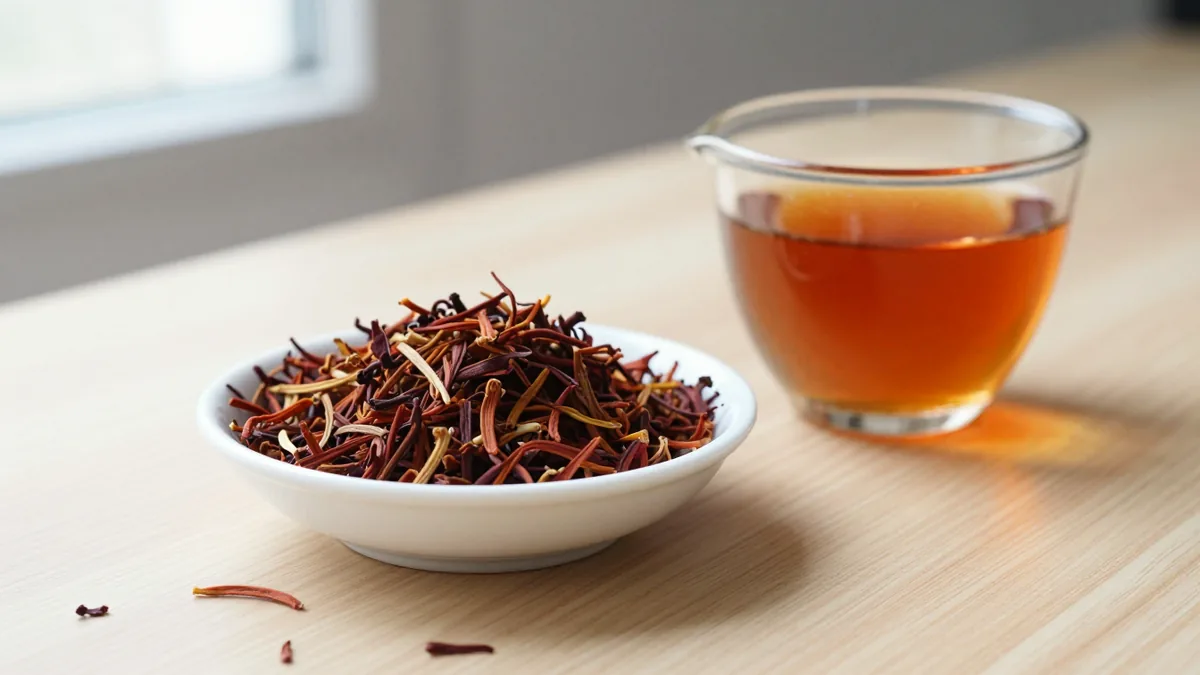
Rooibos grows only in South Africa's Cederberg and is EU-protected; honeybush (Cyclopia) is mostly wild-picked. Both are caffeine-free herbal teas.
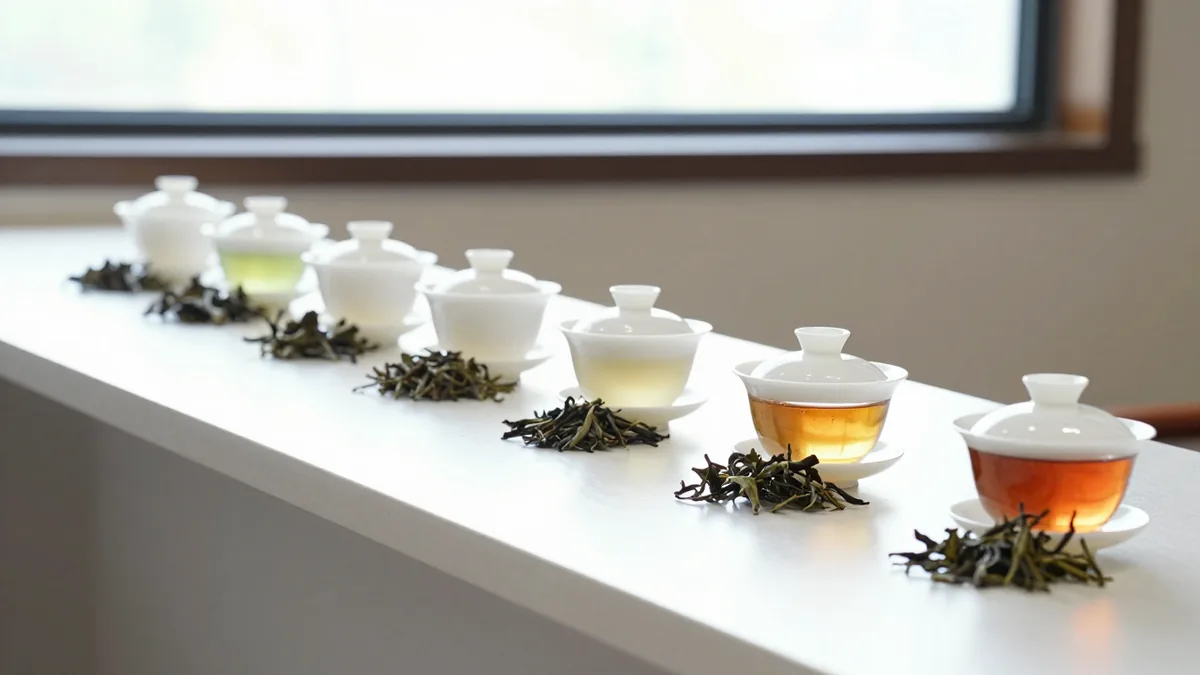
Brew each tea at the same weight, water and time, then judge leaf, aroma, liquor, taste and wet leaf on a 0-15 scale. A 3-tea flight costs $3.00.
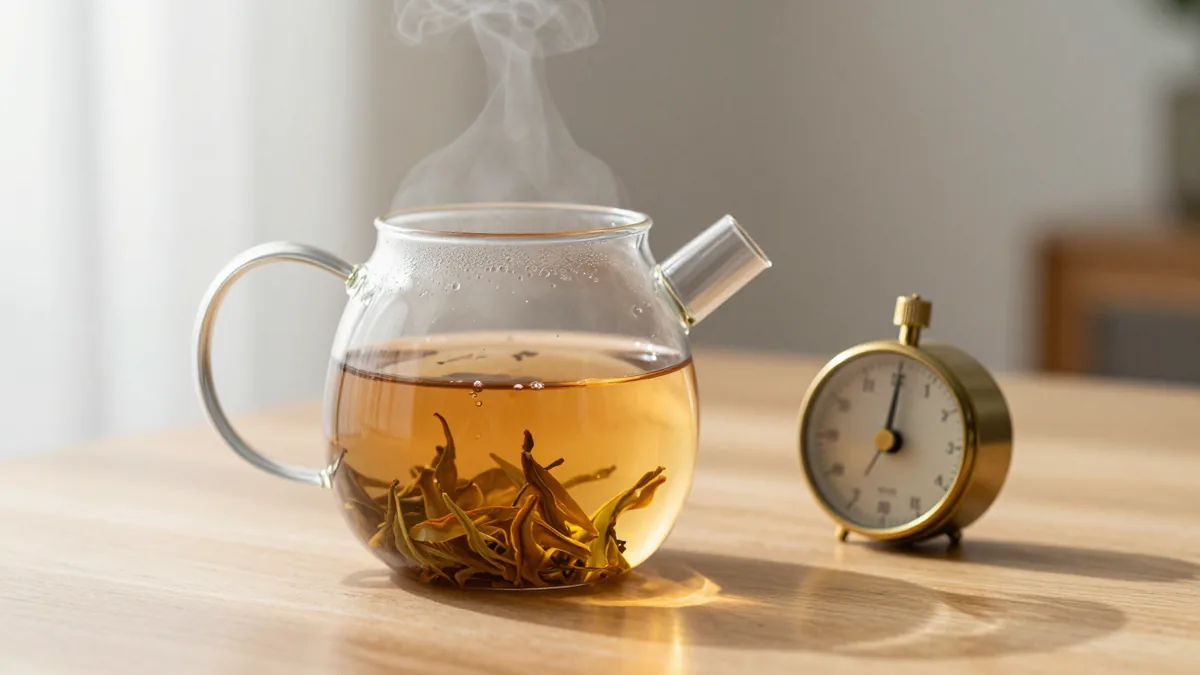
Broken tea leaf gives up about 95% of its caffeine in 3 minutes at 80 °C; whole leaf needs about 20 minutes. Second infusions keep a median 83% of the first.
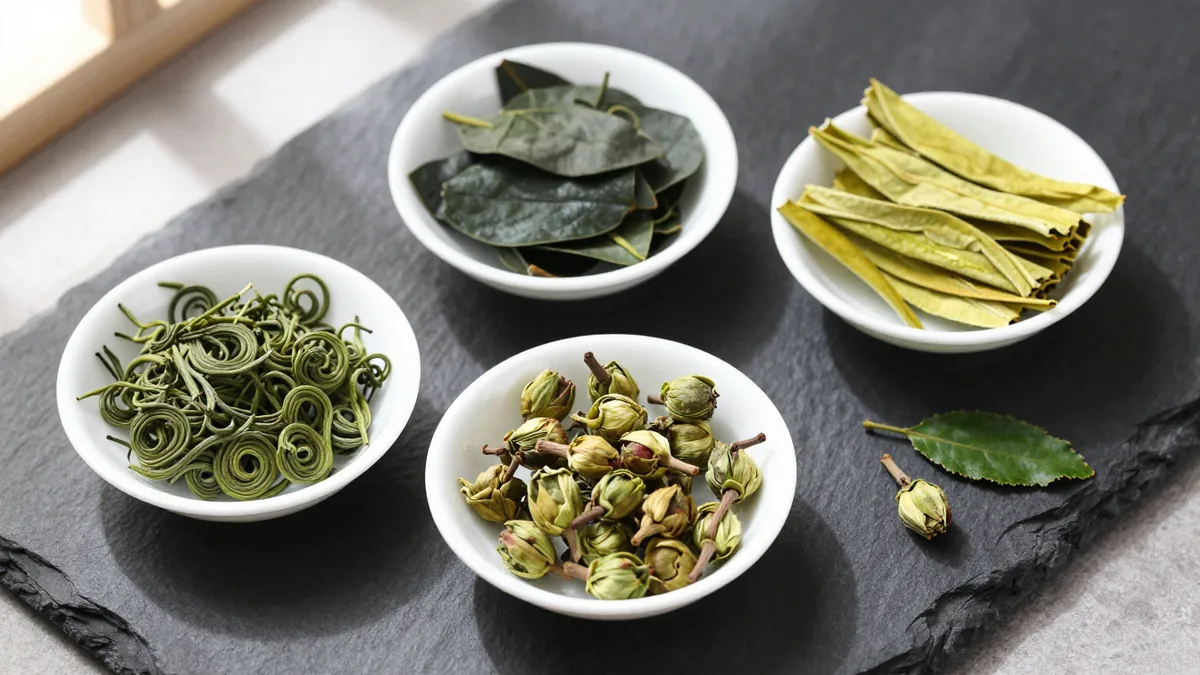
Pan-fired Biluochun, baked Huangshan Maofeng and Anji Bai Cha, charcoal-roasted Lu'an Guapian: how each is made, its chemistry and catalog price.
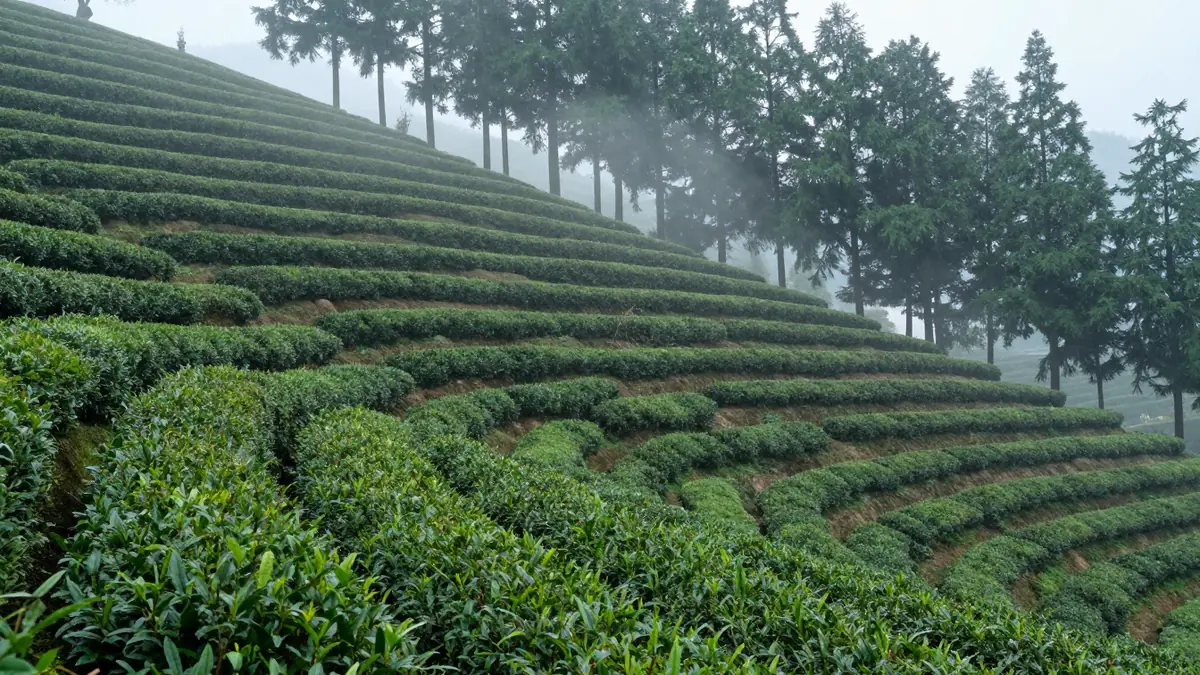
Korean law grades green tea by picking date from Gogu (about April 20): ujeon, gogu, sejak, jungjak, daejak. Hadong, Boseong and Jeju compared, plus balhyocha.
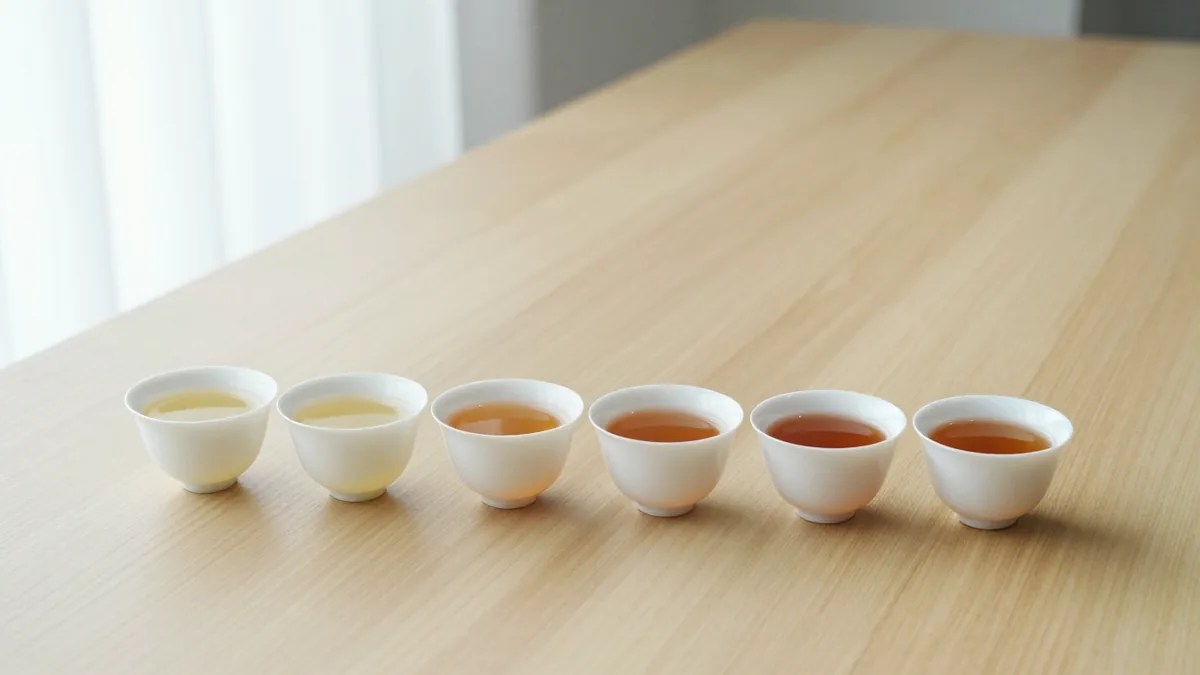
Four tasting flights from in-stock teas: oxidation, country, roast and puer age. At 3 g per cup one session costs $1.01 to $3.30 in leaf as of October 1, 2026.
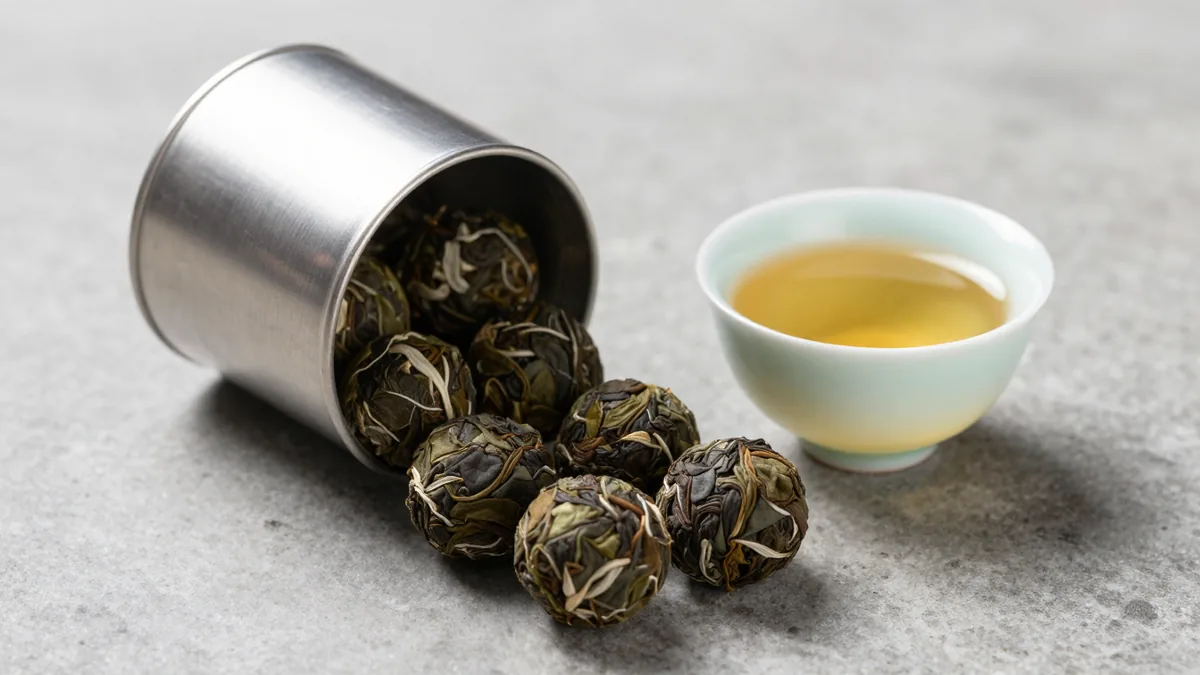
GABA tea is fresh leaf held without oxygen so glutamate turns into GABA, about 150 mg/100 g. Human studies are small. 12 GABA oolongs in our catalog.
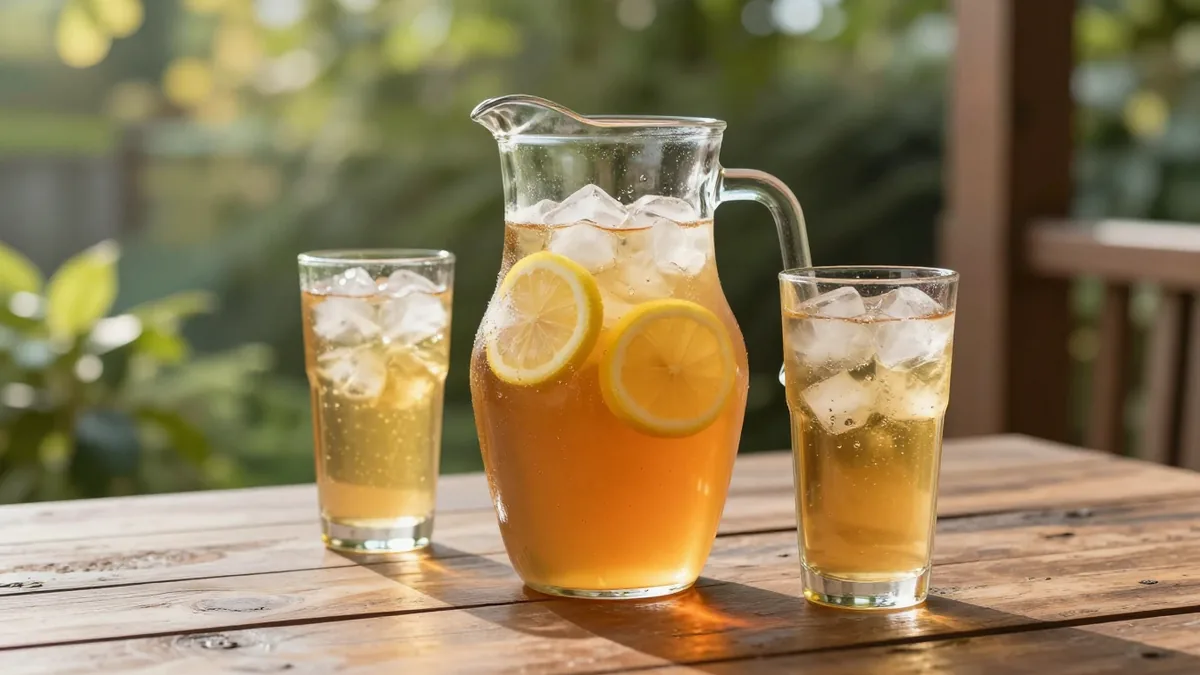
Brew black tea at 21 g per liter and pour it over its own weight in ice. Assam, Ceylon and Nilgiri suit iced tea; a 2 L pitcher costs $4.05-$7.77 in leaf.
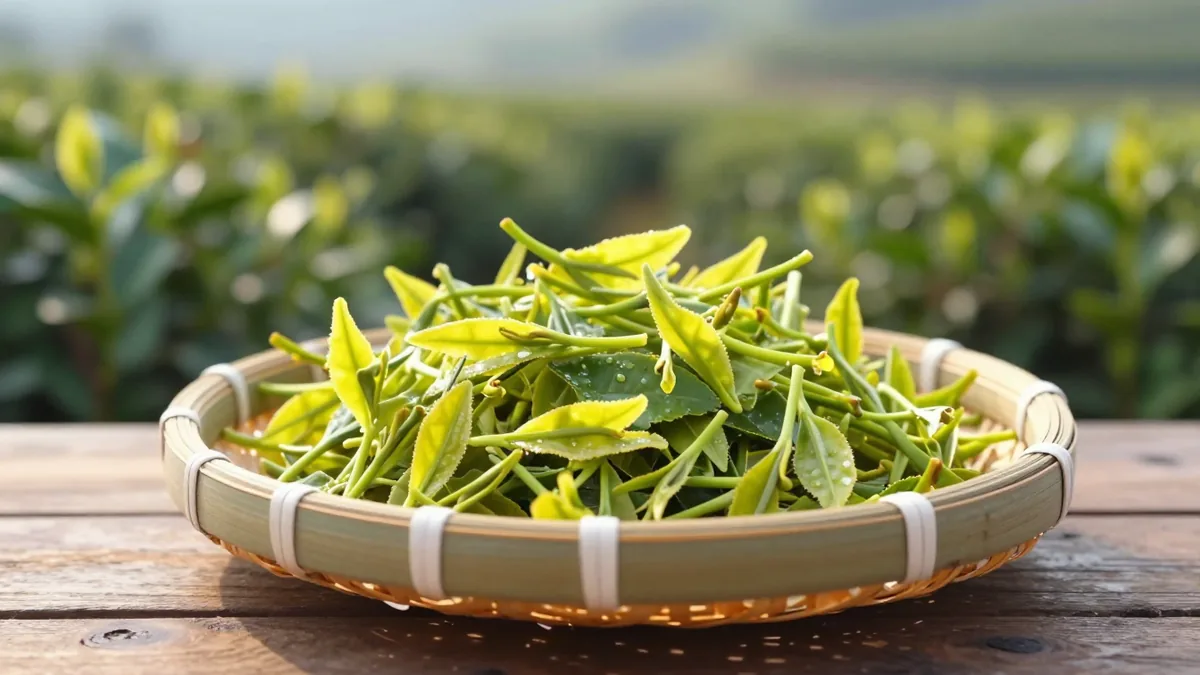
Shincha is the first tea of the spring crop. In 2025 first-flush sencha sold for ¥2,278/kg crude, second flush ¥1,321. Dates, flush shares and US prices.
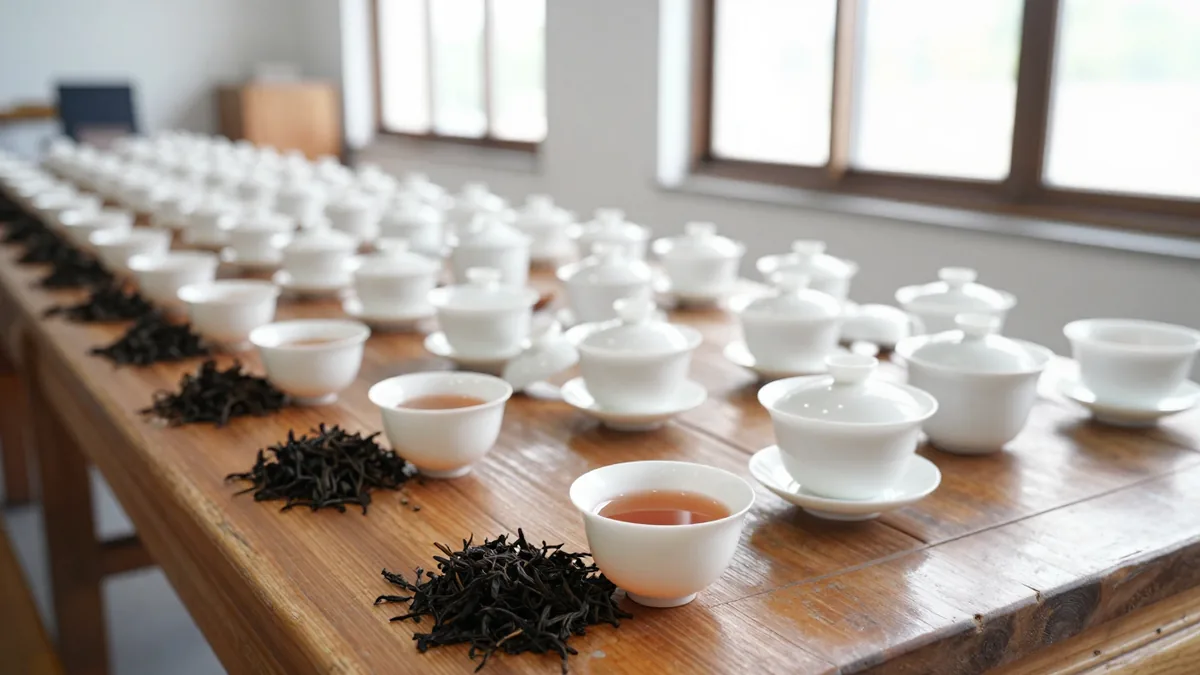
Brokers taste and value each lot, then buyers bid. Mombasa averaged $2.15/kg in 2025; Colombo sold 239 million kg in 2025 at a weighted Rs 1,184/kg.
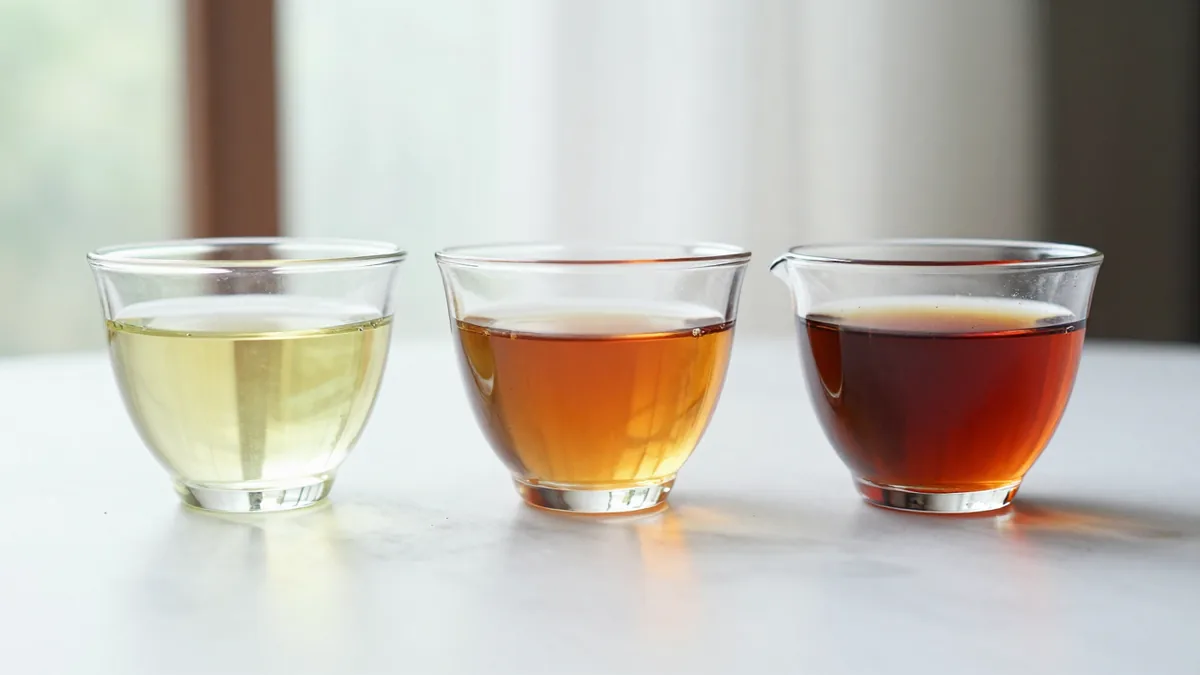
Black tea color comes from theaflavins (about 0.3-2.3%, orange-red) and thearubigins (9-19%, red-brown). A TF:TR ratio near 1:10 is the classic quality target.
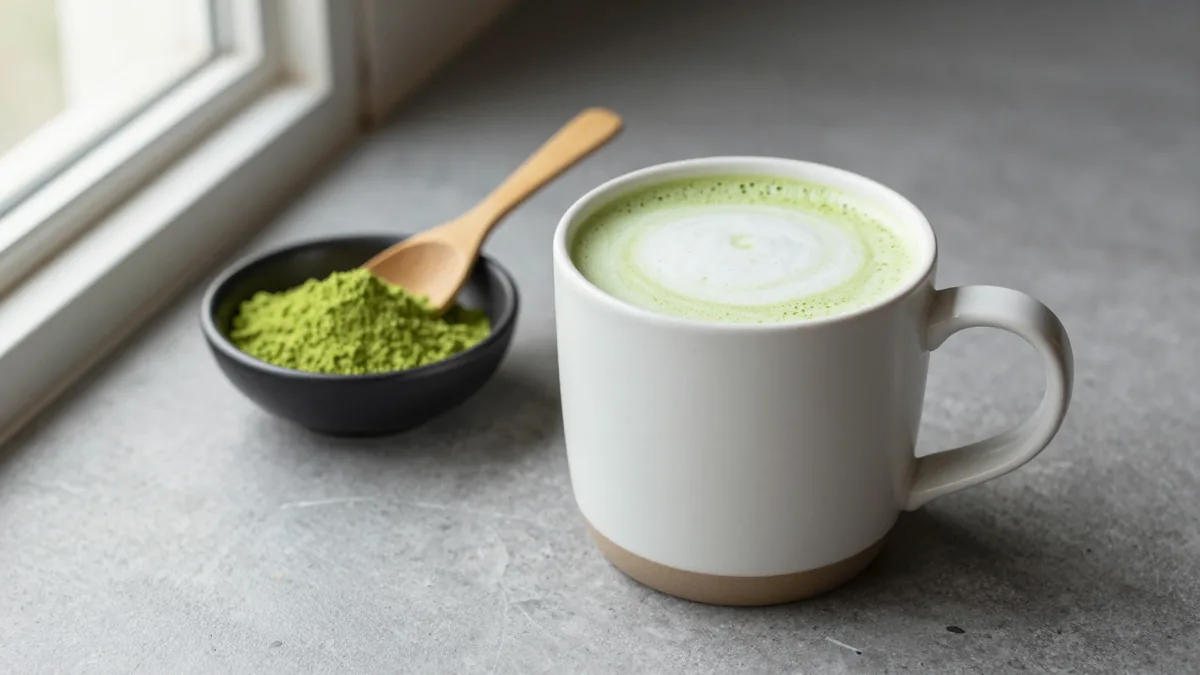
Use 3 g matcha whisked into 100 ml of 80 °C water, then 100 ml milk. Oat milk foams longest; latte-grade matcha costs $0.39/g, about $1.28 a cup.
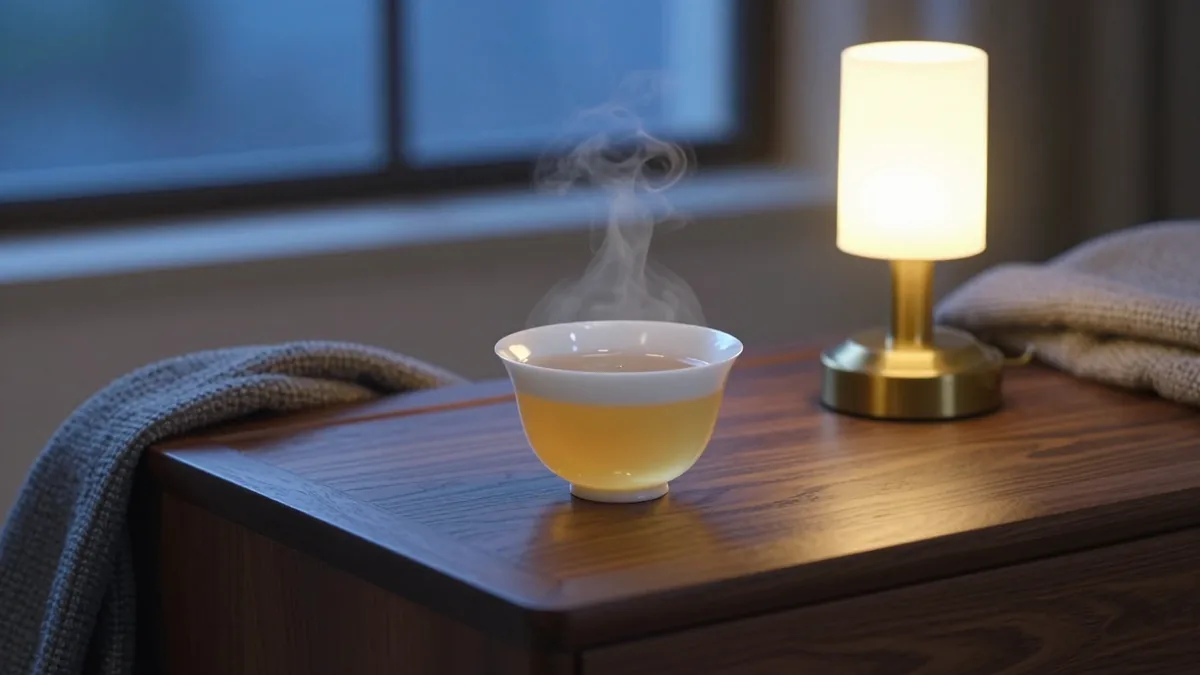
Caffeine's half-life is 3–7 h in adults. A 47 mg mug of black tea at 3 pm leaves about 16 mg at 11 pm at 5 h. Decaf and herbal options, with the sleep studies.