Decaf tea is not caffeine-free. USDA lists decaffeinated brewed black tea at 1 mg caffeine per 100 g, about 2 mg per 8 fl oz cup versus about 47 mg for regular black tea. Industry uses supercritical CO2 or ethyl acetate; a 2022 study found CO2 removed 98.2% of caffeine from green tea but also 87.2% of its catechins. A 30-second home rinse is not decaffeination: in short-steep tests caffeine kept leaching strongly through the second and third infusions.
Decaffeinated tea is regular Camellia sinensis leaf with most of its caffeine pulled out by a solvent. This guide covers how much caffeine is left, which solvents US and EU rules allow, what the process does to catechins, why the home rinse does not work, and what decaf costs in our catalog as of October 1, 2026. For caffeine in regular teas, see caffeine in tea vs coffee.
How Much Caffeine Decaf Tea Still Has
The FDA says it directly: "Decaffeinated" does not mean caffeine-free. Its consumer page says decaf coffees and teas "still contain some caffeine" and gives 2 to 15 mg per 8 fl oz for decaf coffee. It gives no tea-specific range.
USDA FoodData Central lists decaffeinated brewed black tea at 1.0 mg caffeine per 100 g, against 20 mg per 100 g for regular brewed black tea. At USDA's 237 g cup weight that is:
- Decaf black tea: 1 × 2.37 = about 2.4 mg per 8 fl oz
- Regular black tea: 20 × 2.37 = about 47 mg per 8 fl oz
Retail decaf varies. Chin et al. (2008) measured 20 commercial teas and found the decaffeinated ones contained less than 12 mg per 6 or 8 oz serving, with steep time affecting the result. Four cups of decaf at that ceiling is still under 48 mg, about one cup of regular black tea by the USDA figure.
Get caffeine and decaf notes
How much caffeine each tea type carries, how decaf tea is made, and caffeine-free alternatives. Free, no spam.
No fixed schedule. Unsubscribe anytime.
The Three Industrial Methods
Vendor descriptions and the studies below decaffeinate finished, dry leaf with one of three solvents. Each pulls caffeine out with some other leaf compounds.
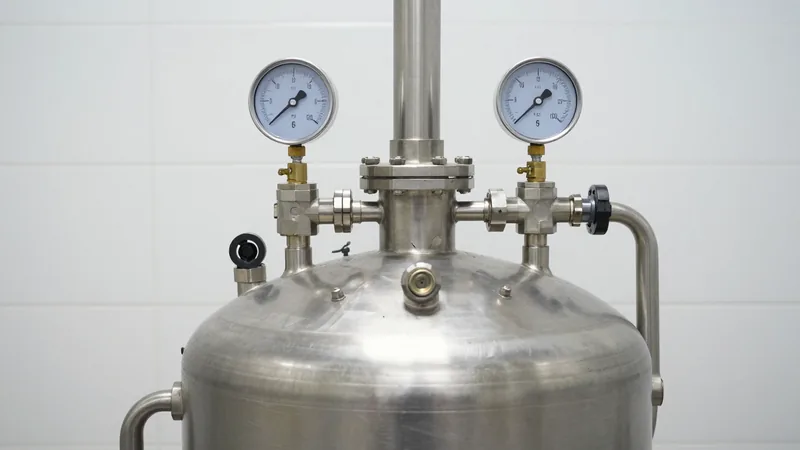
- Supercritical carbon dioxide (CO2). CO2 is pressurized until it behaves like a liquid, flushed through the leaf, then released as gas. In the 2022 study below the settings were 32 MPa, 50 °C and 3.5 hours with water as a co-solvent (Wang et al. 2022).
- Ethyl acetate. An ester found naturally in fruit. US rules allow it as a solvent "in the decaffeination of coffee and tea" (21 CFR 173.228).
- Methylene chloride (dichloromethane). The US residue rule for it names spice oleoresins, hops extract and decaffeinated coffee, with a 10 ppm cap for coffee. Tea is not listed in that section (21 CFR 173.255). The EU allows it for tea with a residue cap.
| Solvent | US rule | EU rule (Directive 2009/32/EC, Annex I) |
|---|---|---|
| Carbon dioxide | GRAS, good manufacturing practice (21 CFR 184.1240) | Allowed for all uses under good manufacturing practice (Annex I, Part I) |
| Ethyl acetate | Allowed for decaffeinating coffee and tea (21 CFR 173.228) | Allowed for all uses under good manufacturing practice (Annex I, Part I) |
| Methylene chloride | 10 ppm residue cap in decaf coffee; tea not named (21 CFR 173.255) | 5 mg/kg residue cap in tea, 2 mg/kg in roasted coffee (Annex I, Part II) |
| Methyl acetate | Not covered here | 20 mg/kg residue cap in coffee or tea (Annex I, Part II) |
The label rarely names the solvent. Harney & Sons is one exception: its Decaf Ceylon page says the loose tea is decaffeinated with pressurized CO2 and the teabags with "natural ethyl acetate". white2tea says it commissioned CO2 decaffeination "to lower the caffeine to the EU standard" for its decaf puer cakes and decaf black tea. What-Cha mentions "a slight background taste left by the decaffeination process" on its Ceylon decaf but does not name the method.
What Decaffeination Does to Catechins
Every method we found data for removes catechins along with caffeine. How much depends on the tea and the settings.
| Study | Tea | Process | Caffeine removed | Catechin loss |
|---|---|---|---|---|
| Wang et al. 2022 | Green | CO2 + water, 32 MPa, 50 °C | 98.2% | 87.2% of total catechins |
| Wang et al. 2022 | Black | CO2 + water, 32 MPa, 50 °C | 97.1% | 39.3% of total catechins |
| Park et al. 2007, as cited by Wang et al. | Green | CO2 + 95% ethanol, 300 bar, 70 °C, 120 min | 97.4% | 62.2% of EGCG |
| Huang et al., as cited by Wang et al. | Green | CO2 + water, 300 bar, ~60 °C, 7.5 h | 95.6% | 19.8% of catechins |
| Liang et al. 2007 | Fresh green leaf | Hot water, 100 °C, 3 min, 1:20 leaf to water | 83% | 5% of catechins |
In the Wang study, decaffeinated green tea lost 90.9% of its EGCG, and tasters scored it lower overall because bitterness and astringency dropped. Decaffeinated black tea scored higher. The authors concluded CO2 suits black tea better than green.
Retail decaf shows the same pattern. Henning et al. (2003) measured total flavanols at 21.2–103.2 mg/g in regular teas and 4.6–39.0 mg/g in decaffeinated teas. The abstract does not say which decaf method each product used.
We did not find a peer-reviewed, head-to-head comparison of ethyl acetate and CO2 decaf on the same tea leaf. Claims that one method keeps a fixed percentage of catechins more than the other should be read as marketing until someone publishes that test.
The 30-Second Rinse Myth
The home method says to steep tea for 30 seconds, pour the water off, and brew again to get a near-decaf cup. The data do not support it.
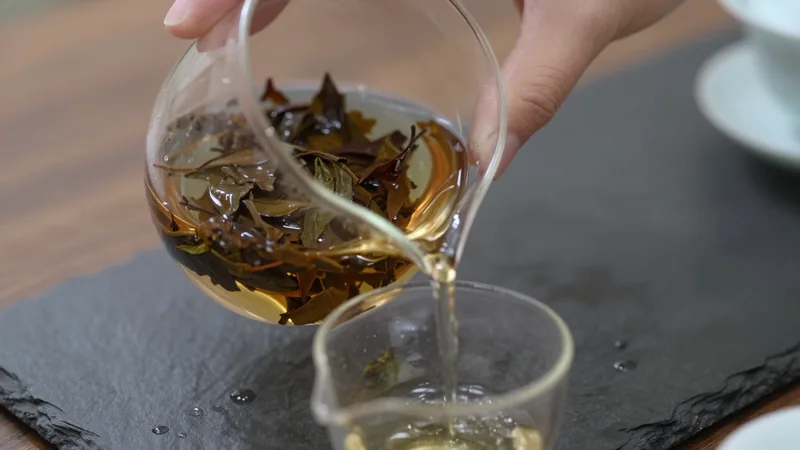
A 2025 study brewed a raw puer 14 times with steeps of 20, 30, 45, 60 seconds and longer. After the 20-second first infusion, caffeine showed "rapid leaching" at the second and third infusions (30 and 45 seconds). Caffeine concentration fell by only 40.37% after the seventh infusion (Peng et al. 2025). If a 20-second rinse had stripped most of the caffeine, those later infusions would have been low.
The industrial hot-water method is a useful upper bound. Liang et al. (2007) removed 83% of caffeine from fresh, unrolled green tea leaf, but that took 3 minutes in boiling water at 1 part leaf to 20 parts water. The same paper reports that rolled leaf and dry tea lost a large share of catechins under that treatment. A home rinse uses dry, rolled tea and a fraction of that time.
What a rinse does do:
- Discards some caffeine, plus some aroma and flavor from the first infusion.
- Leaves a cup with far more caffeine than commercial decaf.
If caffeine is the reason to switch, buy decaf leaf or a caffeine-free herbal infusion. For gongfu brewers who rinse for other reasons, see the gongfu brewing guide.
Decaf in Our Catalog: Count and Price
Decaf is a small corner of specialty tea. In the Tea Explorer catalog, 7,306 teas from 40 vendors, fetched 2026-10-01:
- 50 decaf listings from 6 vendors: Harney & Sons, Plum Deluxe, Tea Forte, The Steeping Room, What-Cha and white2tea.
- 21 of them are in stock with a listed weight of 20 g or more. Their median price is $0.142 per gram.
- The median for in-stock regular black tea in the same catalog is $0.260 per gram (price index).
That gap mostly reflects which vendors sell decaf (blenders such as Harney & Sons) rather than a decaf discount. Within one vendor, decaf is not meaningfully cheaper: 3 of 5 Harney & Sons decaf versions cost more per gram than the regular tea, and the other 2 are within $0.002 per gram:
| Regular tea | Size and price | $/g | Decaf version | Size and price | $/g |
|---|---|---|---|---|---|
| Darjeeling | 113.4 g, $14.00 | $0.123 | Decaf Darjeeling | 113.4 g, $13.75 | $0.121 |
| Earl Grey | 113.4 g, $11.00 | $0.097 | Decaf Earl Grey | 85 g, $11.00 | $0.129 |
| Paris | 113.4 g, $13.00 | $0.115 | Decaf Paris | 85 g, $12.10 | $0.142 |
| Hot Cinnamon Spice | 113.4 g, $13.00 | $0.115 | Decaf Hot Cinnamon | 85 g, $9.60 | $0.113 |
| Japanese Sencha | 113.4 g, $15.00 | $0.132 | Decaf Sencha | 56.7 g, $13.75 | $0.242 |
Source: Tea Explorer catalog, 7,306 teas from 40 vendors, fetched 2026-10-01.
Per gram, Harney & Sons' decaf costs between $0.113 and $0.242. The decaf tins are often smaller (85 g against 113.4 g), so the shelf price can look lower while the per-gram price is about the same or higher. Compare per gram with the tea cost calculator.
Naturally Caffeine-Free Options
Herbal infusions are not decaffeinated tea. They come from other plants and never contained caffeine. Rooibos (Aspalathus linearis) is consumed worldwide as a caffeine-free tea.
Our catalog lists 28 in-stock rooibos teas with a weight of 20 g or more, at a median of $0.146 per gram as of October 1, 2026. Browse them in the tea catalog.
The trade-off: rooibos and herbal blends taste nothing like black or green tea. Decaf Camellia sinensis keeps the tea flavor and keeps a few milligrams of caffeine.
Frequently Asked Questions
How much caffeine is in a cup of decaf tea?
USDA lists decaffeinated brewed black tea at 1.0 mg per 100 g, about 2 mg per 8 fl oz cup. A 2008 study of retail teas found decaf versions under 12 mg per 6 or 8 oz serving. Regular black tea is about 47 mg per 8 fl oz by the USDA figure.
Is CO2 decaf tea better than ethyl acetate decaf?
CO2 is the method with the most published data, and it is not catechin-neutral: one 2022 study found it removed 87.2% of catechins from green tea and 39.3% from black tea. We found no peer-reviewed head-to-head test of ethyl acetate and CO2 on the same leaf. Both solvents are allowed for tea in the US and EU.
Is methylene chloride used to decaffeinate tea?
The US rule that sets methylene chloride residue limits names coffee (10 ppm), hops extract and spice oleoresins, not tea. The EU allows dichloromethane for decaffeinating tea with a 5 mg/kg residue cap. Most US labels do not state the solvent, so check the vendor page.
Does a 30-second rinse decaffeinate tea?
No. In a 2025 multi-infusion study, caffeine kept leaching strongly in the 30- and 45-second infusions after a 20-second first infusion, and had fallen by only 40.37% after the seventh. Industrial hot-water decaf needed 3 minutes at 100 °C on fresh, unrolled leaf to remove 83%.
Does decaf tea cost more?
Sometimes. Harney & Sons' Darjeeling is $0.123/g and its Decaf Darjeeling $0.121/g, both in 113.4 g tins, but Decaf Sencha is $0.242/g against $0.132/g for Japanese Sencha, as of October 1, 2026. Decaf is rare in specialty tea: 50 of 7,306 catalog listings.