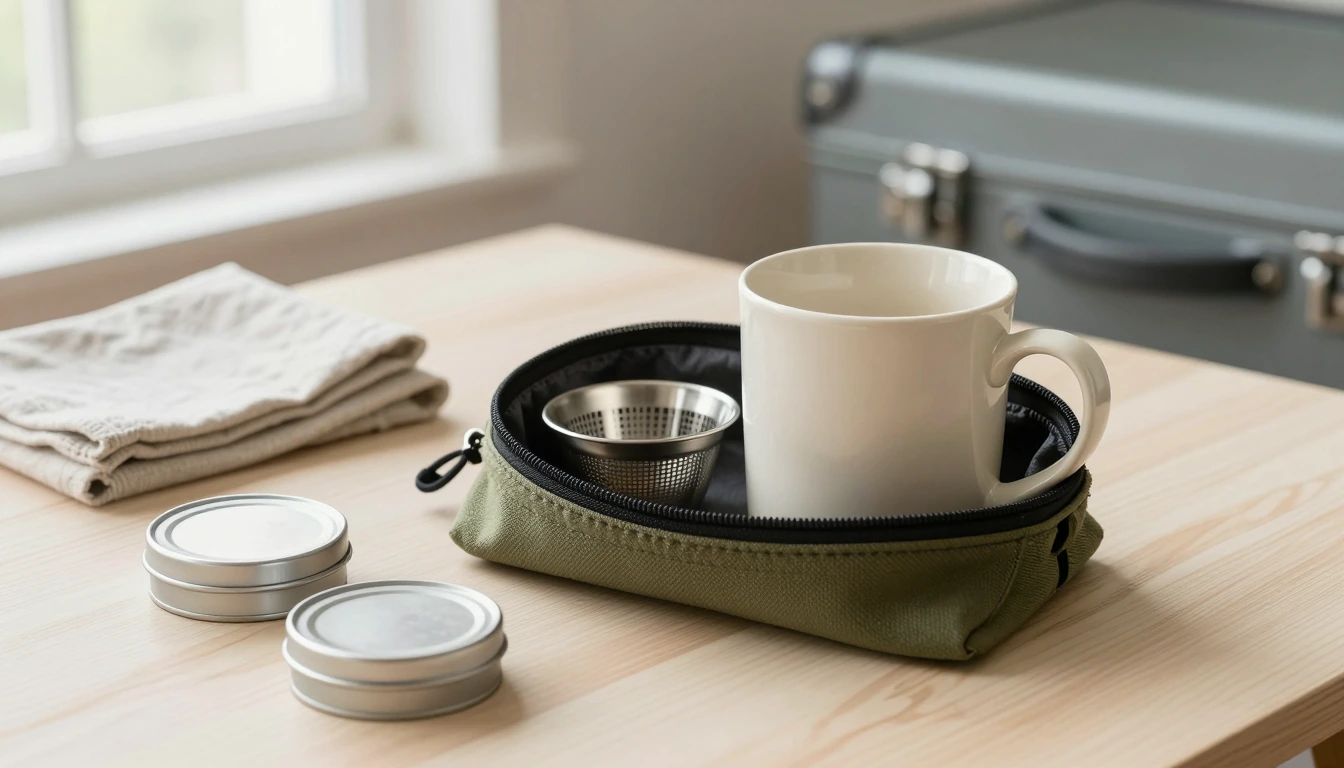
For most trips, pack tea, a mug-sized removable infuser, a cup and a small drying cloth. Add an insulated bottle if you need to carry brewed tea. Before choosing a travel set, decide where the hot water comes from, where the leaves go after brewing and how you will wash and dry the parts.
Pick a brewing situation before a bag
A travel tea kit should solve one actual situation: a hotel breakfast, an afternoon at an office or a seated session with a friend. Those need different equipment. A beautiful nesting set does little for a train journey if you have nowhere to put the hot lid and wet leaves. A single mug and basket can do more when counter space is limited.
Start with three questions. Will you have a clean mug? Can you get water at a useful temperature? Is there a sink where the parts can dry? If any answer is uncertain, bring less equipment and choose tea that works with the conditions you can provide. For the tea itself, begin with a familiar leaf and the producer’s instructions rather than using a trip to troubleshoot an unfamiliar style.
Our beginner tea guide can help narrow the choice by flavor. The gaiwan, teapot and kyusu comparison explains the different brewing workflows if you are deciding whether a second vessel earns its space.
Get the tea newsletter
New tea rooms, brewing notes, and tea worth trying. Free, no spam.
No fixed schedule. Unsubscribe anytime.
Three kits, with a job for every piece
| Trip situation | Core equipment | What to leave home |
|---|---|---|
| Desk or hotel mug brewing | Removable basket, tea portions, small cloth; mug if unavailable | Extra cups and a large draining tray |
| Carrying a ready drink | Suitable insulated bottle; brew and strain before leaving | Loose leaf in a bottle not designed for it |
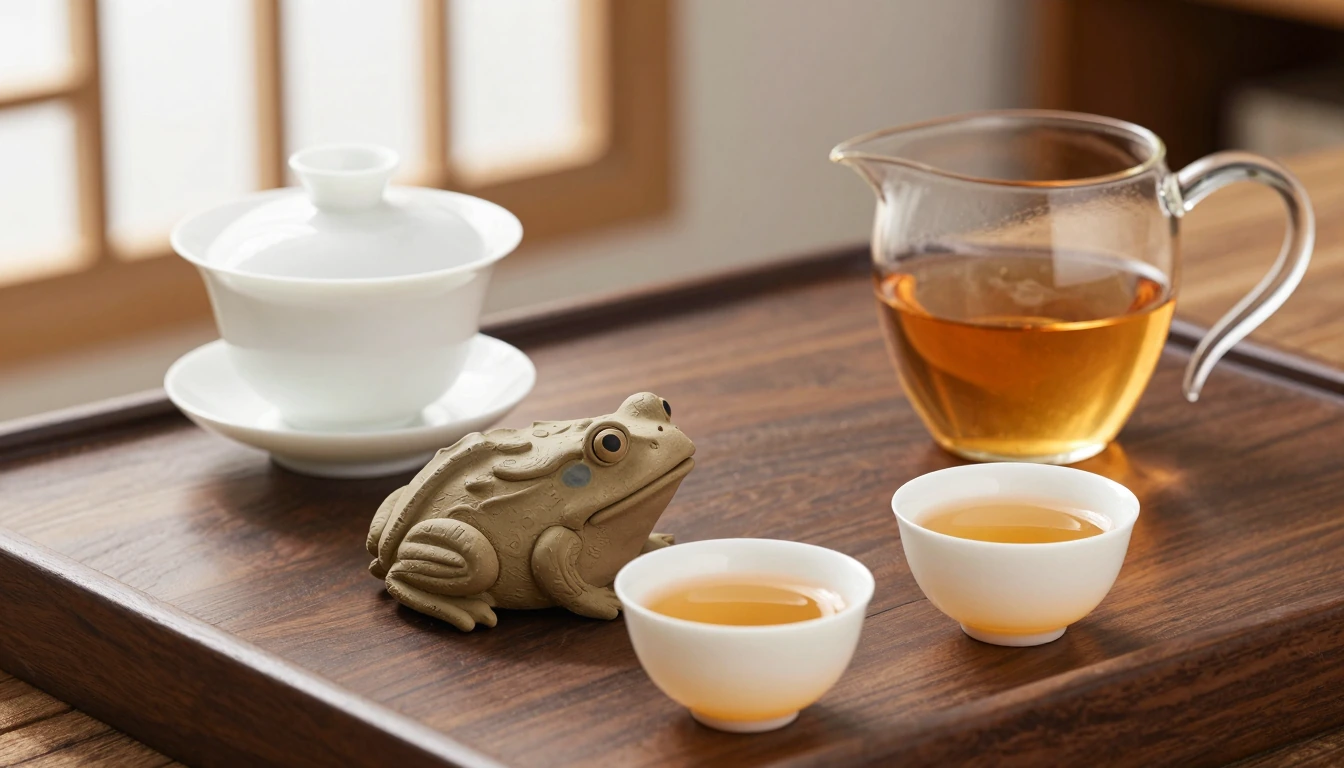
| Seated tea session | Small pot or gaiwan, one or two cups, towel, protective pouch | Decorative accessories and duplicate serving vessels |
These are editorial packing templates, not recommendations that a particular branded item is the best. Try each arrangement at home on a surface as small as the one you expect to use away. Pack it again while the equipment is clean and dry. The awkward step in that rehearsal is the one to simplify before departure.
Count lids and removable seals as real parts of the kit. A system with fewer objects is only simpler if you can use and clean every one of them. A basket that will not fit the destination mug is a greater inconvenience than carrying a plain mug you already know.
Brewing and carrying are different jobs
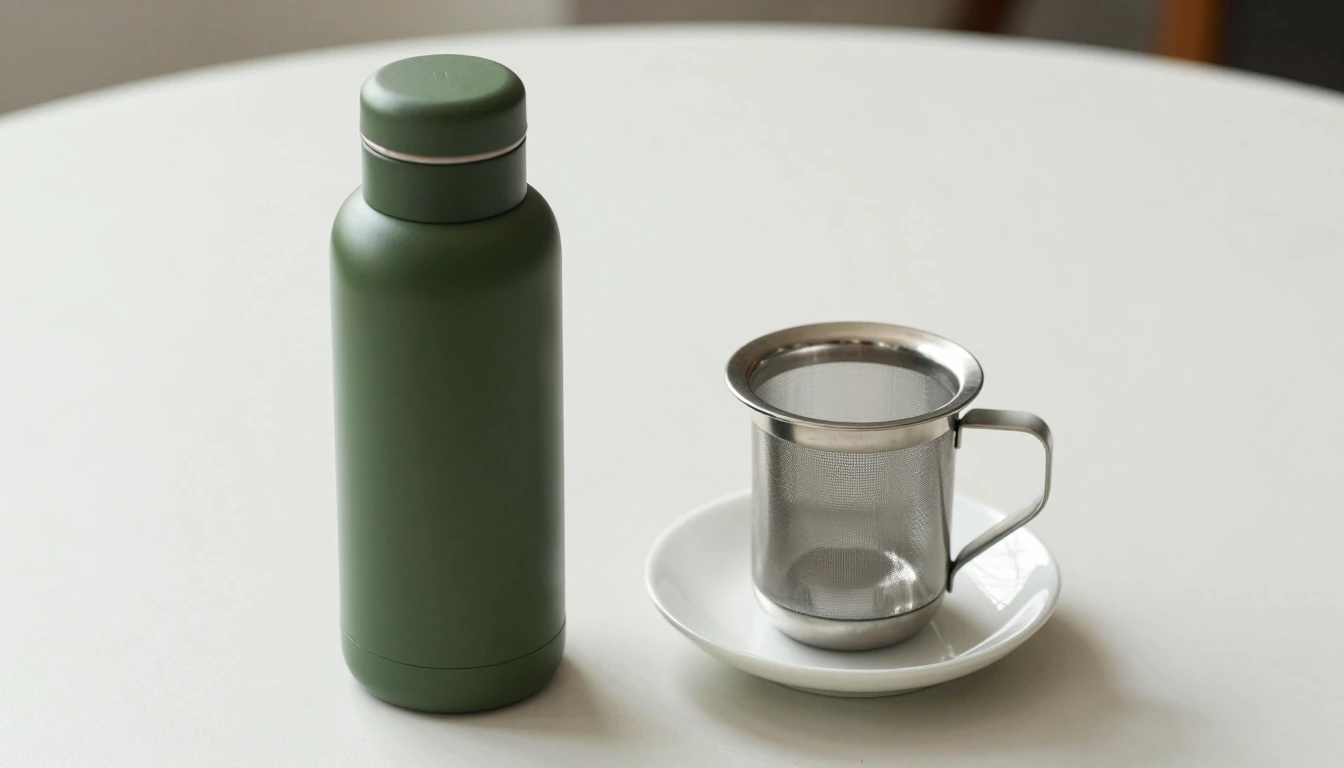
An insulated bottle may carry finished tea without providing a way to stop the infusion. If you want a timed brew, use a removable basket or a separate pot, then strain into the bottle. That arrangement lets you change the brewing time without changing how long you carry the drink.
Read the exact model’s instructions. Zojirushi’s general My Bottle guidance warns that loose leaves can cause clogging or leakage. The company also makes a specific mug with a tea-leaf filter intended for brewing inside it. Both statements can be true: the model determines the intended use. Do not assume a lid that catches ice is also a leaf infuser, or that another model’s filter fits your bottle.
A filter at the drinking opening does not necessarily remove the leaf from the water between sips. Check the mechanism, not the product category name. For a familiar timed infusion, our grams-per-cup guide provides a starting framework; use your own tea’s recommendation for the final dose and timing.
A bottle’s cool exterior also tells you little about the temperature of the drink. KINTO explicitly cautions users about hot contents even when the exterior feels cool. Pour a small amount into a cup when that gives you more control; keep the brewing and drinking arrangement stable rather than balancing equipment on your lap.
Pack tea in useful portions
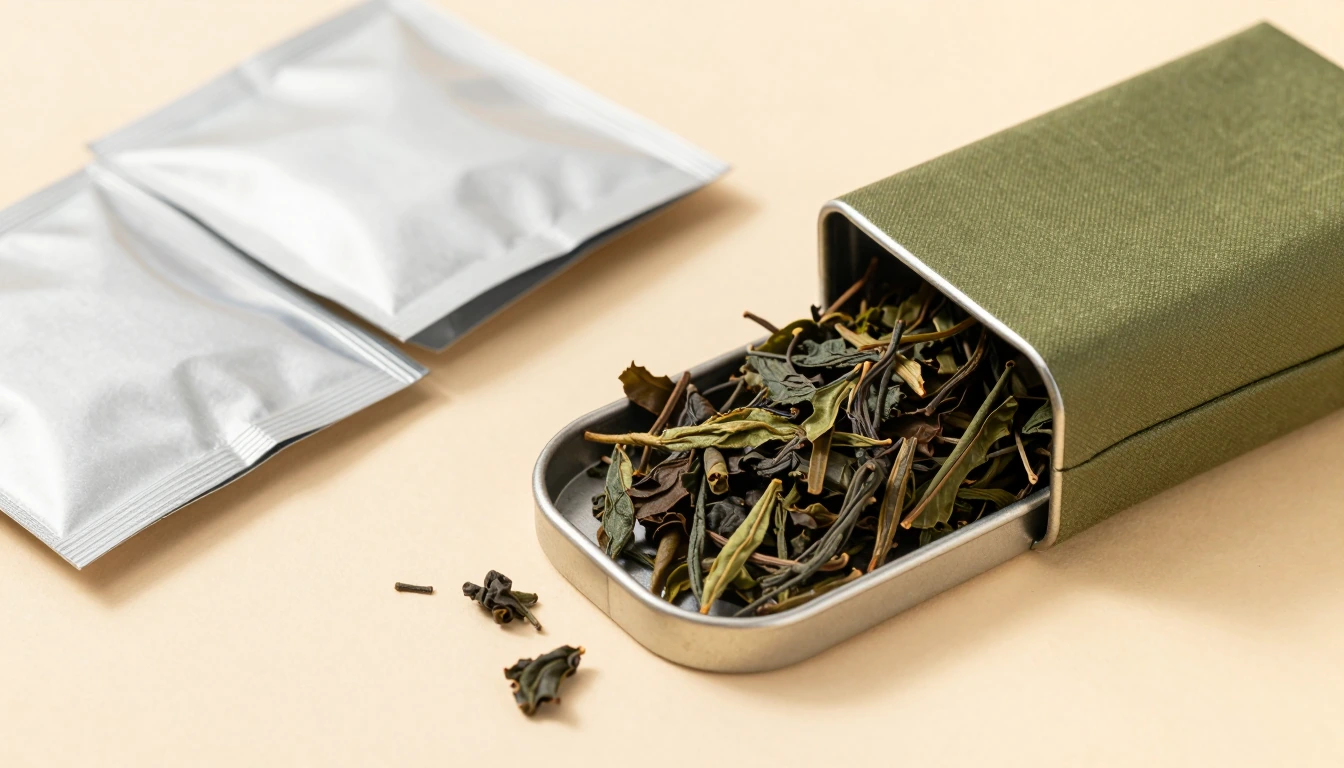
Ippodo’s storage FAQ recommends keeping dry tea away from sunlight, heat, humidity and strong smells. Room temperature is acceptable. For travel, our practical application is a tightly closed original bag or small suitable food container, kept separate from toiletries and damp equipment. A decorative open tin does not serve that job.
Use the original labeled packet when you can. For a short trip, divide only what you expect to brew rather than opening the whole supply each day. As an editorial planning example, a four-day trip with one 3 g session per day needs 12 g; adding one spare portion brings that to 15 g. The arithmetic is a packing estimate, not a dose recommendation for every tea. Larger mugs or a different method change it.
Write tea name and your normal dose on the outside of each portion. Include the producer’s temperature and time if you do not know them. Keep scented blends separate from plain leaf so an opened pouch does not become a mixture of every aroma in the bag. For a longer stay, our tea-storage guide covers the decisions that a short travel pouch does not replace.
Do not put a wet infuser back beside dry leaf. Give the infuser a separate washable container for the journey back to a sink, then clean and dry it as soon as practical. The container organizes the kit; it does not make wet equipment ready for indefinite storage.
Build the hot-water plan
A hotel room kettle, shared office boiler and café water service are different resources. Check what is available rather than assuming a reservation includes a kettle or a particular water temperature. Ask before using shared equipment, and keep tea leaves out of a water-only kettle. Brew in your own cup or pot.
Choose tea whose instructions you can follow with that setup. If the water source offers no temperature control, a method requiring precise cooler water adds another step and another vessel. You can bring a suitable thermometer, choose a simpler tea for this trip or use a familiar cooling routine; none is mandatory. Our water-for-tea guide is useful when the water itself seems to be the variable.
Do not pack an electrical travel kettle on appearance alone. If you decide you need one, verify its own power and use instructions against the destination before buying it. Often the easier answer is to ask the accommodation what it provides and carry only the brewing pieces. Airline, security and border requirements are separate from this packing guide; check the current official rules for your route.
Protect the pieces that matter
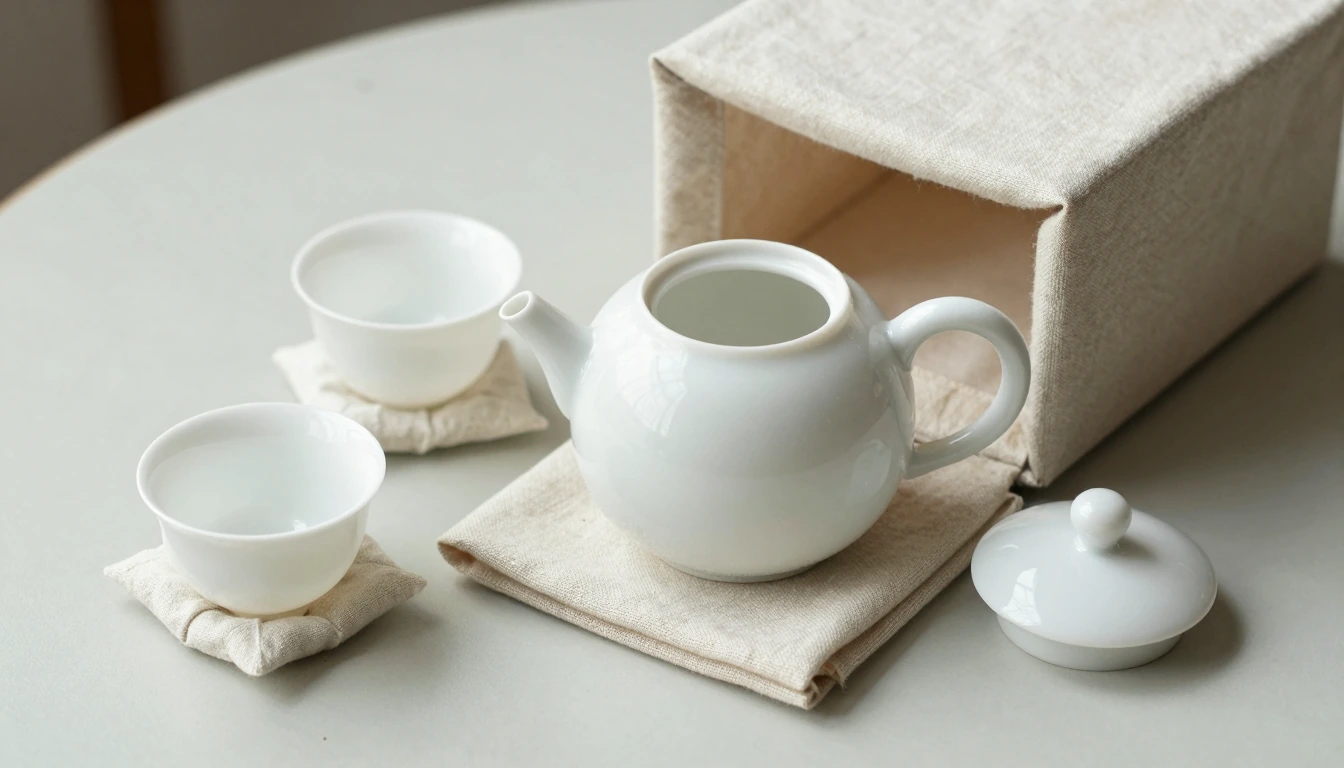
For a small pot or gaiwan, cushion each ceramic piece so that lid and body do not strike one another. A towel can double as table protection, but test the packed arrangement gently before travel. Do not depend on a tight nesting fit as proof that a set can withstand luggage handling. If breakage would spoil the trip, choose a less fragile workflow.
Distinguish a heat-safe serving vessel from a carrying bottle. HARIO’s Cold Brew Tea Carafe is described as borosilicate glass with a silicone filter and stopper, suitable for hot water and a dishwasher. Those material and care statements do not establish that it is the right vessel to roll around in a bag. For this packing plan, treat a glass table carafe as table equipment unless its own instructions establish the carrying use you need.
For an insulated bottle, fit the correct seals and close it as directed before carrying. KINTO’s Travel Tumbler instructions call for secure closure, correctly attached rings and upright carrying. Use its model-specific precautions rather than a generic claim that every screw-top vessel is leakproof in every position.
Cleaning is part of the return trip
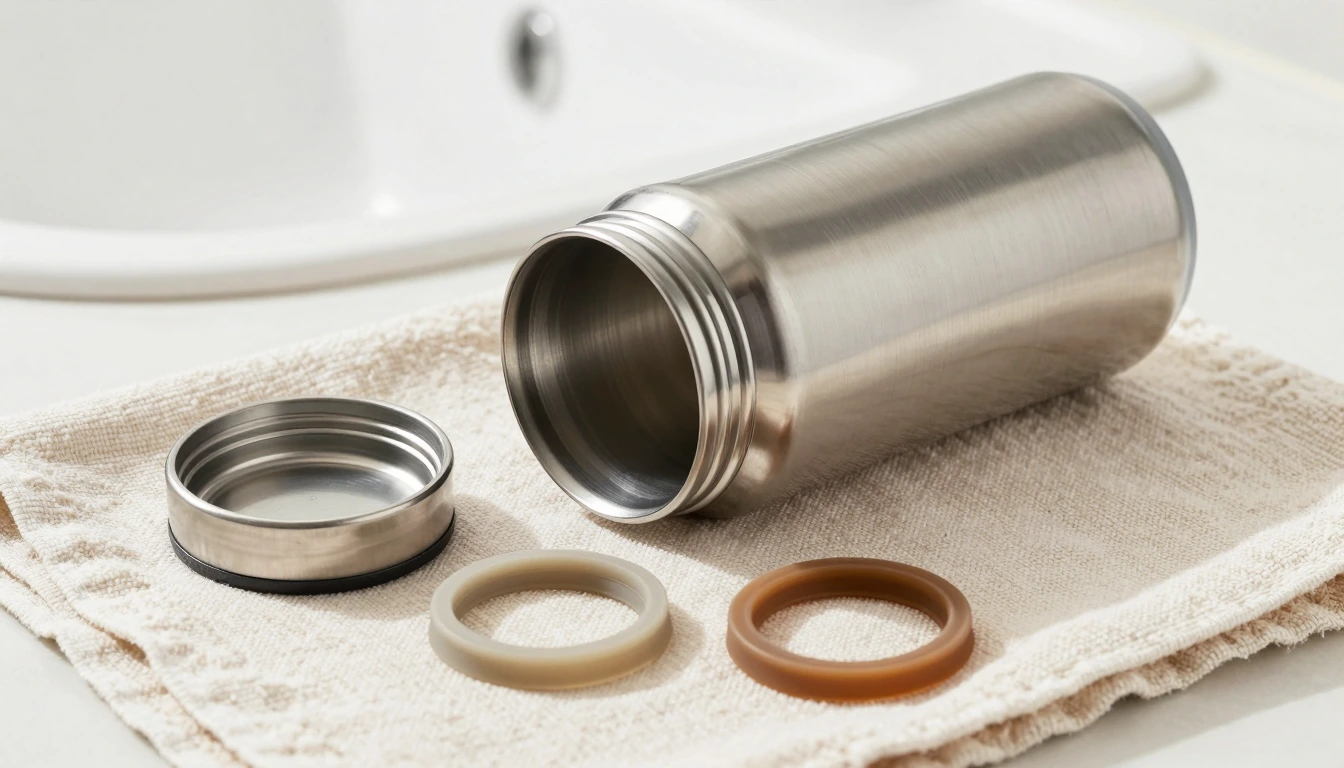
Rinse promptly, empty the leaves and wash the parts according to the maker’s directions. Zojirushi’s care guidance illustrates taking the stopper and gaskets apart, washing and drying them. Pack a small soft cloth and allow room for washed parts to dry outside the pouch. If you cannot clean a multi-part brewer during the trip, that is a reason to simplify the kit.
Do not transfer cleaning instructions across models. KINTO’s cited Travel Tumbler page prohibits dishwasher use, while the cited HARIO carafe page permits it. Similarly, replace a worn seal with the correct part: KINTO’s parts guide distinguishes Type A and Type B Travel Tumbler components and says the two ring types are not interchangeable. A similar-looking ring is not evidence of compatibility.
Before leaving home, do one complete rehearsal: pack the dry kit, make a cup, remove the leaves, clean the equipment and pack it again only after drying. Check that the pouch still closes without pressing on the lid or cup. After the trip, note which item went unused and which step was awkward. The next kit can be smaller because you have a real journey to learn from, rather than another product list to buy.