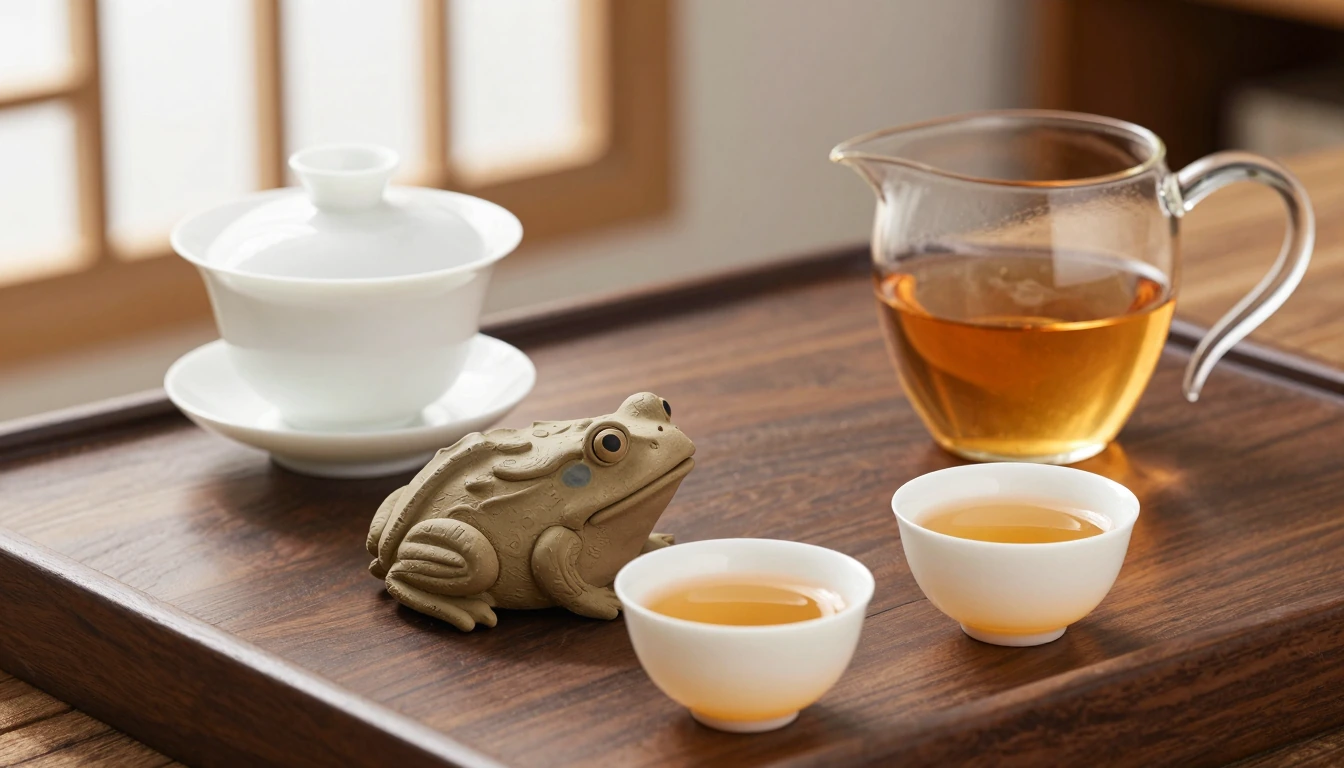
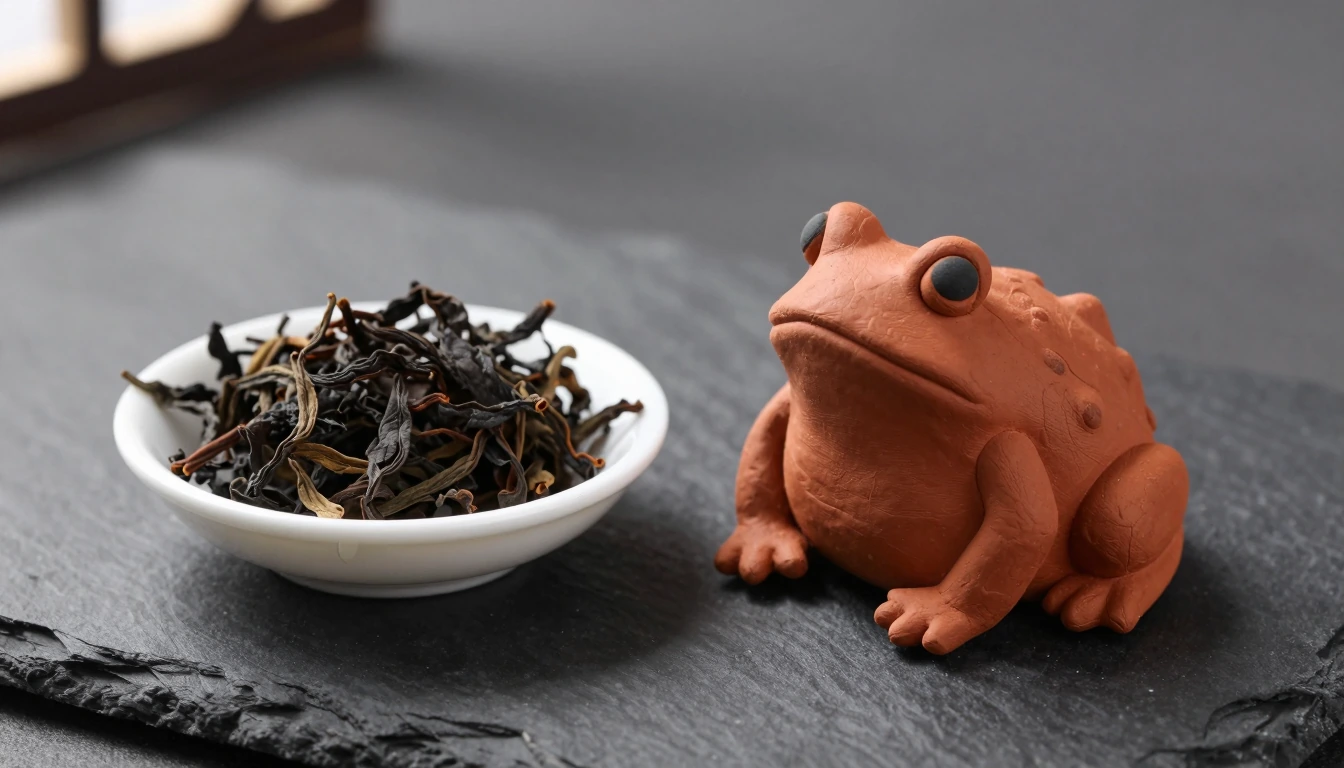
A tea pet is a small figure that sits among the brewing tools. It might be a frog, a fruit, a reclining animal or something entirely personal. The appeal is easy to understand: it gives an otherwise practical collection of cups and pots a little character.
Start with the brewing problem, then choose the accessory that solves it. If tea keeps steeping while you pass cups around, look at a server. If rinse water lands on the table, choose a waste bowl or a draining tray. If everything already works and you simply like a clay frog, that is a perfectly clear reason to buy the frog.
This guide treats the arrangement below as an editorial starting point, rather than a prescribed ceremony. Products are examples of how makers describe their own equipment; their dimensions and care directions do not apply to every similar-looking object.
Start with the brewing vessel and cup
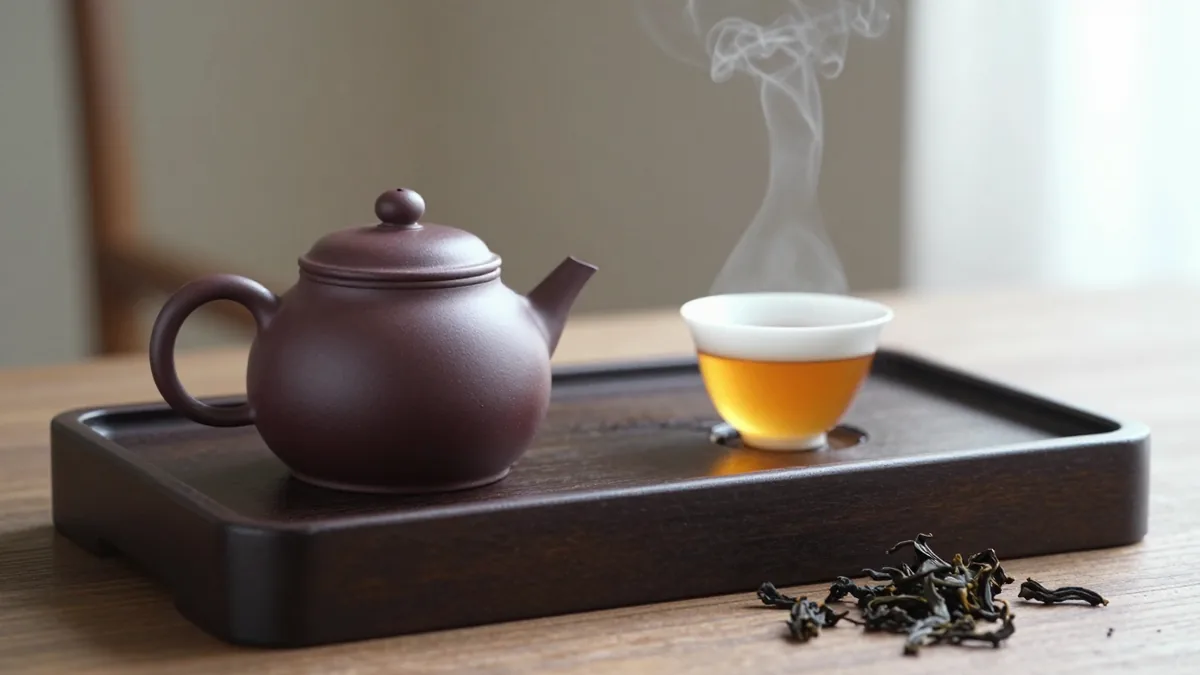
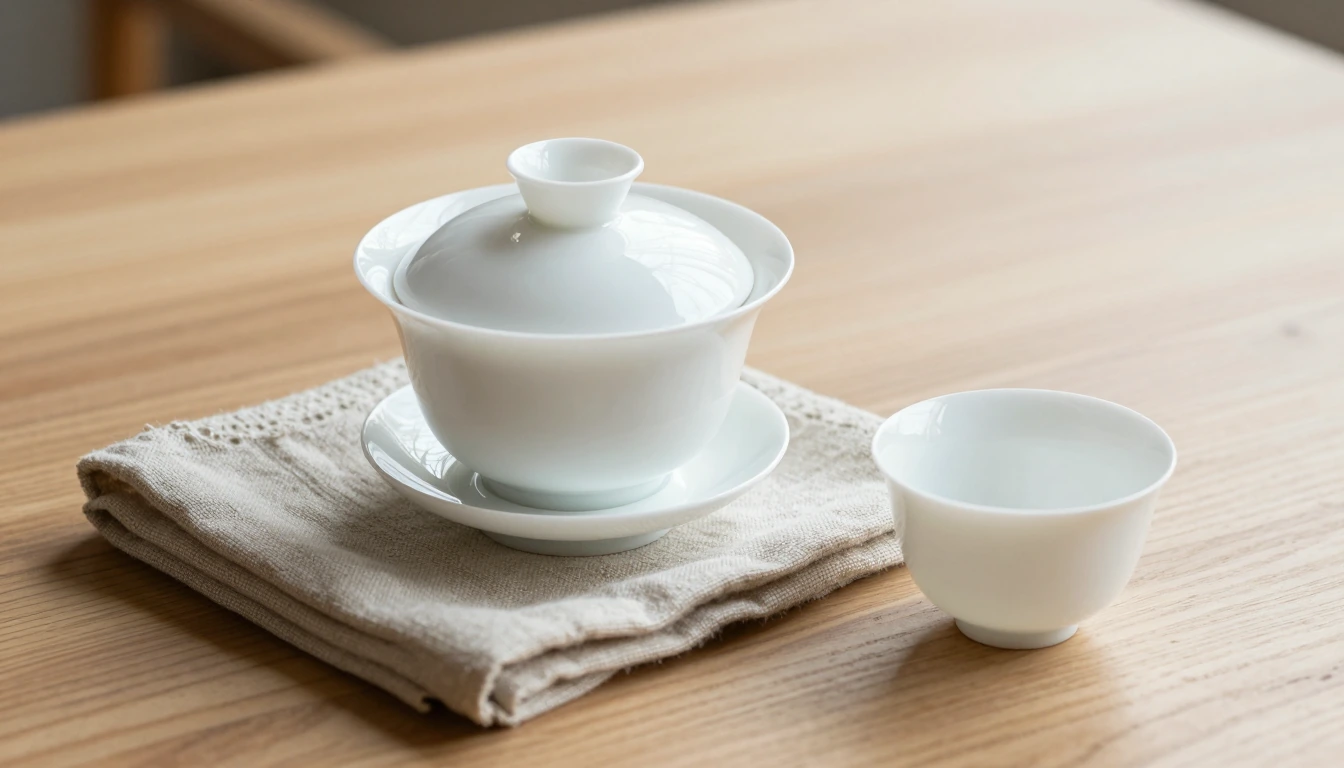
For a first arrangement, put a gaiwan or small teapot, one drinking cup and a folded towel on the table. Add a separate bowl for any water you discard. Keep the kettle where its cord and spout will not cross the path of the drinking cup. Sit down before filling anything and check that each object is easy to reach.
Red Blossom's gongfu guide describes a simplified solo version that decants straight into the drinking cup. Its dry-brewing variation directs discarded water into a bowl instead of relying on a draining tray. These are useful reminders that a large fitted set is only one way to organize the process.
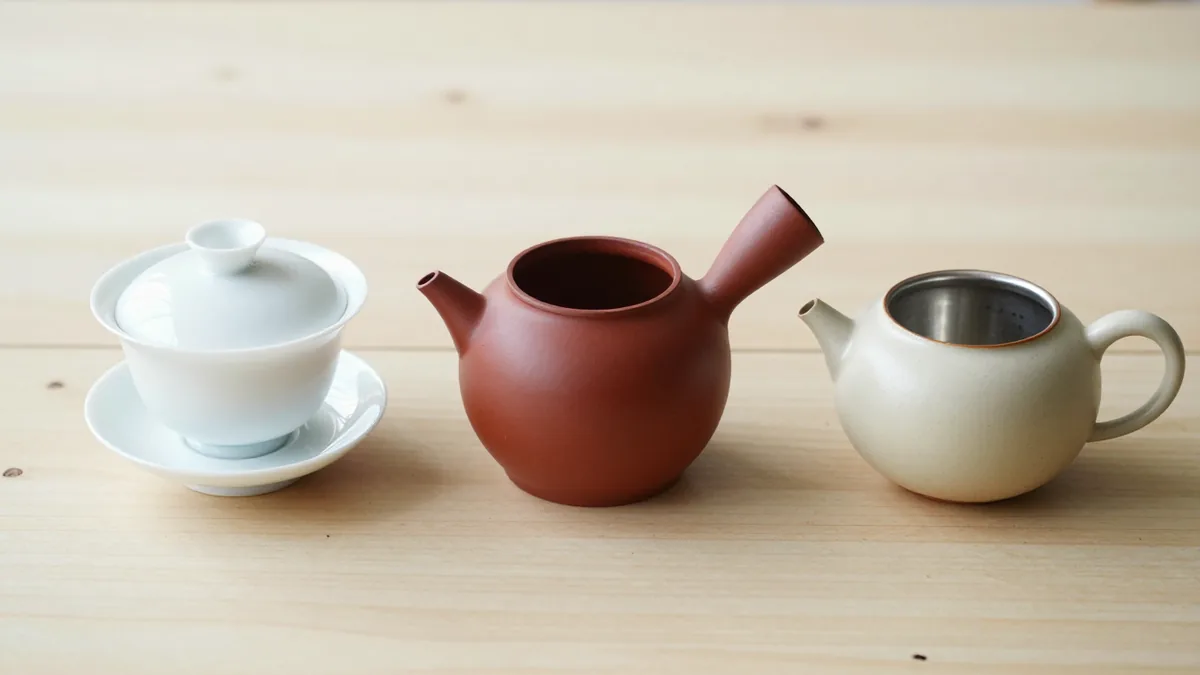
Our gaiwan, teapot and kyusu comparison helps with the first vessel. Try the simple arrangement for a few sessions. Write down the moment that feels awkward: reaching over a hot vessel, finding nowhere to rest the lid, or carrying waste water through a crowded room. That observation gives the next purchase a job. Our gongfu brewing guide covers the leaf, water and timing decisions; the equipment here should help you repeat those decisions comfortably.
Get the tea newsletter
New tea rooms, brewing notes, and tea worth trying. Free, no spam.
No fixed schedule. Unsubscribe anytime.
What each accessory actually does
| Accessory | The question it answers | What to check before buying |
|---|---|---|
| Server or fairness pitcher | Where will the full infusion go before I divide it? | Useful capacity, comfortable grip, clear pour |
| Waste-water bowl | Where will rinse water and discarded tea go? | Stable base and enough room for your session |
| Draining tray | How will I contain water around the brewing vessel? | Reservoir access, table fit and care instructions |
| Leaf dish or scoop | How will I show and transfer the dry leaf? | Opening wide enough for your leaf and vessel |
| Strainer | Do small leaf fragments bother me in the cup? | Fit over the server and a place to rest afterward |
| Tea pet | What object would I enjoy seeing at the table? | Material, maker instructions and a modest footprint |
The order in the table is a way to think through the workflow, not a shopping list. You may already have a bowl that works. A small saucer may give the gaiwan lid a perfectly good resting place. Compare your arrangement before and after adding a piece.
Choose the server by the pour, not the label
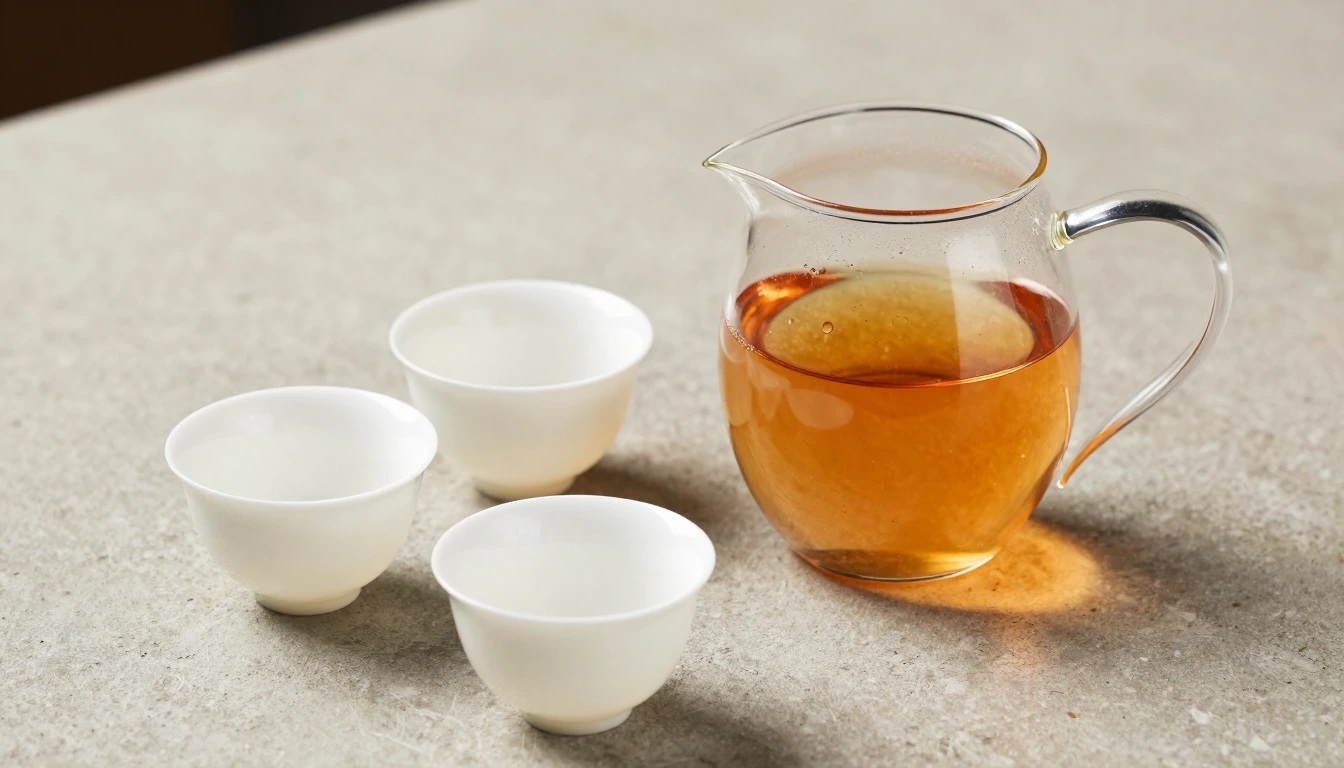
A server is useful when you want to empty the brewing vessel completely and then divide that infusion. It also gives you a visible place to judge how much liquid is available for the cups. You do not need to fill a pitcher simply because it has room.
Manufacturer capacity needs careful reading. Red Blossom's Modern Glass Server is listed in 350 ml and 500 ml sizes, with the explicit qualification that its measurements are taken to the brim. The amount you can carry and pour comfortably will be lower. That distinction matters more than whether a listing calls a vessel a server, fair cup or fairness pitcher.
As an editorial planning example, a 100 ml brewing vessel and three 30 ml cups suggest a modest server, not a huge decanter. Leave space above the actual infusion. Before brewing, use cool water to rehearse a full decant and a round of pours. Does the handle feel secure? Can the spout reach each cup without the body knocking into another piece?
Global Tea Hut's discussion of gongfu tools describes both pitcher service and direct pouring between cups. When comparing results, use the same tea and cups and change one part of the process at a time; our tea-tasting guide explains how to make useful notes.
Pick a tray that you can empty easily
A tray should fit the space where you will actually brew. Measure the table with the kettle and cups in place, then allow room for your forearms. A large tray that consumes the whole table can be less convenient than a small brewing area and a separate waste bowl.
Think about the end of the session before the beginning. Can you remove the reservoir without lifting a slippery stack of teaware? Is there a clear route to the sink? Will the tray fit where you intend to dry it? If the answer requires moving several objects while they are full, simplify the layout.
Care depends on construction. Mei Leaf's Gong Fu Code instructions call for cleaning and drying its bamboo tray, insert and water catcher after each session, and warn against abrasive cleaners and dishwashers for that model. This is evidence to read the actual manufacturer's directions, rather than apply a rule for plain porcelain to wood, coatings or metal.
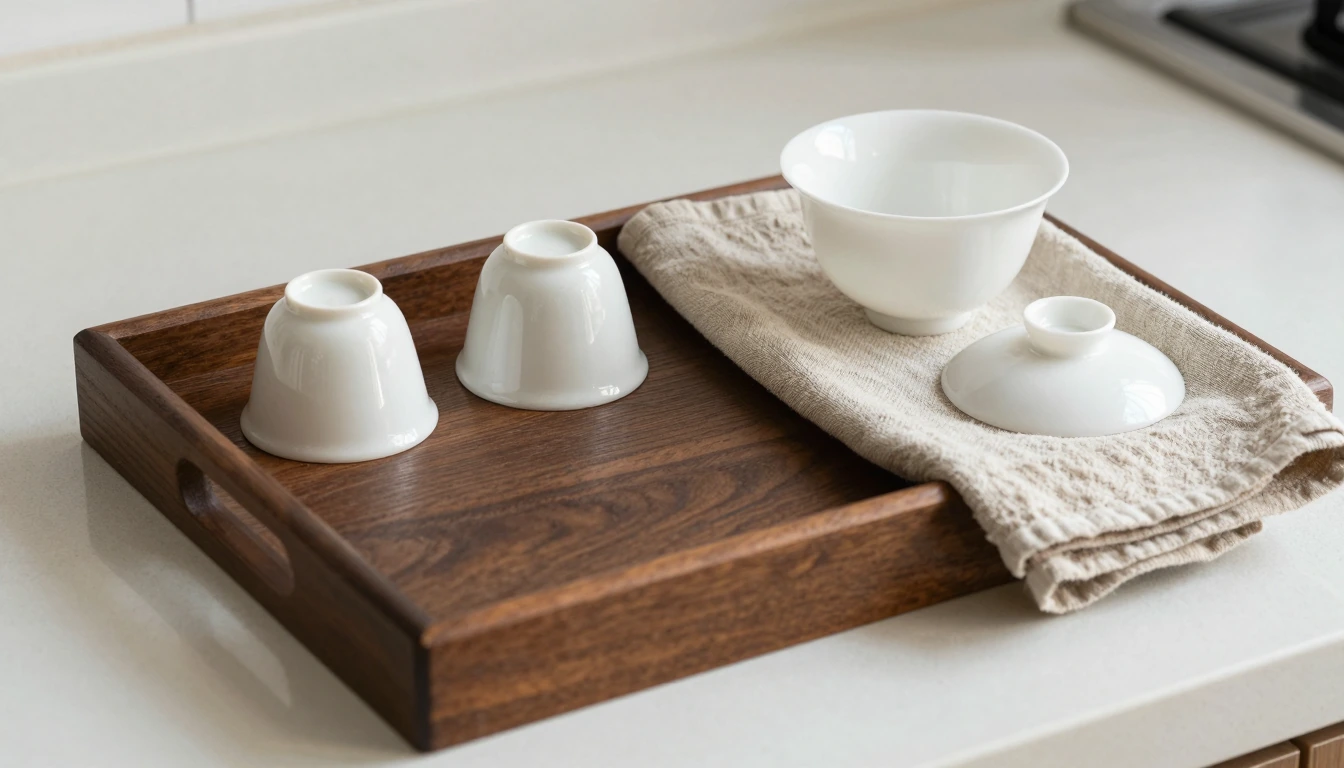
For a first trial, a plain waste bowl beside the brewing vessel avoids committing to a particular reservoir design. Count how often you empty it during your usual session. That practical observation is more useful than choosing a tray solely because its product photographs look impressive.
A leaf dish earns its place when you use it
A leaf dish lets guests look at dry tea before it enters the brewing vessel. It can also make it easier to transfer long, brittle leaves without pinching them. Red Blossom describes its White Tea Dish as a presentation vessel with a curved opening for sliding leaf toward the pot.
Try the same job with a clean shallow dish you already own. Check that it pours where you want the leaves to go, rather than scattering them across the tray. A dedicated scoop may be a better fit if your main frustration is reaching into narrow tea containers. Neither object measures grams: use a scale when you want to repeat a recipe, as explained in our tea dose guide.
Keep the leaf dish dry until you finish transferring the tea; damp leaves are harder to recover. Store it with the dry-tea tools afterward.
Tea pets: material and size before symbolism
There is no single material hidden behind the name. Mei Leaf's Duckling Tea Pet is described as color-changing resin. Teawala's Persimmon Tea Pet is described as clay, handmade in Yixing, and measures only 2.5 cm wide by 2.2 cm high. Bitterleaf's Chilling Beasts are handmade animal figures that also provide a resting place for small tea tools. Those examples are enough to show why appearance alone cannot tell you the material or intended use.
Ask the seller three concrete questions: what is it made from, may hot tea be poured over it, and how should it be cleaned? Keep the answers with the order details. Do not assume a decorative figurine is intended for repeated hot-water contact, and do not transfer instructions for one finish to another.
Choose a figure that fits an unused corner, away from the grip of the brewing vessel and the route between pitcher and cups. If you enjoy pouring a little discarded tea over a suitable pet, place it where the liquid is contained. There is no need to divert drinkable tea simply to imitate a photograph.
Treat stories about luck or symbolism as stories associated with a particular maker or tradition, not promised results. You can choose a frog because you like frogs. For questions about unglazed brewing vessels, read our separate Yixing teapot guide; a decorative object and a pot that brews tea have different jobs.
A ten-minute setup check before guests arrive
Set out the empty equipment, then rehearse the movements with cool water. Start at the kettle, fill the brewing vessel, decant into the server and divide the liquid between the cups. Put the lid down where you intend it to rest. Finally, empty the waste bowl or tray. If a handle catches on another object, rearrange it now.
For two guests, our suggested arrangement is one brewing vessel, a server, three cups, a waste bowl, a towel and an optional small pet. Keep spare tools off the main surface. Add a strainer only if you want one after trying the tea; do not let an unused accessory obstruct the pour.
Afterward, follow each maker's cleaning directions, empty the water containers and let the pieces dry separately before storage. Check corners and inserts rather than assuming the visible top is the entire tray. The best arrangement is the one you can set out, use and put away without a puzzle.
Questions before you buy
Do I need a tea pet for gongfu brewing? No. It is an optional object for the table. Start with the vessel, cup and somewhere for discarded water.
Is a fairness pitcher always necessary? A server makes shared service easier to organize, while direct pouring is another established approach. Try the workflow before buying a large pitcher.
Can I use one cleaning method for the whole set? Read the directions for each material and finish. A coated tray, a clay figure and a glazed cup may have different instructions.
What should I upgrade first? Upgrade the part that repeatedly gets in your way. A dependable pour, a manageable waste-water container and enough space around hot vessels are useful reasons; a matching collection is a matter of taste.
Source pages were reviewed on October 26, 2026. The layout and purchase order are editorial suggestions. Generated illustrations show arrangements and materials; they are not photographs of the named products.