Gongfu brewing uses a 100–150 ml gaiwan, 3–6.7 g of leaf per 100 ml, and water from 80°C for green tea up to 99–100°C for oolong and puer. First steeps run 5–25 seconds and each later steep adds 3–10 seconds. A 120 ml gaiwan at 6 g per 100 ml takes 7.2 g of leaf and gives 5 to 20 infusions depending on the tea.
Gongfu brewing means a lot of leaf, a little water, and many short steeps from the same leaves. The name means "making tea with skill", and the method grew out of tea habits in Fujian and the Chaoshan area of Guangdong.
This guide gives you the gear, the ratios, a timings table for seven tea types, and the points where the major vendor guides disagree. Use it as a starting schedule, then adjust one variable at a time.
What gongfu changes compared with a mug
Western brewing uses little leaf and one long steep. Gongfu flips both. Mei Leaf's brewing chart is a clean example: for raw puer it lists 0.9 g per 100 ml with a 120-second first steep for Western brewing, against 5 g per 100 ml and a 10-second first steep for gongfu.
That is about 5.6 times more leaf per ml and a first steep 12 times shorter. Mei Leaf expects 6 Western infusions from raw puer and 15 gongfu infusions.
The payoff is control. Each steep is short enough that you can taste how the tea changes from round to round and correct the next one.
Get brewing and teaware notes
Steep times, water temperatures, leaf ratios, and teaware that is worth buying. Free, no spam.
No fixed schedule. Unsubscribe anytime.
The gear: gaiwan, fair pitcher, cups
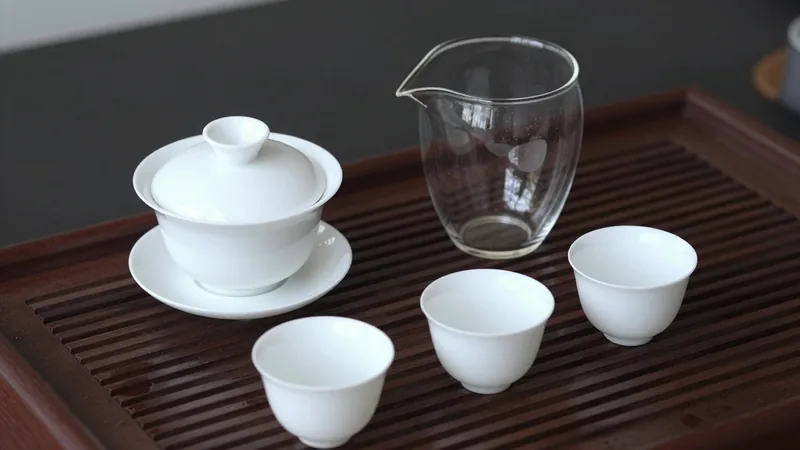
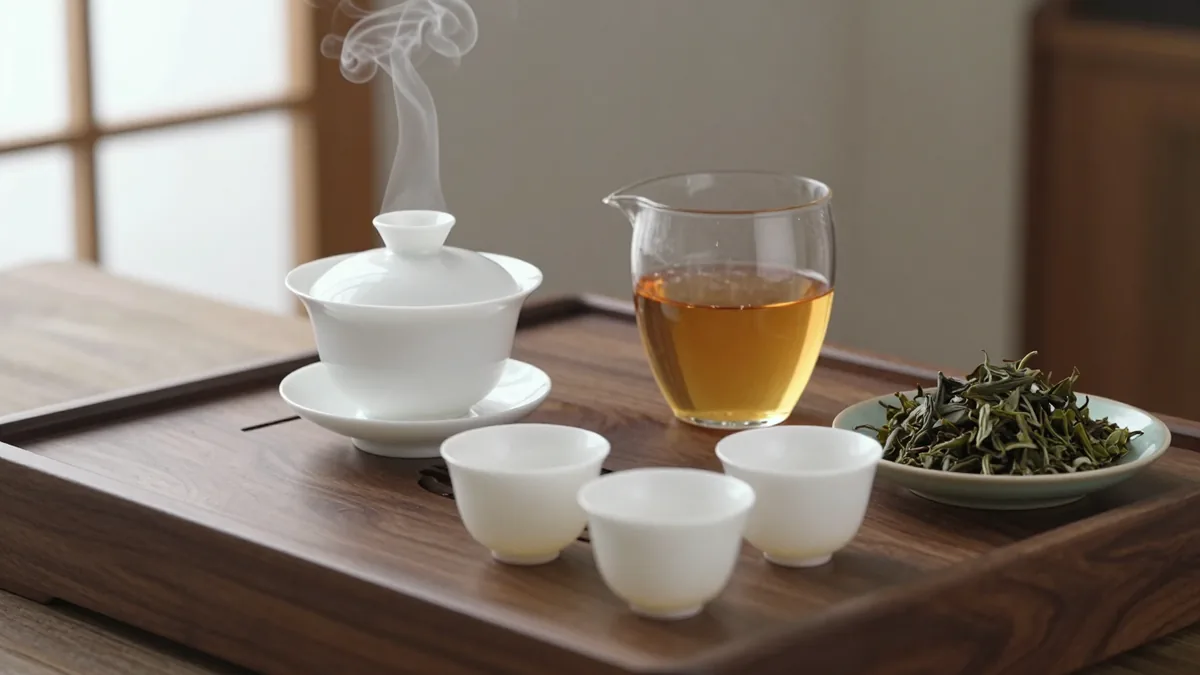
Gaiwan. A lidded bowl on a saucer. Most gaiwans sold for gongfu hold 100–150 ml, and Valley of Tea recommends 120 ml as the size most brewing ratios are written for. Smith Tea's gaiwan guide uses a 150 ml gaiwan. Above 200 ml, steep times get hard to control because pouring takes longer.
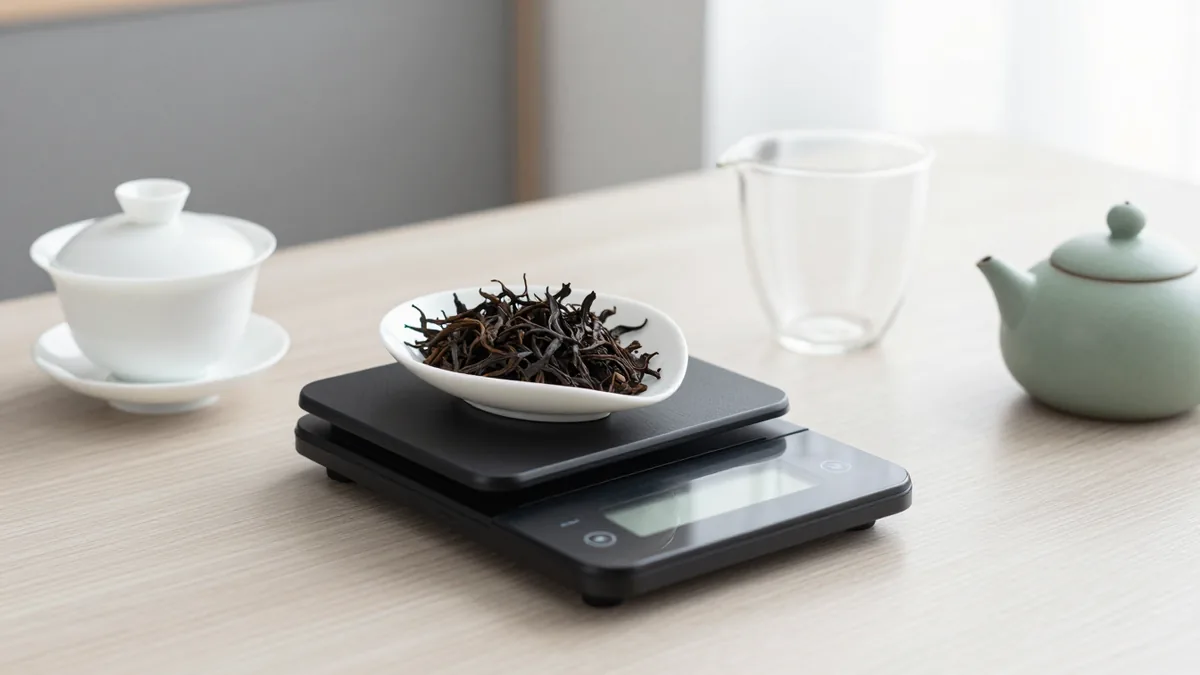
Measure your own gaiwan. Fill it with water to just under the lid line and weigh it on a kitchen scale. Vendors measure to the brim, and Yunnan Sourcing lists its 100 ml white porcelain gaiwan as "100ml measured to the brim of the bowl (+/- 5ml)".
How to hold it. Put your thumb and middle finger on the rim of the bowl's flared lip and your index finger on the lid knob, per Valley of Tea. The rim stays cooler than the bowl walls. Tilt the lid to leave a small gap, then pour in one decisive motion.
Fair pitcher (gong dao bei, also called cha hai). A small jug you empty the gaiwan into. It stops the steep at a known second and mixes the weak first pour with the strong last pour, so every cup tastes the same (Wikipedia: Gongfu tea).
Cups and a scale. Two to four small cups, and a scale that reads to 0.1 g. A gaiwan dose is 4–10 g, so a 1 g error is 10–25% of the dose.
Leaf ratios: where the vendor guides disagree
The vendors agree on short steeps and hot water. They disagree on how much leaf to use, by more than 2 to 1.
| Source | Tea | Stated dose | Grams per 100 ml |
|---|---|---|---|
| Mei Leaf | Green | 3–3.5 g per 100 ml | 3.0–3.5 |
| Mei Leaf | Rolled (ball) oolong | 6–6.5 g per 100 ml | 6.0–6.5 |
| Yunnan Sourcing | Oolong | 4–5 g per 100 ml | 4.0–5.0 |
| Yunnan Sourcing | Puer | 6 g per 100 ml | 6.0 |
| white2tea | Puer | 1 g per 15 ml | 6.7 |
| Eco-Cha | Unroasted Taiwan oolong | 10 g per 150 ml | 6.7 |
| Eco-Cha | Roasted Taiwan oolong | 8 g per 150 ml | 5.3 |
| Smith Tea | General gaiwan | 7 g per 150 ml | 4.7 |
| Hence Tea | Dancong oolong | 7–8 g in 100–150 ml | 4.7–8.0 |
Two patterns hold across sources. Rolled oolongs get more leaf than strip-style teas, because tight balls take up little room dry and open slowly. And Eco-Cha cuts the dose for roasted oolong: "the more roasted the leaves are, the less leaves needed."
Here is what the common ratios mean for three gaiwan sizes:
| Gaiwan | 4 g / 100 ml | 5 g / 100 ml | 6 g / 100 ml | 6.7 g / 100 ml |
|---|---|---|---|---|
| 100 ml | 4.0 g | 5.0 g | 6.0 g | 6.7 g |
| 120 ml | 4.8 g | 6.0 g | 7.2 g | 8.0 g |
| 150 ml | 6.0 g | 7.5 g | 9.0 g | 10.0 g |
The 120 ml row at 6.7 g matches white2tea's own worked figure of 8 g for a 120 ml gaiwan, and the 150 ml row matches Eco-Cha's 10 g. If you are new to a tea, start in the 5 g column and move up only if the cups taste thin.
Gongfu timings by tea type
This table puts Mei Leaf's chart next to other vendor guides. Where two sources differ, both values are shown.
| Tea type | Leaf per 100 ml | Water | First steep | Add per steep | Typical steeps |
|---|---|---|---|---|---|
| Green | 3–3.5 g (ML); 5–6 g (YS) | 80°C (ML); ~85°C (YS) | 15 s (ML); 10 s (YS) | +3 s (ML) | 5 (ML) |
| White | 3.5–4 g (ML); 5–6 g (YS) | 85°C (ML, YS) | 20 s (ML) | +10 s (ML) | 5 (ML) |
| Rolled oolong (ball) | 6–6.5 g (ML); 6.7 g (ECO) | 99°C (ML); 100°C (ECO) | 25 s (ML); 50 s (ECO) | +5 s (ML); +10–15 s (ECO) | 9 (ML); 5–8 (ECO) |
| Strip / roasted Wuyi oolong | 4.5–5 g (ML); 5.3 g roasted (ECO) | 99°C (ML); 100°C (HT) | 20 s (ML) | +5 s (ML) | 9 (ML) |
| Sheng (raw) puer | 5 g (ML); 6–6.7 g (YS, W2T) | 95°C (ML); 100°C (W2T) | 10 s (ML); 5 s (W2T) | +3 s (ML); +5 s (W2T) | 15 (ML); 10–20 (YS) |
| Shou (ripe) puer | 5 g (ML); 6 g (YS) | 99°C (ML); 95–100°C (YS) | 10 s (ML) | +5 s (ML) | 20 (ML) |
| Black | 4–4.5 g (ML); 5–6 g (YS) | 90–95°C (ML); ~90°C (YS) | 10–15 s (ML) | +5 s (ML) | 8 (ML) |
Sources: ML = Mei Leaf brewing chart; YS = Yunnan Sourcing brewing guide; ECO = Eco-Cha oolong guide; HT = Hence Tea, Da Hong Pao; W2T = white2tea puer guide. Mei Leaf's chart lists the black tea values as 90°C and 4.5 g for small leaf, 95°C and 4 g for large leaf.
The biggest split is Eco-Cha's 50-second first steep for Taiwan oolong against Mei Leaf's 25 seconds. Eco-Cha also uses more leaf, so treat its schedule as a separate, slower style, not a typo. For how far oolongs range from light to roasted, see our oolong oxidation guide.
Worked schedule, rolled oolong (Mei Leaf): 25, 30, 35, 40, 45, 50, 55, 60, 65 seconds. Nine steeps add up to 405 seconds, or 6 minutes 45 seconds of total leaf contact.
Worked schedule, sheng puer (Mei Leaf): start at 10 seconds and add 3 each round. Steep 15 runs 52 seconds, and the session totals 465 seconds, about 7 minutes 45 seconds. For choosing between raw and ripe cakes, see sheng vs shou puer.
One session, step by step
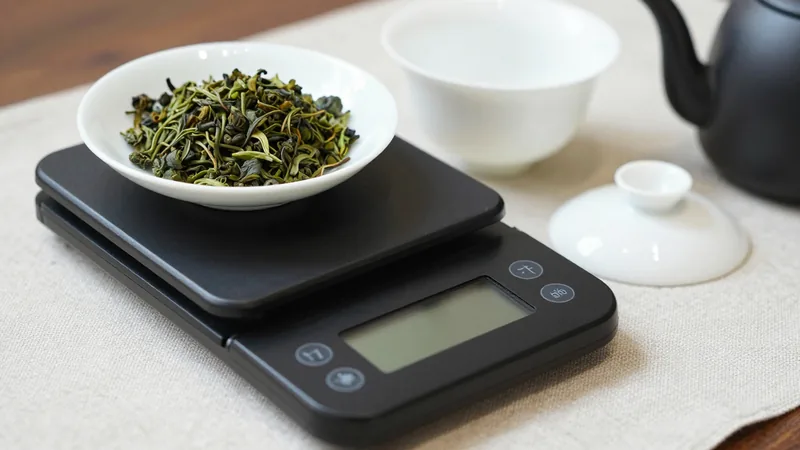
- Heat the water. Boil it, then let it fall to the table temperature for your tea. Green and white teas sit lowest, at 80–85°C per Mei Leaf.
- Preheat everything. Pour hot water into the gaiwan, pitcher and cups, then discard it. Wikipedia's gongfu entry lists warming the pot as the first step. A cold gaiwan pulls heat out of the first steep.
- Weigh the leaf. Gaiwan volume in ml × grams per 100 ml ÷ 100. For 120 ml at 6 g per 100 ml: 120 × 6 ÷ 100 = 7.2 g.
- Rinse if the tea calls for it. Smith Tea rinses for about 5 seconds or less. Yunnan Sourcing uses one 20-second wash for raw puer and two 15-second washes for ripe puer. Discard the rinse.
- Steep and decant. Fill to just under the rim, lid on, start counting. Pour everything into the pitcher at the target second. Leaving liquid in the gaiwan keeps extracting and makes the next steep bitter.
- Serve and repeat. Pour from the pitcher into cups, then add the per-steep increment for the next round.
- Stop when it goes thin. The tea is done when even a long steep tastes like water. Late steeps on many teas run past a minute; Yunnan Sourcing's schedule moves to "maybe a minute each time" after its fifth steep.
Yixing clay basics
Yixing pots are an alternative to a gaiwan, not an upgrade for every tea. They are made from clay dug near Yixing in Jiangsu province, and the best-known clay is zisha, or "purple clay".
The pots are left unglazed, and the clay absorbs trace amounts of tea flavor with each use. For that reason many drinkers steep only one type of tea in a given pot: one for roasted oolong, one for shou puer, and so on.
Practical rules:
- Buy a gaiwan first. Porcelain is neutral, cheap, and lets you smell the lid between steeps.
- Pick one tea type before you buy clay. Roasted oolong and puer are common choices because they suit near-boiling water.
- Never use soap in an unglazed pot. Rinse with hot water and air-dry with the lid off.
Fixing a session that tastes wrong
Change one variable per session, so you know what fixed it.
| Problem | First fix | Second fix |
|---|---|---|
| Bitter or harsh | Cut the steep time by a third | Drop the dose by 1 g |
| Thin or watery | Add 1 g of leaf | Raise the water temperature 5°C |
| Fine for 3 steeps, then flat | Lengthen later steeps faster | Use the higher dose from the ratio table |
| Grassy, cooked taste (green) | Lower the water to 80°C | Use Mei Leaf's lower 3–3.5 g dose |
Green tea is the least forgiving at gongfu ratios. If it keeps turning bitter, read why green tea tastes bitter. Tea type definitions are in the glossary, and other methods are in the brewing guides.
Frequently Asked Questions
How many grams of tea go in a gaiwan?
Multiply the gaiwan volume by 3–6.7 g per 100 ml. A 120 ml gaiwan takes 4.8 g at 4 g per 100 ml and 8 g at white2tea's 1 g per 15 ml. Start near 5 g per 100 ml (6 g in a 120 ml gaiwan) and adjust.
What size gaiwan should I buy first?
Buy one between 100 and 150 ml. Valley of Tea recommends 120 ml because most published ratios are written for it, and a 100 ml gaiwan suits one or two people. Anything over 200 ml is slow to pour and hard to time.
Do I need to rinse the tea?
Rinse compressed and aged teas, especially puer. Yunnan Sourcing uses one 20-second wash for raw puer and two 15-second washes for ripe puer, and Smith Tea rinses for 5 seconds or less. Yunnan Sourcing also gives green, white, black and oolong teas a brief 10-second wash.
How many times can I re-steep the leaves?
Mei Leaf's chart expects about 5 steeps for green and white tea, 8 for black tea, 9 for oolong, 15 for raw puer and 20 for ripe puer. Eco-Cha says most Taiwanese oolongs give at least 5 steeps. Stop when a long steep tastes like water.
Why do vendor steep times disagree so much?
They assume different doses. Eco-Cha uses 10 g in 150 ml with a 50-second first steep, while Mei Leaf uses 6–6.5 g per 100 ml with a 25-second first steep for rolled oolong. More leaf with a shorter steep and less leaf with a longer steep can land at similar strength.