Weigh your tea. A Western mug of black tea takes about 1 g per 100 ml (2.5 g per 8 fl oz), the ISO 3103 tasting standard uses 2 g per 100 ml, gongfu brewing uses 3–7 g per 100 ml, usucha matcha 3.3 g, koicha 13.3 g, and cold brew 0.7–1 g. The published ratios below span 0.7 to 13.3 g per 100 ml, a 19-fold range. A teaspoon holds about 2 g of sencha but about 6 g fits in the large spoon MAFF uses for bulky bancha, so spoons are only a rough guide.
Every brewing method has its own leaf-to-water ratio. This page puts the published ratios from standards bodies, Japan's agriculture ministry and tea vendors into one table, converted to two units: grams per 100 ml and grams per US 8 fl oz cup.
The ratio table
To convert, multiply grams per 100 ml by 2.366. One US fluid ounce is 29.57 ml (NIST), so 8 fl oz is 236.6 ml.
| Method | Source | Dose as published | g per 100 ml | g per 8 fl oz | More |
|---|---|---|---|---|---|
| ISO 3103 tasting standard | ISO 3103:2019 | 2 g per 100 ml, 6 min | 2 | 4.7 | |
| Western mug, black | Harney & Sons | 2.5 g per 8 oz | 1.1 | 2.5 | loose vs bags |
| Western pot, black | Yunnan Sourcing | 3–4 g per 300 ml | 1–1.3 | 2.4–3.2 | |
| Tea bag, 1 per 8 oz cup | Lipton / Twinings / Bigelow | 1.65–2.26 g bag | 0.7–1 | 1.7–2.3 | loose vs bags |
| Gongfu, green | Mei Leaf | 3–3.5 g per 100 ml | 3–3.5 | 7.1–8.3 | gongfu guide |
| Gongfu, black (large leaf) | Mei Leaf | 4 g per 100 ml | 4 | 9.5 | gongfu guide |
| Gongfu, strip oolong | Mei Leaf | 4.5–5 g per 100 ml | 4.5–5 | 10.6–11.8 | gongfu guide |
| Gongfu, rolled oolong | Mei Leaf | 6–6.5 g per 100 ml | 6–6.5 | 14.2–15.4 | gongfu guide |
| Gongfu, Taiwan oolong | Eco-Cha | 8–10 g per 150 ml | 5.3–6.7 | 12.6–15.8 | gongfu guide |
| Gongfu, puer | Yunnan Sourcing | 6 g per 100 ml | 6 | 14.2 | gongfu guide |
| Gongfu, puer | white2tea | 1 g per 15 ml | 6.7 | 15.8 | gongfu guide |
| Grandpa style (glass, top up) | Yunnan Sourcing | 1–1.2 g per 100 ml | 1–1.2 | 2.4–2.8 | |
| Thermos, long steep | Yunnan Sourcing | 1–1.5 g per 100 ml | 1–1.5 | 2.4–3.5 | |
| Kyusu, sencha | MAFF Japan | 2–3 g per 100 ml | 2–3 | 4.7–7.1 | Japanese green teas |
| Kyusu, fukamushi sencha | MAFF Japan | 2 g per 60 ml | 3.3 | 7.9 | Japanese green teas |
| Kyusu, kabusecha | Kettl | 5–6 g per 180 ml | 2.8–3.3 | 6.6–7.9 | Japanese green teas |
| Kyusu, gyokuro | MAFF Japan | 10 g, 90 ml pot, 3 people | 11.1 | 26.3 | Japanese green teas |
| Bancha, hojicha, genmaicha | MAFF Japan | 2–3 g per 100 ml | 2–3 | 4.7–7.1 | Japanese green teas |
| Matcha, usucha (thin) | Ippodo | 2 g in 60 ml | 3.3 | 7.9 | matcha grades |
| Matcha, koicha (thick) | Ippodo | 4 g in 30 ml | 13.3 | 31.5 | matcha grades |
| Cold brew, green | Kettl | 10 g per liter | 1 | 2.4 | cold brew ratios |
| Cold brew, oolong | Valley of Tea | 8–10 g per liter | 0.8–1 | 1.9–2.4 | cold brew ratios |
| Cold brew, lab method | Lantano et al. | 7–8 g per liter | 0.7–0.8 | 1.7–1.9 | cold brew ratios |
| Hot brew over ice (double strength) | Harney & Sons | 2 x 2.5 g per 8 oz | 2.1 | 5 | cold brew ratios |
| Hot brew over ice, hojicha | Kettl | 10 g in 300 ml, over ice | 3.3 | 7.9 | cold brew ratios |
| Masala chai (per water) | BBC Good Food / Dishoom | 2 tsp in 400 ml; 2 tbsp in 1 L | 1–1.2 | 2.4–2.8 | masala chai |
| Thai iced tea | BBC Good Food | 90 g per 1.5 L | 6 | 14.2 | Thai and HK milk tea |
| Hong Kong milk tea | China Sichuan Food | 40 g per 2 L, simmered | 2 | 4.7 | Thai and HK milk tea |
Sources: linked in each row. Teaspoon-to-gram conversions in the chai row use 2 g per teaspoon (Keenan et al.).
Three patterns stand out:
- Short steeps use more leaf. Gongfu first steeps run 10–25 seconds and kyusu steeps 30–150 seconds, so they need 2–7 g per 100 ml. Western steeps of several minutes need about 1 g.
- Cold water needs time, not more leaf. Cold brew sits at 0.7–1 g per 100 ml, close to a Western mug, and makes up for the low temperature with 6–12 hours.
- Iced tea over ice needs double. Every hot-over-ice method lands at 2.1–3.3 g per 100 ml because the ice will dilute it.
Get brewing and teaware notes
Steep times, water temperatures, leaf ratios, and teaware that is worth buying. Free, no spam.
No fixed schedule. Unsubscribe anytime.
Western mug, teapot and tea bags
Start at 2.5 g per 8 fl oz cup (Harney & Sons), which is 1.1 g per 100 ml. Yunnan Sourcing's Western dose for its Qi Lan black tea is the same range: 3–4 g per 300 ml (Yunnan Sourcing).
ISO 3103 uses about twice that: 2 g per 100 ml, steeped 6 minutes for black tea (ISO 3103:2019). It is a tasting method, not a recipe. The large ISO pot takes 5.6 g of tea for about 285 ml of water, weighed to ±2%.
A tea bag is a pre-weighed dose. Harney says 1 bag per 8 oz cup. Bags we have weights for:
| Bag | Net weight | Bags | Grams per bag | g per 100 ml in 8 oz |
|---|---|---|---|---|
| Lipton Black | 226 g | 100 | 2.26 | 1 |
| Twinings English Breakfast | 100 g | 50 | 2.0 | 0.8 |
| Bigelow Constant Comment | 33 g (1.18 oz) | 20 | 1.65 | 0.7 |
One 2 g bag in a 12 oz (355 ml) travel mug drops to 0.6 g per 100 ml, about half the Western dose. Use 2 bags.
Gongfu, grandpa style and thermos
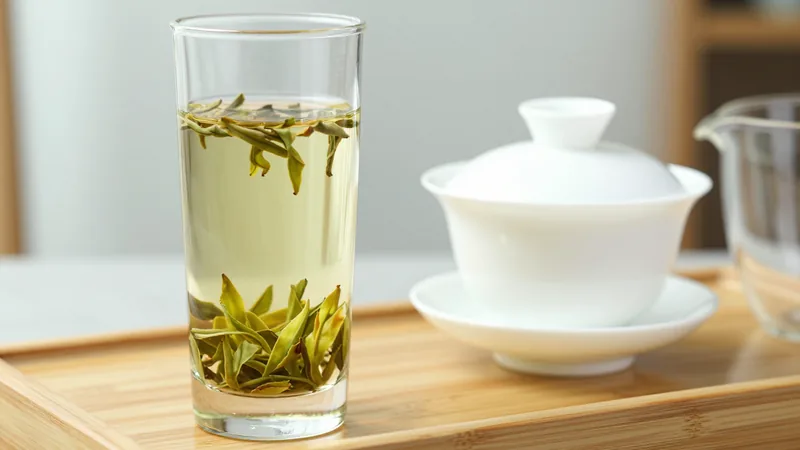
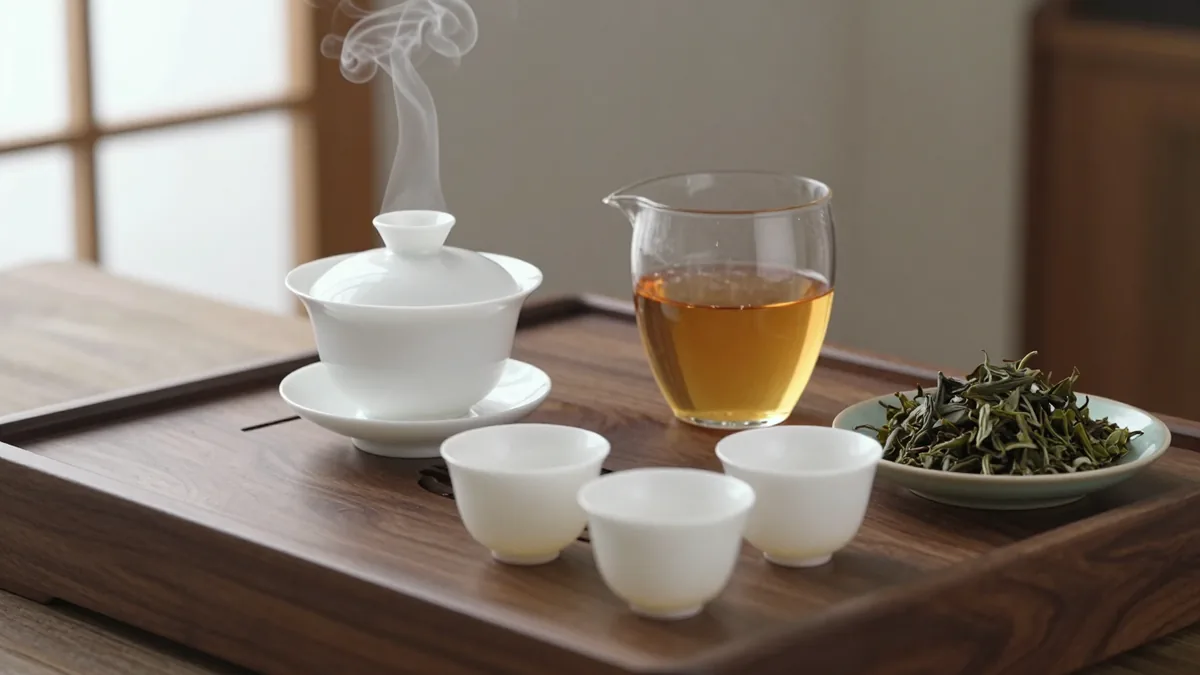
Gongfu uses a small pot or gaiwan, a lot of leaf and many short steeps. Vendors cluster tightly:
- Green and white: 3–4 g per 100 ml (Mei Leaf).
- Oolong: 4–5 g for strip-style, 6–6.5 g for tightly rolled (Mei Leaf, Yunnan Sourcing). Eco-Cha uses 10 g per 150 ml for unroasted Taiwan oolong and drops to 8 g for roasted (Eco-Cha).
- Puer: 6–6.7 g per 100 ml (Yunnan Sourcing, white2tea).
In a 120 ml gaiwan, 6 g per 100 ml is 7.2 g of leaf. The gongfu guide has steep times for each.
Grandpa style goes the other way: leaf straight in a glass, topped up as you drink. Yunnan Sourcing suggests 1–1.2 g per 100 ml (Yunnan Sourcing), so a 400 ml glass takes 4–5 g. For a thermos steeped 30–60 minutes, it uses 1–1.5 g per 100 ml (Yunnan Sourcing).
Japanese kyusu and matcha
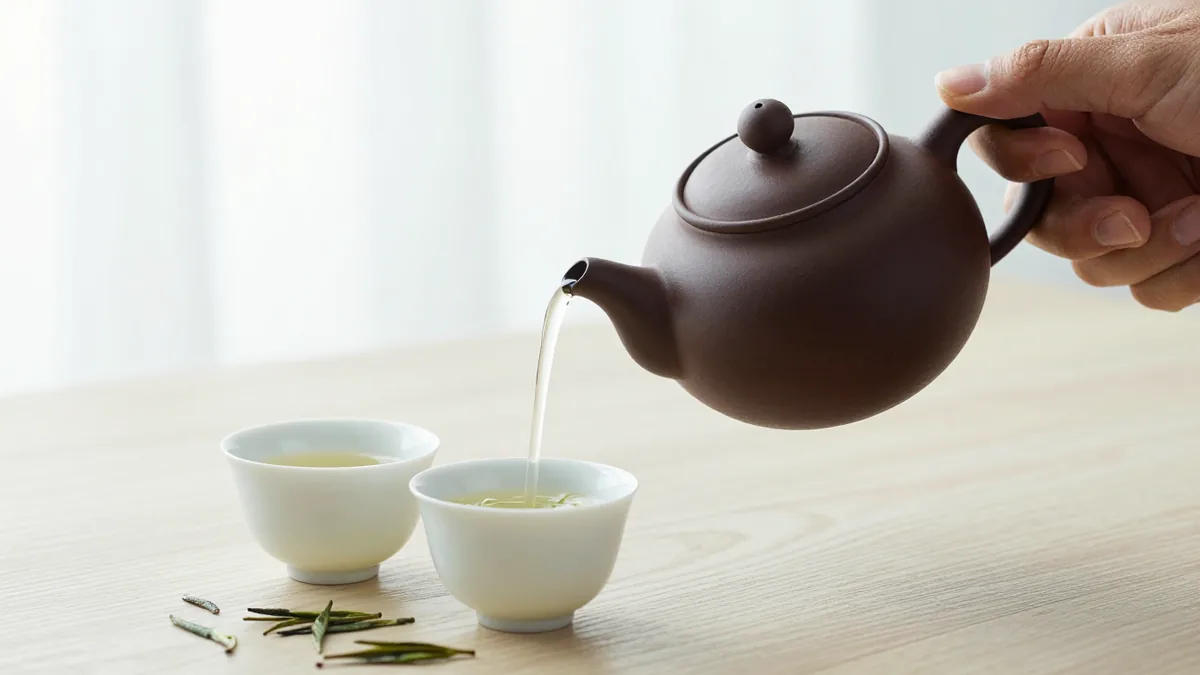
Japan's agriculture ministry gives 2–3 g per 100 ml for sencha and for bancha, genmaicha and hojicha (MAFF). Fukamushi sencha runs a little stronger at 2 g per 60 ml. Gyokuro is the outlier: 10 g for 3 people in a 90 ml teapot, poured into 40 ml cups, or about 11 g per 100 ml of pot. See Japanese green tea types for temperatures.
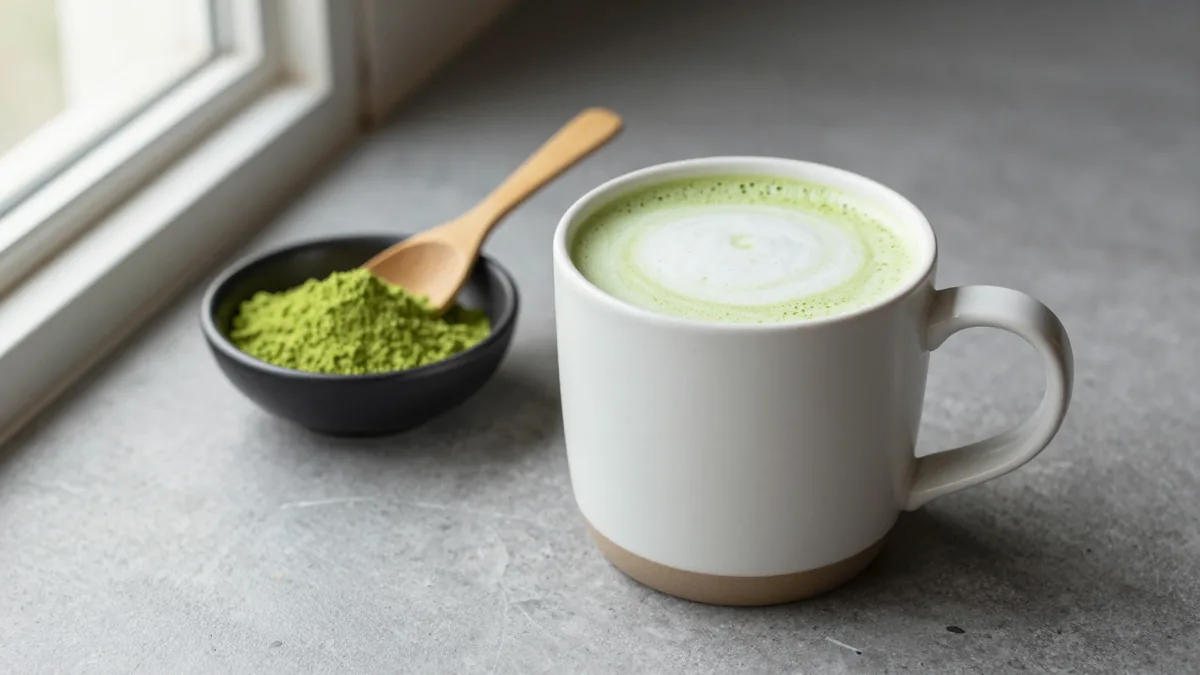
Matcha is whisked, not steeped, and every gram ends up in the cup:
- Usucha (thin): 2 g in 60 ml, 3.3 g per 100 ml (Ippodo).
- Koicha (thick): 4 g in 30 ml, 13.3 g per 100 ml (Ippodo). That is the highest ratio in the table.
Iced, cold brew and milk tea
Cold brew uses about the same leaf as a hot Western mug. Kettl uses 10 g per liter (Kettl); a lab study used 7–8 g per liter for 12 hours at 4 °C (Lantano et al.). The cold brew ratios guide and the cold brew calculator cover steep times.
Hot tea poured over ice needs 2–3 times the leaf. Harney says "twice the tea for the same water" (Harney & Sons). Kettl brews 10 g of hojicha in 300 ml for 1 minute and pours it over ice (Kettl).
Milk teas split by style:
- Masala chai: about 1–1.2 g per 100 ml of water before the milk goes in, using 2 g per teaspoon (BBC Good Food, Dishoom). See masala chai from scratch.
- Hong Kong milk tea: 2 g per 100 ml, simmered (China Sichuan Food).
- Thai iced tea: 6 g per 100 ml, the strongest steeped tea here, because condensed milk, evaporated milk and ice all dilute it (BBC Good Food). Both are in Thai iced tea and Hong Kong milk tea.
Why teaspoons fail
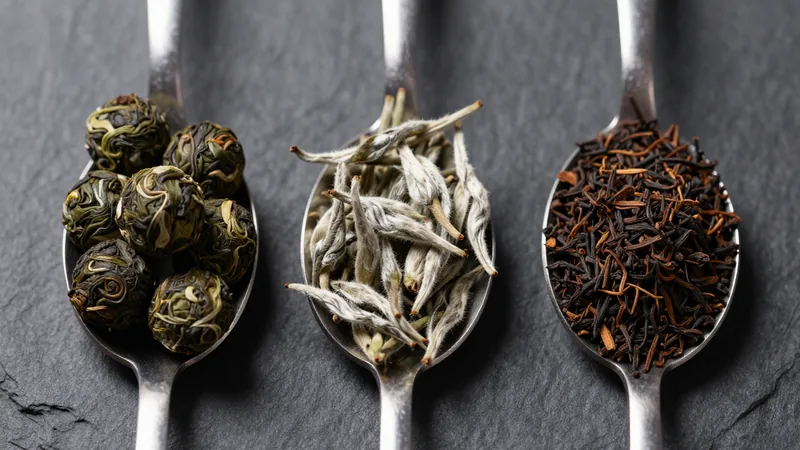
A teaspoon is a volume, 4.93 ml (NIST). Leaves of different shapes pack into it differently.
| Measure | Tea | Weight | Source |
|---|---|---|---|
| 1 teaspoon | Sencha | about 2 g | MAFF |
| 1 large spoon | Bancha, genmaicha, hojicha | about 6 g | MAFF |
| 1 teaspoon | Loose black tea | 2 g | Keenan et al. |
| 1 teaspoon | English Breakfast (broken leaf) | 2.5 g | Harney & Sons |
| 1 level teaspoon | Matcha | 2 g | Ippodo |
The clearest evidence is in recipes that give volume swaps. For the same 2-cup masala chai, Swasthi's Recipes lists 2.5–3 teaspoons of black tea leaves, or 1.25–1.5 teaspoons of tea dust, or 3.5 teaspoons of CTC (Swasthi's Recipes). Swasthi treats 1 spoon of dust as equal to 2 spoons of leaf.
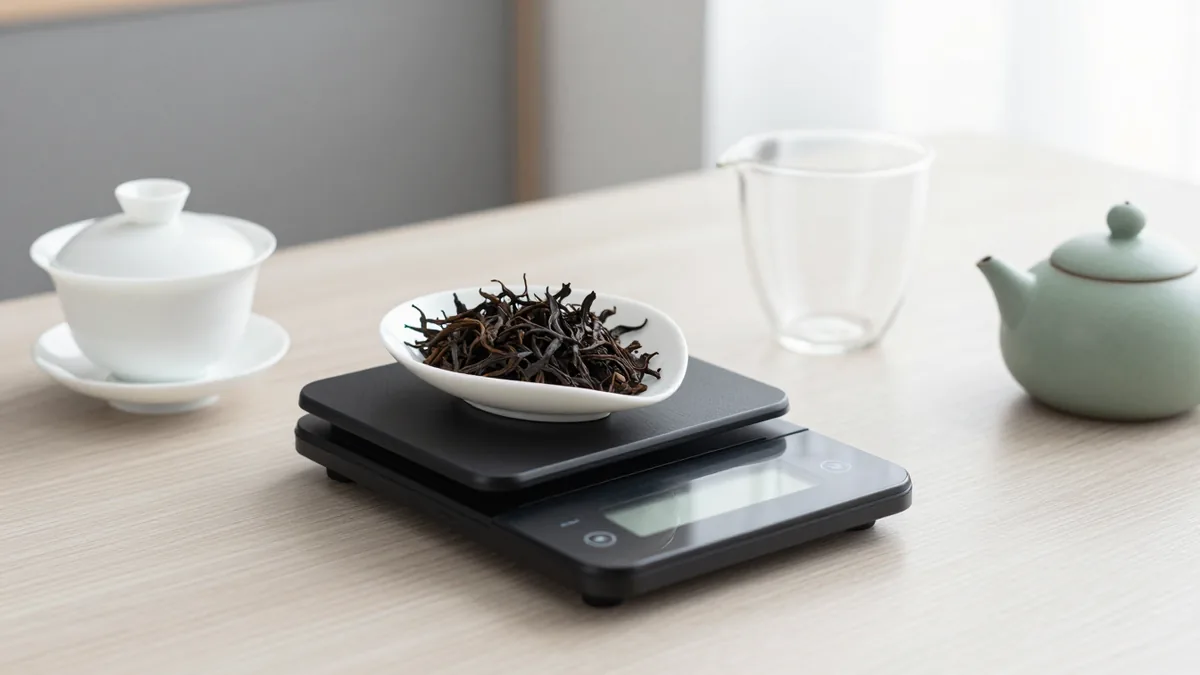
A kitchen scale that reads to 0.1 g fixes this. If you only have spoons, fill one with your tea, weigh it once, and write the number on the tin.
Scaling a ratio to your pot
- Measure your vessel's water volume in ml (fill it, pour into a measuring jug).
- Multiply by the ratio from the table and divide by 100.
- For long steeps, add a little water: leaves absorb about 4 times their own weight (MAFF). 10 g of leaf holds back about 40 ml.
Worked example: a 600 ml teapot of Western black tea at 1.1 g per 100 ml needs 6.4 g of leaf. The same pot for gongfu-strength oolong at 5 g per 100 ml would take 30 g, which is why gongfu uses small pots. The tea ratio calculator does this math for any vessel, and the steeping chart pairs each ratio with a temperature and time.
Frequently Asked Questions
How many grams of tea for an 8 oz cup?
About 2.5 g of black tea for a Western steep, which is Harney & Sons' dose or about 1.1 g per 100 ml. A typical tea bag holds 1.65–2.26 g. For gongfu-strength brewing, the same 236.6 ml would take 7–16 g.
What is the ISO standard ratio for tea?
ISO 3103:2019 uses 2 g of tea per 100 ml of boiling water, steeped 6 minutes for black tea and 5 minutes for leafy green tea. It is a sensory testing method, about twice the strength of a typical Western mug.
How many grams is a teaspoon of tea?
About 2 g for sencha or loose black tea, 2.5 g for Harney's broken-leaf English Breakfast, and 2 g for a level teaspoon of matcha. MAFF measures bulky bancha and hojicha with a large spoon that holds about 6 g.
How much tea for cold brew?
7–10 g per liter, or 0.7–1 g per 100 ml, steeped in the fridge for several hours. Hot tea poured over ice needs more: 2–3 g per 100 ml.