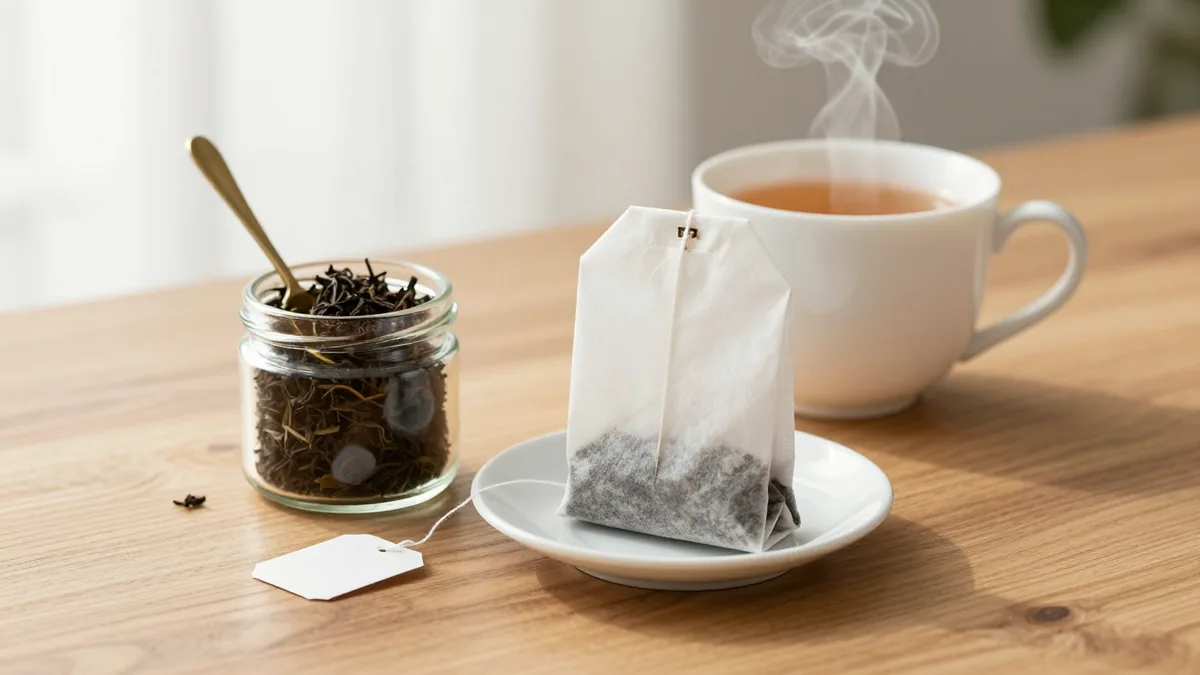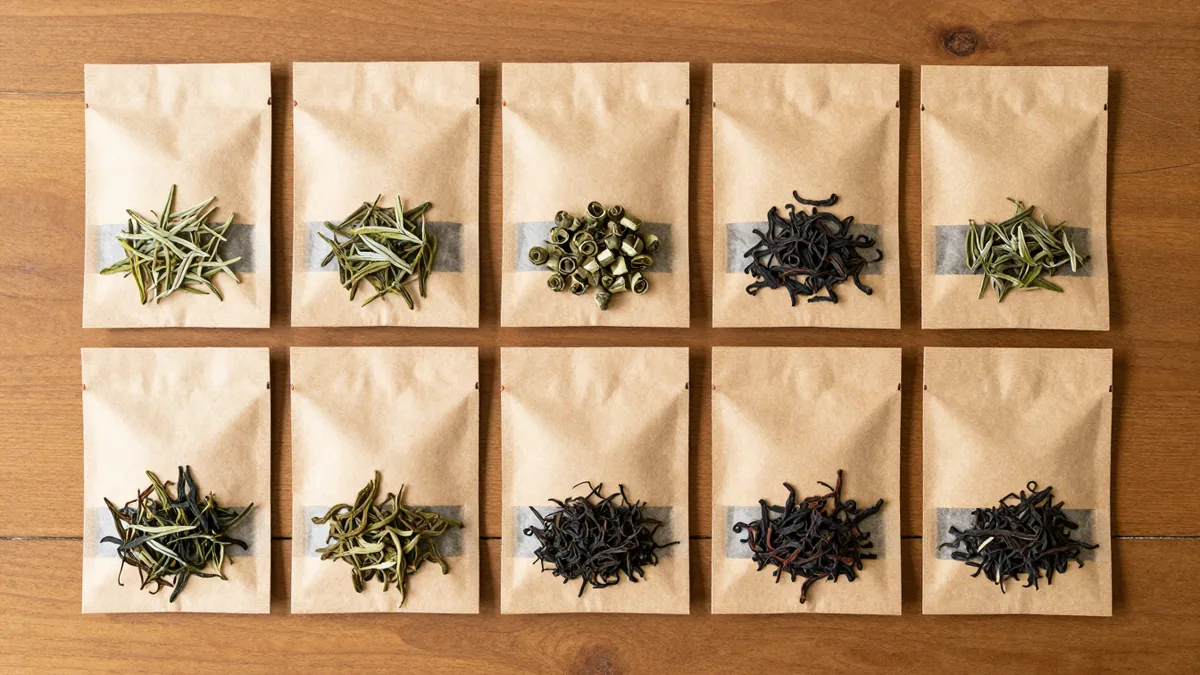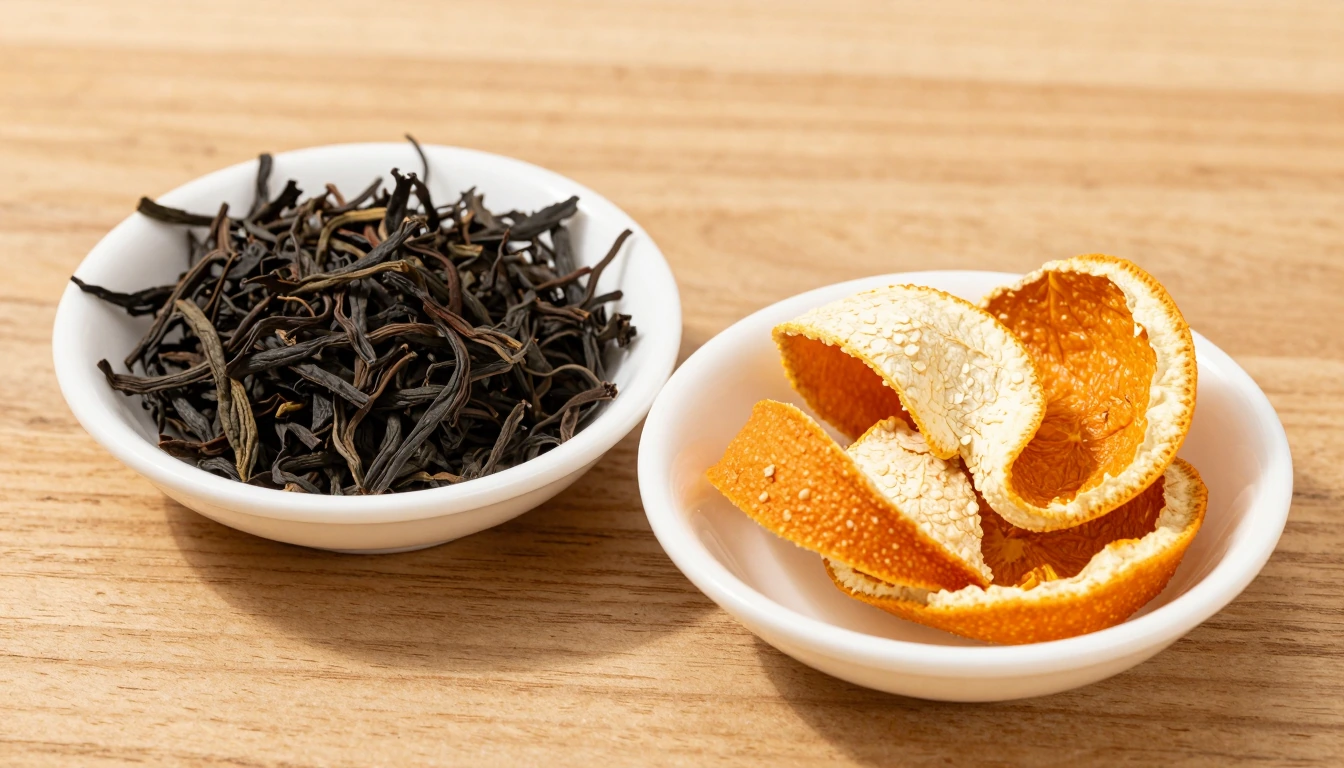
Make your first home tea blend from two teas you already like. Weigh a 10 g trial, record each ingredient, and brew it beside an unchanged control. Change one proportion at a time. The three starter formulas below are editorial experiments to try, not tested commercial recipes.
A home blend succeeds when you can taste what you intended and make it again. It does not need a long ingredient list or a name before it has a good cup. Start with a clear goal: a breakfast tea with more aroma, a small mint accent, or a citrus note that leaves the base tea recognizable.
Keep the first session small. Two base teas, one optional accent and a notebook give you enough variables for a useful afternoon. A cupboard full of spices makes it harder to identify which change improved the cup.
Understand what you are blending
Tea blending can combine teas with one another, add dry botanical ingredients, or use flavorings applied during production. These are different routes to flavor. Harney & Sons describes blends made from different tea types alongside fruit, herbs and flavors. A simple mixture of two unflavored black teas is a complete blend; flowers are optional.
Commercial consistency is another purpose. Twinings describes comparing a new blend with a flavor benchmark, while the UK Tea & Infusions Association explains how blenders adjust recipes as seasonal supplies change. At home, your benchmark can be a cup of the original tea. Keep some untouched so you can judge whether a change helped.
Visible fruit does not necessarily explain a purchased tea's aroma. Adagio's account of its process separates applied natural flavors from dry inclusions added afterward. Dried orange peel in your bowl will not automatically reproduce the aroma of a professionally flavored orange tea. Decide whether you want to build your own cup or imitate a named product; the first is usually a more useful beginner project.
Get tasting and processing notes
Oxidation, rolling, roasting oolong, aging pu-erh, and how to taste tea side by side at home. Free, no spam.
No fixed schedule. Unsubscribe anytime.
Choose a base with a workable brewing range
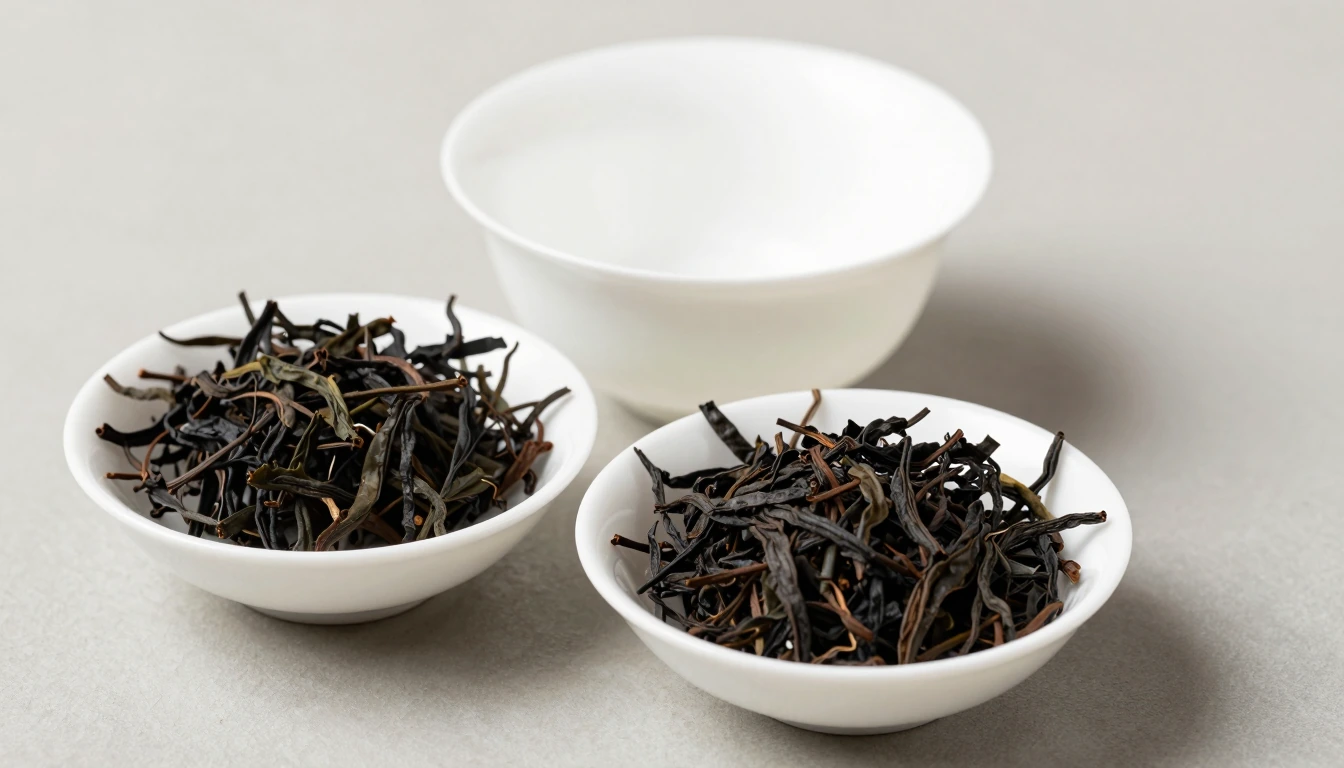
Taste each tea alone before combining it. Note the producer's temperature, leaf quantity and steeping recommendation. Pick teas that can share a brewing method for the first experiment. Two black teas with similar leaf size are easier to evaluate together than a fine broken black tea mixed with large rolled oolong leaves.
Choose a base for flavor rather than price alone. A tea you dislike unblended is not an automatic bargain ingredient. For regional black-tea differences, read Assam, Ceylon and Kenyan tea compared. To understand why leaf size changes your spoonful, use our tea-label guide.
Start with commercially dried ingredients intended for food or tea preparation. Keep fresh fruit, wet peel and extracts out of a dry batch; use a finished brewed cup for experiments with fresh garnishes. This article's formulas use only loose tea and dry culinary ingredients, with no essential-oil dosing.
Weigh a small trial and keep the arithmetic visible
A scale reading to 0.1 g is useful for small experiments. A 10 g batch is large enough to divide into several cups without committing a full tin. Use a clean dry mixing bowl and a small spoon. Tare the bowl, add each ingredient separately and write its mass before moving to the next.
The formula is simple: ingredient grams equal total batch grams multiplied by the desired fraction. In a 10 g batch, 70% becomes 7 g and 30% becomes 3 g. Check that the percentages sum to 100 before blending. Adagio's custom-blend instructions also organize recipes by percentages, making proportions a useful way to communicate a blend even when batch size changes.
Do not use spoon counts as percentages. A spoonful of fluffy mint and a spoonful of compact black tea do not necessarily have the same mass. If your scale cannot reliably measure the accent you want, mix a larger simple batch or choose a less concentrated adjustment; do not pretend a number beyond the scale's resolution is precise.
Three starter formulas to compare
The following recipes are editorial starting points, not tasted-and-validated results. Use them to learn a method. Ingredient flavor varies by supplier, age and cut, so record what you actually use.
| Trial | Ingredients for 10 g | What to compare |
|---|---|---|
| Two-black-tea blend | 7 g familiar breakfast-style black tea + 3 g aromatic unflavored black tea | Does the second tea remain noticeable after milk, if you use it? |
| Mint-accent black tea | 9.5 g black tea + 0.5 g dried culinary peppermint | Can you still identify the base tea? |
| Citrus-accent black tea | 9 g black tea + 1 g dried food-grade orange peel | Does the cup gain a pleasant accent or mainly extra bitterness? |
For the first formula, the labels describe roles, not guaranteed regional flavor. Smell and taste the actual teas rather than assuming every Assam is the same or every Chinese black tea is delicate. For mint and citrus, start restrained and increase only if the first cup asks for it.
Compare a control with two variants
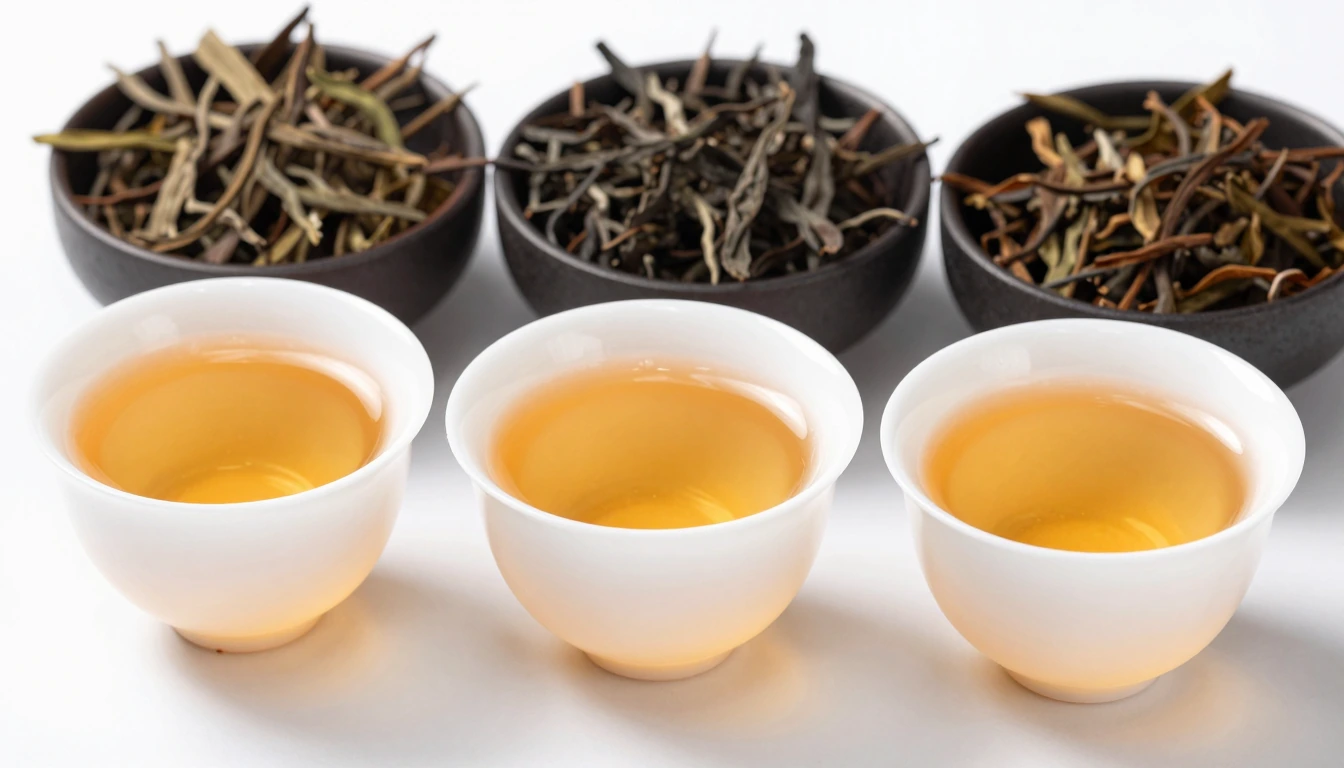
Set up three similar cups: the unblended base, your first trial and one adjusted version. For example, compare pure black tea, 95% black tea with 5% peppermint, and 90% black tea with 10% peppermint. Those percentages describe dry ingredient mass, not a prediction of flavor intensity.
Use equal finished blend mass and equal water volume in each cup. Follow the base tea's brewing instructions as the initial setting, and hold water, temperature and steeping time constant across the comparison. Mix each dry sample before taking a portion; a scoop from the top of a settled jar may not represent the whole recipe.
Taste without milk or sweetener first if that suits your normal drinking, then add your usual accompaniment to each cup equally. Write down what changes rather than a simple score: more mint aroma, less identifiable tea, lingering citrus bitterness, or a thinner cup. Our tea-tasting guide has a broader vocabulary if you need it.
This is a comparison session, not a scientific claim about ingredients. Keep the number of cups small enough that you can still describe the differences clearly. If you cannot choose between versions, stop and repeat on another day rather than forcing a winner.
Adjust one thing at a time
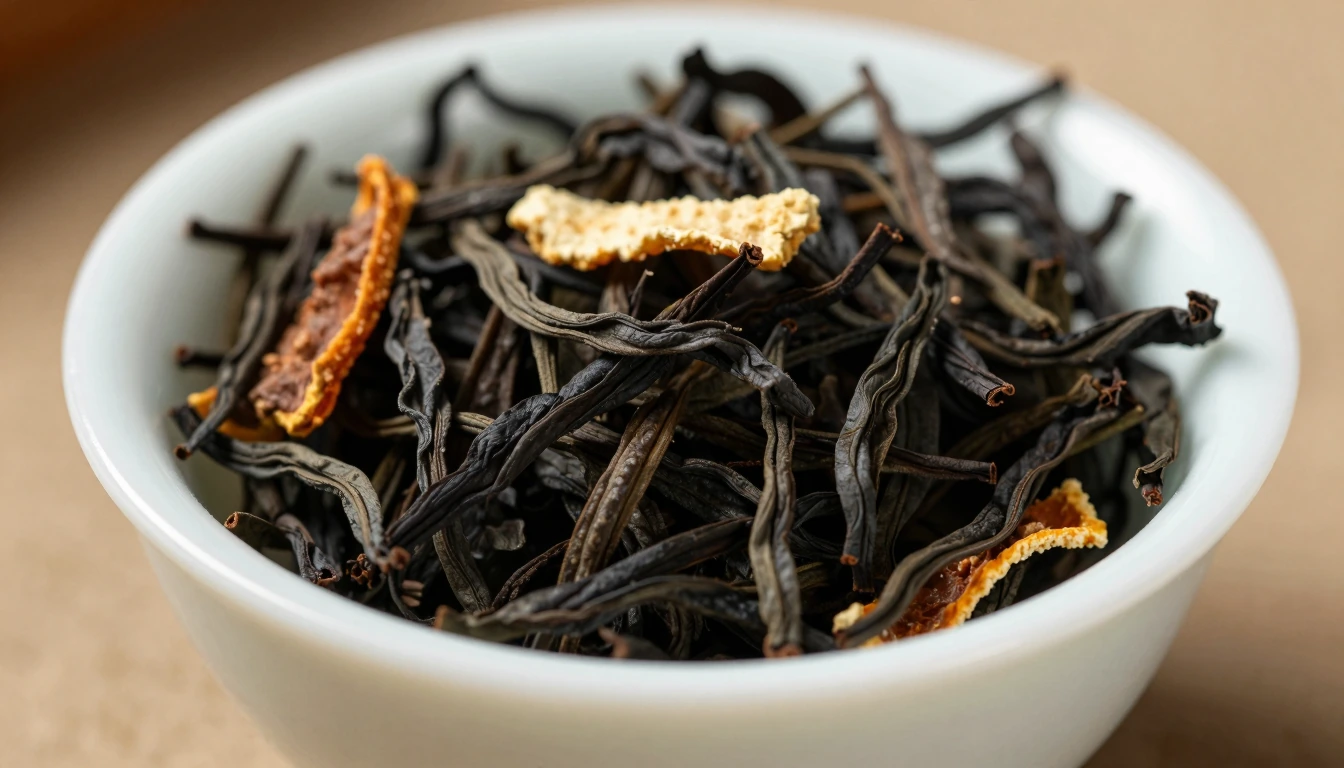
If the tea disappears behind mint, reduce mint before increasing the total leaf dose. If the cup seems thin, compare the base tea alone at the same blend mass: replacing leaf with a botanical ingredient changes how much actual tea is in that measured portion. If citrus tastes harsh, reduce peel before adding more ingredients to cover it.
If one component remains underdeveloped while another becomes too strong, the ingredients may not suit a shared steep. Brew them separately and combine small measured amounts of the finished liquids to explore the flavor relationship. Call that a cup mixture in your notes; it is not the same repeatable method as a dry blend.
Use tea quantities by brewing method when changing vessel size. If you want a familiar scented reference, our Earl Grey guide explains why a bergamot-flavored product is a different proposition from sprinkling citrus peel into black tea.
Store versions separately and label what matters
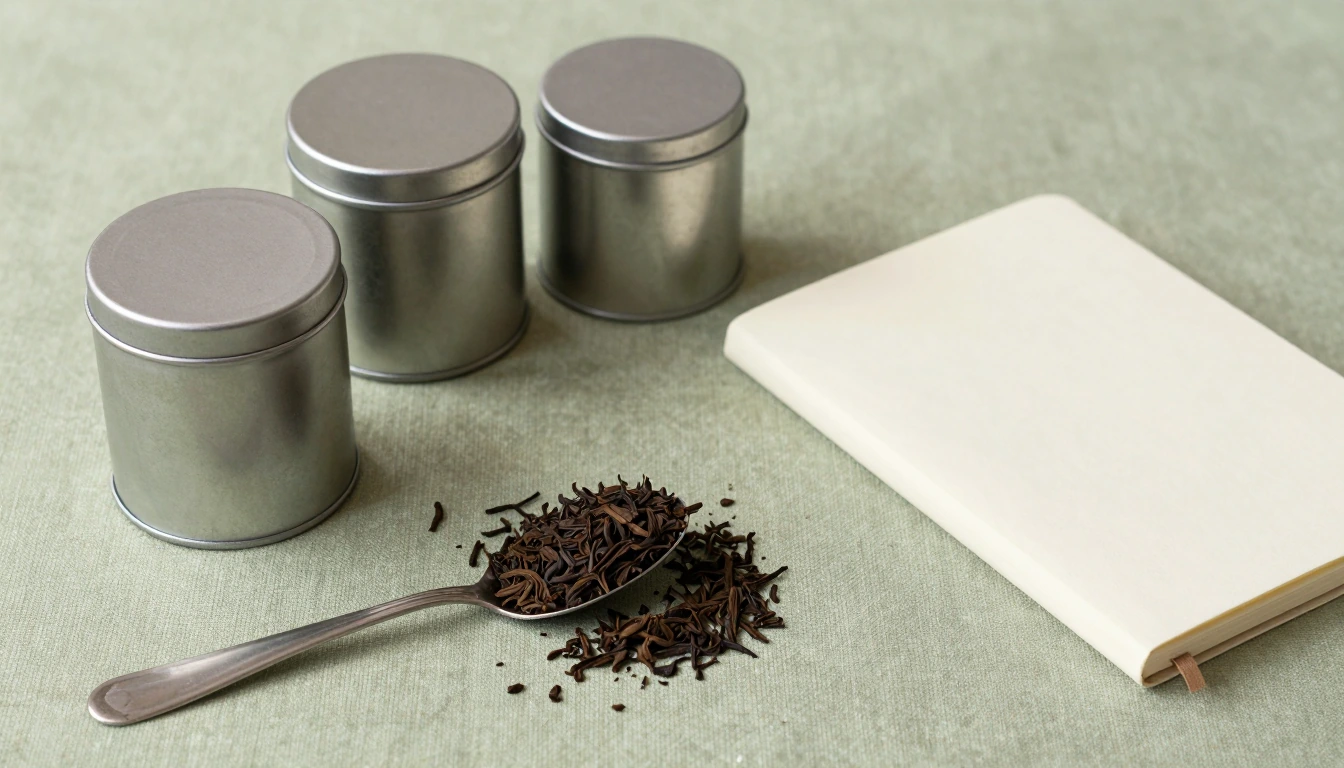
Put each finished trial in its own clean dry container. Record the date, ingredient names, source packages, proportions and brewing setting. Keep an ingredient list if you plan to share the blend; a pleasant aroma does not tell a guest what is inside.
Adagio recommends dry, closed storage away from neighboring scents and direct sunlight. Choose an opaque airtight tin or a well-sealed pouch and keep it away from your spice shelf's strongest aromas. For more on separating scented blends from plain teas, see our tea-storage guide.
Scale up only after you have repeated a cup you enjoy. A 50 g batch of the 70:30 formula needs 35 g and 15 g; multiplying the mass does not remove the need to mix thoroughly. Pour the blend into a larger bowl, fold it gently, and take portions from a remixed batch rather than leaving the finest pieces at the bottom. Keep the original recipe visible so an improvised extra spoonful does not quietly become the new formula.
Know when to stop adding ingredients
A blend does not become more successful because it has more components. Keep the version in which the intended change is clear and the cup is pleasant at your normal drinking strength. If the original tea wins, record that too. A rejected combination saves you from making the same oversized batch later.
For the next session, change the base or change the accent, not both. A notebook containing three clear comparisons is more useful than ten anonymous tins. The goal is a cup you can explain, reproduce and enjoy again.