A tea label answers four questions: what leaf it is, where it grew, when it was picked, and who stands behind it. Grade codes like FTGFOP describe leaf size and tips, not flavor. In our catalog of 7,306 teas, 55% print a year and 59% name an origin country in the title or tags, but only 26 listings carry an orthodox grade code.
What a complete tea label tells you
Read a label in this order.
- Tea type and style. This sets brewing temperature and how fast the tea goes stale.
- Origin. Country, then region, then estate or village. The more specific, the more accountable the seller.
- Harvest year and season. A spring 2026 green tea and a 2019 green tea are different products.
- Grade or leaf style. Whole leaf, broken, fannings or CTC. On Chinese and Japanese teas, the seller's own grade name.
- Cultivar. The plant variety, such as Yabukita or Jin Xuan.
- Seals and legal lines. Organic or certification seals, net weight, country of origin, and who packed it.
A good specialty listing fills in most of these. Mountain Stream Teas' Grandpa's Favorite lists elevation (1,800 m), cultivar (QinXin), oxidation (25%), season (August 2026) and region (Chi Lai Shan, Nantou). That is the standard to compare other labels against.
Get the tea newsletter
New tea rooms, brewing notes, and tea worth trying. Free, no spam.
No fixed schedule. Unsubscribe anytime.
Orthodox grade codes, letter by letter
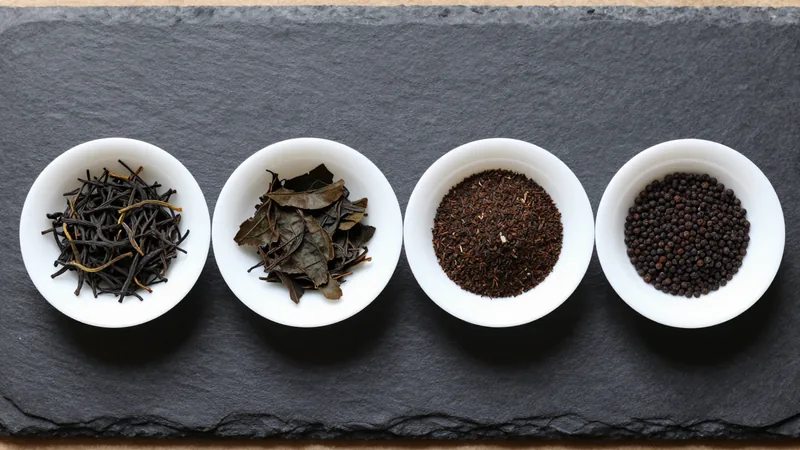
The letter codes come from the Indian, Sri Lankan and African black tea trade. Wikipedia's grading summary notes the terms "are not generally known within Chinese-speaking countries", so a Chinese or Japanese tea will not carry them.
Grades sort leaf by size and how much bud (tip) it contains. Twinings puts it plainly: "tea grading only provides information about the appearance and size of the leaf." A TGFOP from a poor garden can taste worse than a BOP from a good one.
| Code | Stands for | What it tells you |
|---|---|---|
| OP | Orange Pekoe | Long wiry whole leaves, no tips |
| FOP | Flowery Orange Pekoe | Whole leaf with some tips |
| GFOP | Golden Flowery Orange Pekoe | More golden tips than FOP |
| TGFOP | Tippy Golden Flowery Orange Pekoe | High share of tips; main grade in Darjeeling, Assam, Nepal |
| FTGFOP | Finest Tippy Golden Flowery Orange Pekoe | Top whole-leaf grade |
| SFTGFOP | Special Finest Tippy Golden Flowery Orange Pekoe | Best lots within FTGFOP |
| "1" suffix (FTGFOP1) | Grade suffix | Best leaves within that grade |
| BOP | Broken Orange Pekoe | Main broken-leaf grade |
| FBOP | Flowery Broken Orange Pekoe | Broken leaf with some tips |
| F | Fannings | Small pieces left after the larger grades are sorted out |
| D | Dust | The finest particles |
| CTC | Crush, tear, curl | Machine-cut pellets, not an orthodox grade |
Sources: Wikipedia, Tea leaf grading; Twinings; Wikipedia, Crush, tear, curl.
CTC is a manufacturing method. The leaves pass through toothed rollers that cut them into "small, hard pellets" that give "a dark brew" and suit tea bags, per Wikipedia. The same page reports that over 80% of India's tea production is CTC.
Grade codes are rare in specialty listings. Only 26 of 7,306 products in our catalog carry one in the name, 25 of them black teas, and 18 from a single vendor, What-Cha. Even among the 247 black teas from India, Sri Lanka, Nepal and East Africa, only 25 (10%) print a grade.
Worked example. What-Cha's Marionbarie SFTGFOP1 listing reads: "Harvest: First Flush, February 2024", "Grade: SFTGFOP1", "Origin: Marionbarie Tea Estate, Darjeeling Adjacent (Dooars), India". Decoded: whole leaf, the top tippy grade, the best lot within it, picked in the first flush of 2024, from an estate just outside the protected Darjeeling area. The seller says so directly: it is "technically not a Darjeeling".
Harvest year and season
The year matters most for teas that fade: green, Japanese and light oolong. For puer and dark tea, the year tells you how long the leaf has aged. On a compressed cake, the year can be the harvest or the pressing; good listings print both.
Season words narrow the date further:
- Flush (India, Nepal): first flush is spring, second flush is early summer. See Darjeeling flushes explained.
- Mingqian (China): picked before the Qingming festival "on April 4th or 5th", per Rishi Tea. Early, small, expensive.
Harney & Sons' Puttabong 1st Flush Darjeeling gives the exact picking days: "March 19th and 20th." That is as specific as a label gets.
Our catalog shows the gap between tea types. Puer and dark tea listings almost always carry a year, because the year is part of the product. Green tea, the type that goes stale fastest, prints one in only 28% of listings. Flavored and herbal blends almost never do.
| Tea type | Listings | Year printed | Origin country stated | Season word in name | Says "organic" |
|---|---|---|---|---|---|
| Sheng puer | 1,976 | 95% | 68% | 29% | 2% |
| Shou puer | 828 | 90% | 71% | 1% | 5% |
| Dark (hei cha) | 170 | 90% | 89% | 4% | 1% |
| White | 431 | 69% | 60% | 10% | 6% |
| Oolong | 786 | 44% | 77% | 21% | 4% |
| Black | 937 | 42% | 72% | 24% | 7% |
| Green | 579 | 28% | 63% | 14% | 17% |
| Matcha | 235 | 3% | 41% | 0% | 24% |
| Flavored | 567 | 3% | 19% | 2% | 18% |
| Herbal | 493 | 3% | 8% | 3% | 28% |
| All 7,306 listings | 7,306 | 55% | 59% | 15% | 9% |
Source: Tea Explorer catalog, 7,306 teas from 40 vendors, fetched 2026-10-01, as of October 1, 2026 (browse the catalog). "Year printed" = a four-digit year in the product title, size option or vendor tags. "Origin country stated" = a country named in the title or tags (vendor defaults excluded). "Season word" = spring, autumn, flush, Mingqian or shincha in the title or size option. "Says organic" = the word appears anywhere in the listing, which is a seller claim, not a verified certificate.
Protected origin names: Darjeeling, Ceylon, Uji, Pu'er
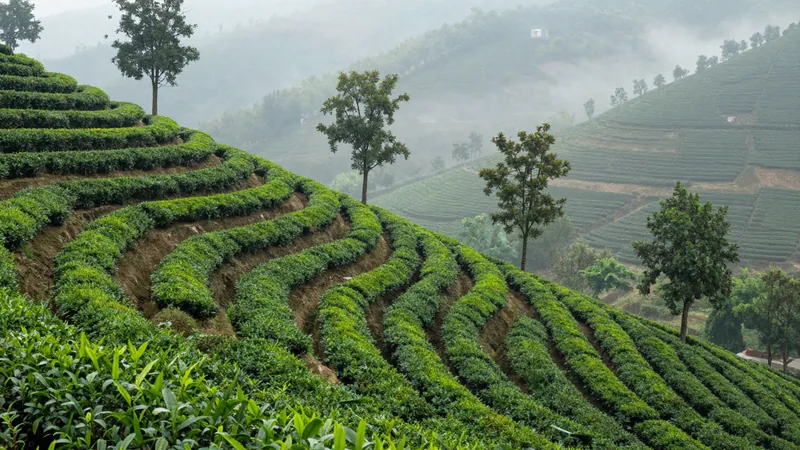
Four origin names on tea labels are controlled by a producer body or a national standard.
| Name on label | Who controls it | What it requires |
|---|---|---|
| Darjeeling (word and logo) | Tea Board of India, US certification marks No. 1,632,726 and 2,685,923 | 100% from one of 87 listed gardens, or a blend of listed gardens labeled "blend"; never mixed with non-Darjeeling tea |
| Ceylon lion logo | Sri Lanka Tea Board | 100% Sri Lankan tea, packed in Sri Lanka, meets Board quality standards |
| Uji tea | Kyoto Prefectural Tea Association definition (2004) | Grown in Kyoto, Nara, Shiga or Mie; finished in Kyoto Prefecture by a Kyoto company |
| Pu'er | Chinese national geographical-indication standard (2008) | Produced in designated areas of Yunnan |
Sources: Tea Board of India, US regulations; Sri Lanka Tea Board; Kyoto Prefectural Tea Association Q&A; Wikipedia, Pu'er tea.
Practical reads:
- "Darjeeling" on a blend. The Tea Board's US rules say the marks "may not be used in relation to a mixture of DARJEELING tea with teas of origin other than Darjeeling, India". A cheap "Darjeeling blend" with no garden name deserves a question.
- Ceylon without the lion. Overseas packers cannot use the logo. The Sri Lanka Tea Board says lion-logo tea "must also be packed in Sri Lanka". A US-packed Ceylon can be 100% Sri Lankan and still lack the logo.
- Uji. Uji tea need not be grown in Uji City. The leaf can come from four prefectures.
- Pu'er made elsewhere. Fermented tea in the puer style from outside Yunnan is often sold as "dark tea", per Wikipedia. See sheng vs shou puer for how the two styles differ.
Our catalog has 111 products with "Darjeeling" in the name. The Marionbarie estate above is not among the 87 gardens in the Tea Board's US schedule, and What-Cha labels it "Darjeeling Adjacent".
Cultivar, estate, single origin and blend
Cultivar names the plant variety. Japanese sencha labels often list it because one cultivar dominates: Oregon State University reports that in 1997, 75% of Japan's tea plantings (39,000 of 52,000 ha) were Yabukita. A label like The Steeping Room's Kogacha Gyo Yame Sencha, "Blend of Yabukita and Saemidori cultivars", tells you it is a cultivar blend from one producer.
Estate or garden means one farm. Single origin is a seller's term; look for the estate or village name to back it. Blend means leaf from more than one source, which is normal for breakfast teas and flavored teas.
What US law requires on the bag
US rules cover the package, not the quality. A loose-leaf bag needs:
- Net quantity in both systems. The FDA Food Labeling Guide says labels "must show the net contents in both metric (grams, kilograms...) and U.S. Customary System (ounces, pounds...)", placed in the bottom 30% of the front panel.
- Name and place of business of the manufacturer, packer or distributor (21 CFR 101.5).
- Ingredient list in descending order of weight (21 CFR 101.4). This is what reveals "natural flavor" in a jasmine or Earl Grey.
- Country of origin for imports. 19 CFR 134.11 requires the English name of the country, marked "legibly, indelibly, and permanently".
Plain tea leaves are exempt from a Nutrition Facts panel. 21 CFR 101.9(j)(4) lists "tea leaves" and "plain unsweetened instant coffee and tea" as exempt, as long as the label makes no nutrition claims.
Notice what is not required: harvest year, grade, cultivar or caffeine. Those are voluntary, which is why they are the best signal of a careful seller.
Organic and certification seals
| Seal or wording | Rule |
|---|---|
| USDA "100 percent organic" | 100% organically produced ingredients |
| USDA "organic" | At least 95% organic ingredients |
| "Made with organic ..." | At least 70% organic ingredients |
| Rainforest Alliance seal | At least 50% certified ingredient; percentage must be shown when below 90% |
Sources: 7 CFR 205.301; Rainforest Alliance.
In our catalog, 692 listings (9%) use the word "organic" somewhere. That word is a seller claim. The seal and the certifier's name on the physical bag are the proof. Prices for organic and conventional teas side by side are in the tea price index, and grade terms are defined in the glossary.
Frequently Asked Questions
Does FTGFOP mean the tea tastes better?
No. FTGFOP means Finest Tippy Golden Flowery Orange Pekoe, a whole-leaf grade with many tips. Twinings states that grading describes "the appearance and size of the leaf" only. Only 26 of 7,306 teas in our catalog print a grade code at all.
What does the "1" after a grade mean?
It marks the best leaves within that grade, so FTGFOP1 is the top lot of FTGFOP. In our catalog it appears on Darjeeling and Assam listings (FTGFOP1, SFTGFOP1) and on OP1 teas from Kenya, Malawi and Sri Lanka.
How old is too old for green tea?
The label should tell you the year; many do not. Only 28% of 579 green tea listings in our catalog print a year, against 95% of sheng puer listings. Buy green tea with a current-year harvest date and ask the seller when it is missing.
Can a tea packed in the US use the Ceylon lion logo?
No. The Sri Lanka Tea Board requires lion-logo tea to be 100% Sri Lankan and packed in Sri Lanka. A US-packed Ceylon tea can still be pure Sri Lankan leaf; it just cannot carry the logo.
Is "organic" in a product name the same as certified organic?
Not necessarily. USDA rules require at least 95% organic ingredients for the "organic" label and 100% for "100 percent organic". Check for the seal and the certifier on the package; 9% of our catalog listings use the word.