Darjeeling has four main flushes: first flush (about March–April) is light and floral, second flush (late May–June) is fuller with the "muscatel" note, monsoon or rain flush (July–September) is strong but plain, and autumn flush (October–November) is coppery and mellow. Only 87 GI-registered estates can sell Darjeeling. They made 5.60 million kg in 2025, down from 14.49 million kg in 1990.
The Four Flushes at a Glance
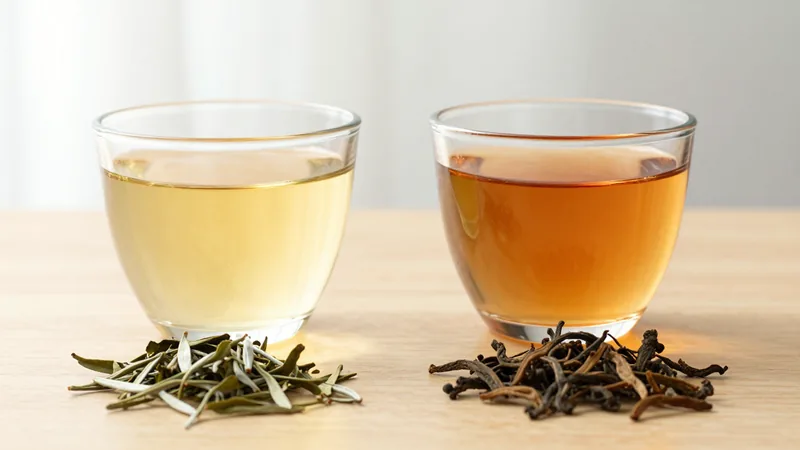
A flush is a growth cycle of new shoots that is plucked before the next one starts. Darjeeling's bushes grow from March to November and rest through the four winter months, November to February, so the year splits into distinct harvests.
Each flush gives a different tea from the same bush. Weather and insect pressure change between seasons, and the cup changes with them.
Darjeeling is also a protected name. In 2004 it became the first product registered under India's Geographical Indications Act. The GI covers 87 estates on about 17,500–17,800 hectares at altitudes from 200 m to more than 2,000 m.
| Flush | Months | Liquor color | Flavor | 2026 retail example (100 g) |
|---|---|---|---|---|
| First flush | Late Feb/March to mid-April | Pale; delicate lime green to light coppery yellow | Floral, delicate | $29.99 (Castleton, Margaret's Hope) |
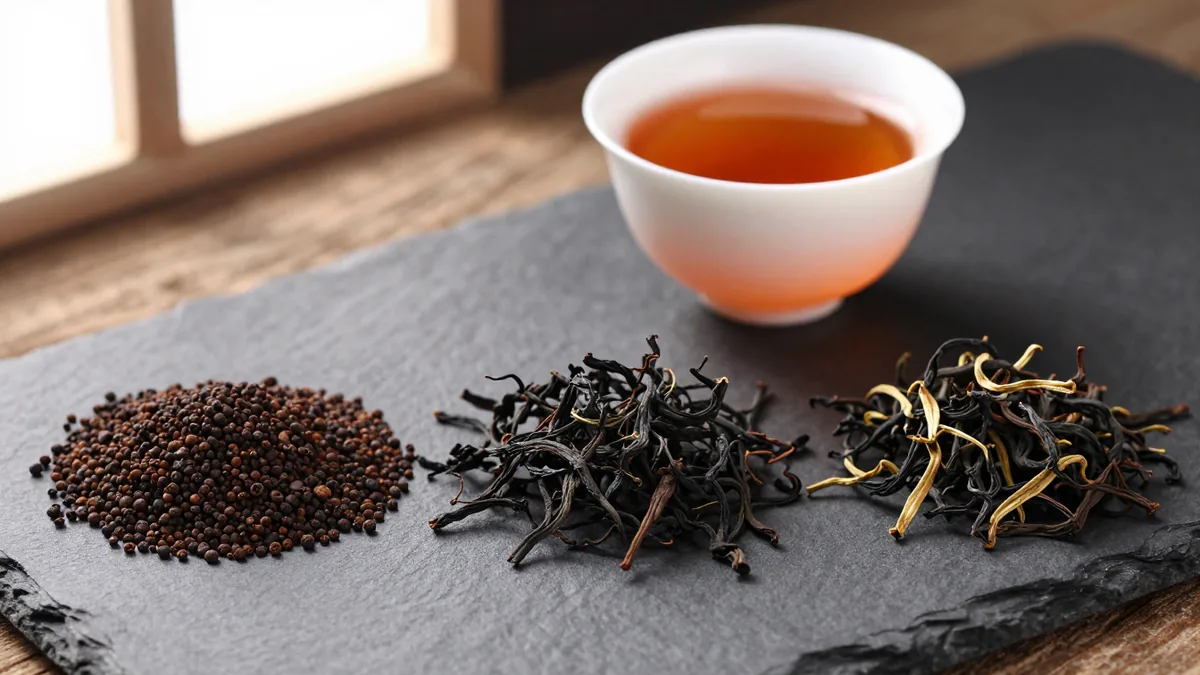
| Second flush | Late May to June | Bright copper purple | Full-bodied, fruity, muscatel | $22.99 (Jungpana Muscatel) |
| Monsoon / rain flush | July to September | Dark | Strong but dull; mostly sold in India | No listing found |
| Autumn flush | October to November | Pale brown (FAO) to dark coppery (Goodricke) | Mellow, full-bodied, fruity | No 2026 listing found yet |
Sources: months and flavor from producers Goodricke and Jay Shree Tea; color from the FAO Darjeeling case study; prices from Vahdam product pages for Castleton, Margaret's Hope and Jungpana, checked October 1, 2026.
Producers also name an in-between flush, late April to early May, which Jay Shree describes as astringent. Dates shift by a few weeks each year with rain and temperature.
Get origin and garden notes
Where tea is grown, how each region makes it, and the next origin explainer. Free, no spam.
No fixed schedule. Unsubscribe anytime.
First Flush: Spring Leaf, Highest Prices
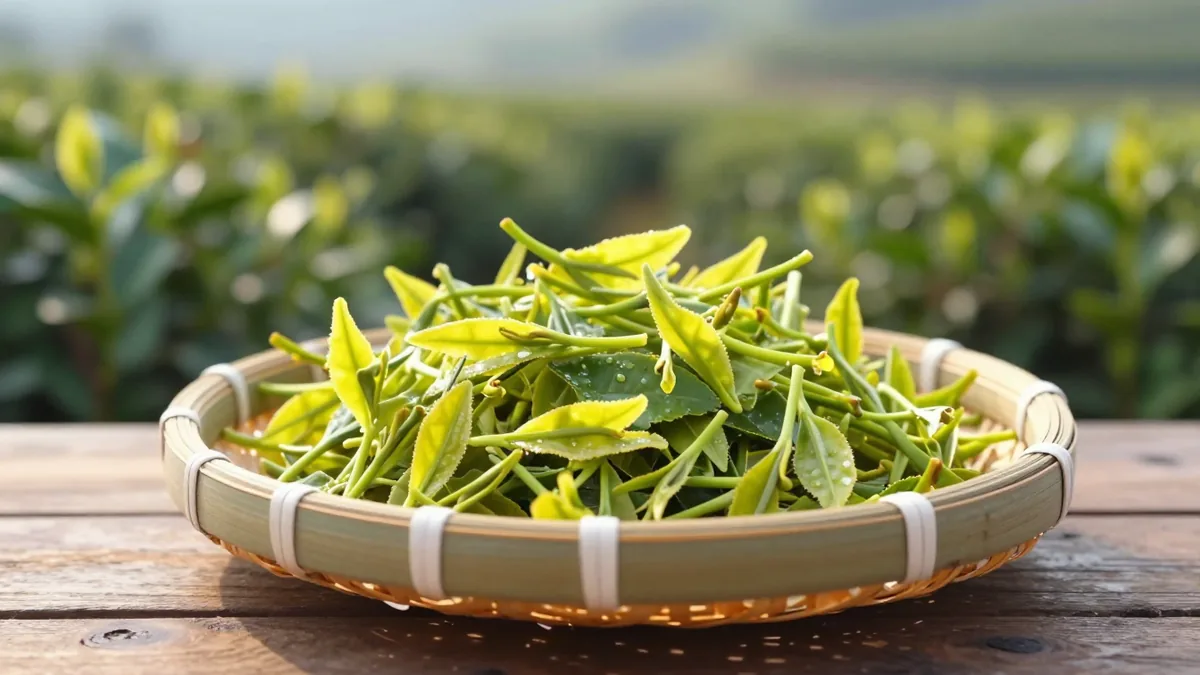
First flush is the year's first plucking after winter. Goodricke describes it as a "floral meadow-like flavour, very delicate taste and generally pale colour".
It is often sold by plucking date. The Republic of Tea's 2026 Margaret's Hope first flush lists a plucking date of March 26, 2026 and an estate altitude of 3,100–6,000 feet.
The FAO study describes spring flush leaf as having a greyish green sheen, against purplish brown in summer and blackish brown in autumn. For how oxidation shifts color and flavor, see oolong oxidation explained. Our brewing guides give times and temperatures.
Second Flush and the Muscatel Note
Second flush is plucked in late May and June, before the monsoon. Jay Shree describes the brew as "bright and full-bodied" with "a typical muscatel character."
Insects are part of that flavor. A 2012 study by the Tea Research Association at Tocklai, published in Plant Molecular Biology, notes that infestation by jassids and thrips triggers aroma and flavor formation in Darjeeling tea. The authors found aroma-related genes, including linalool and geraniol synthase, switched on in thrips-infested leaf.
Second flush carries the estates' finances. In 2017, the Gorkhaland strike shut the industry for 104 days from June to September. The lost June harvest was the most expensive of the year, and Modern Farmer reported a 40% cut in tea revenue, about $22 million. Production fell to 3.2 million kg that year.
Monsoon and Autumn Flushes
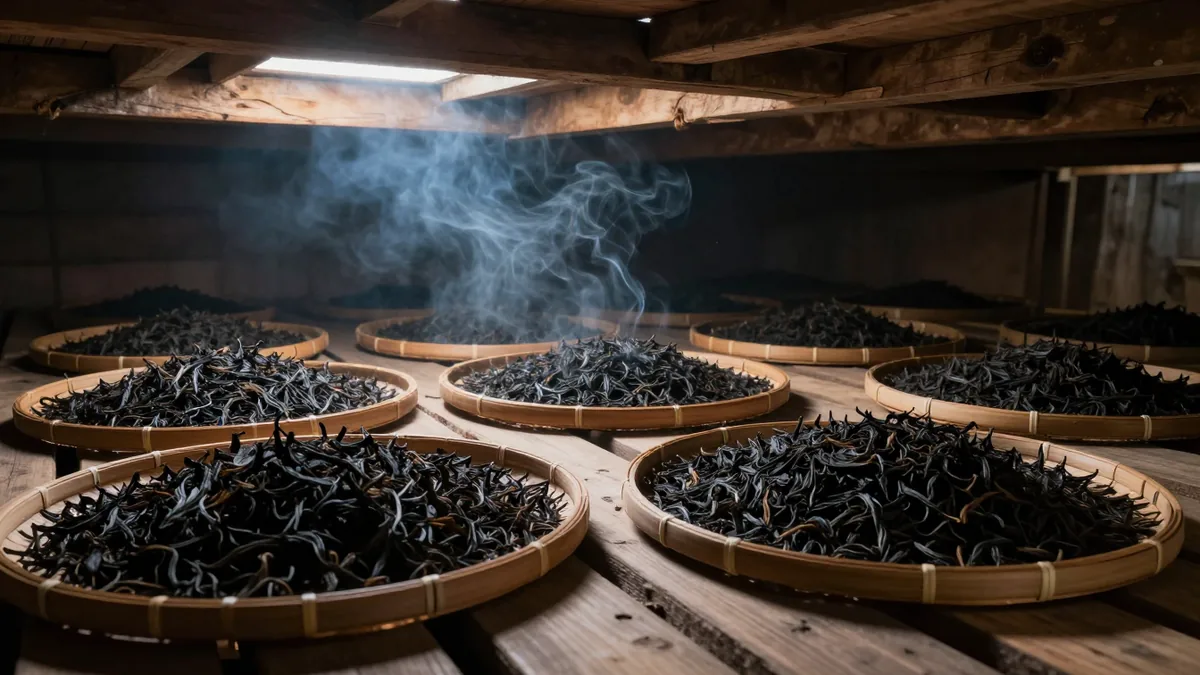
Rain flush grows fast in July to September heat and rain. Goodricke calls it "strong flavour" with a "dark colour but dull flavour". Jay Shree says the leaves come in huge quantity but low quality. A Jay Shree executive told Business Standard that rain flush is mainly for the domestic market and is being replaced by cheaper Nepal tea.
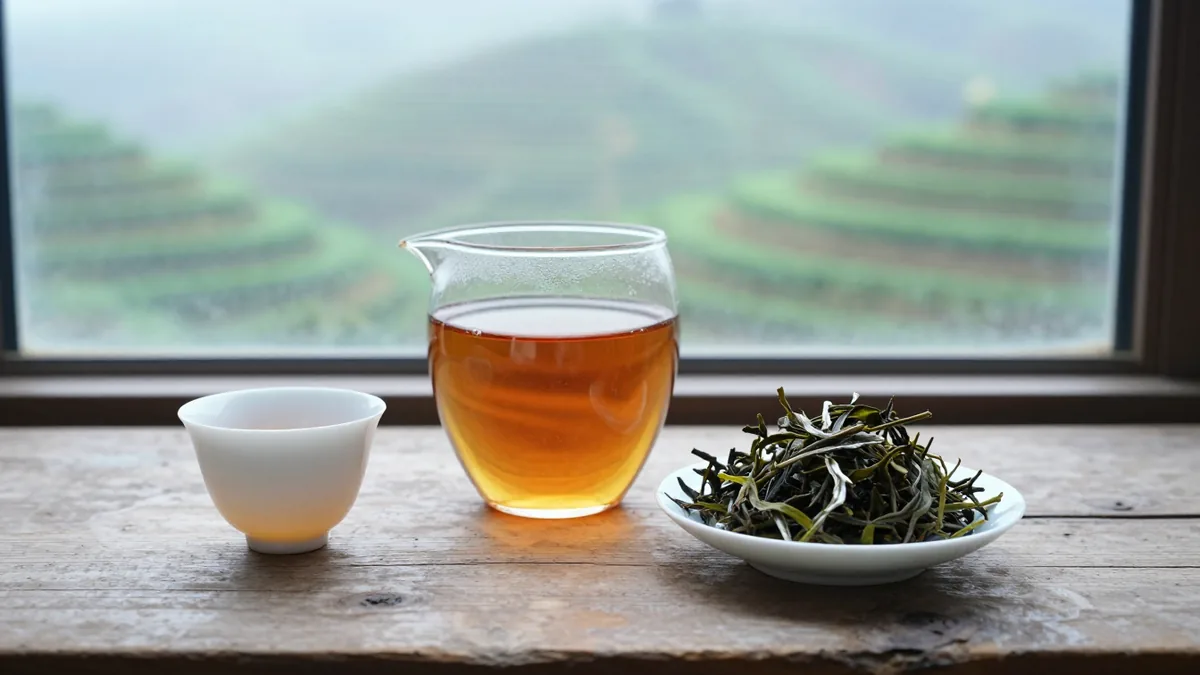
Autumn flush follows the monsoon in October and November. Goodricke describes "dark and coppery colour" and large leaves, priced below the first two flushes. Jay Shree calls the brew "full-bodied fruit flavored".
China Bush vs Clonal
Darjeeling's bushes are mostly the small-leaved Chinese variety, Camellia sinensis var. sinensis, not the large-leaved Assam variety. The FAO study notes that the old bushes have roots more than 1 m long and tolerate cold.
Clonal bushes are grown from cuttings of one selected plant, so every bush in a section is genetically identical. AV2 (Ambari Vegetative 2) is the best-known Darjeeling clone; Teabox describes its floral note as "often described as 'melon'".
Labels such as "China," "clonal" or "AV2" tell you the plant. The flush tells you the season. A tin can be both, for example "first flush AV2."
Darjeeling's Shrinking Harvest
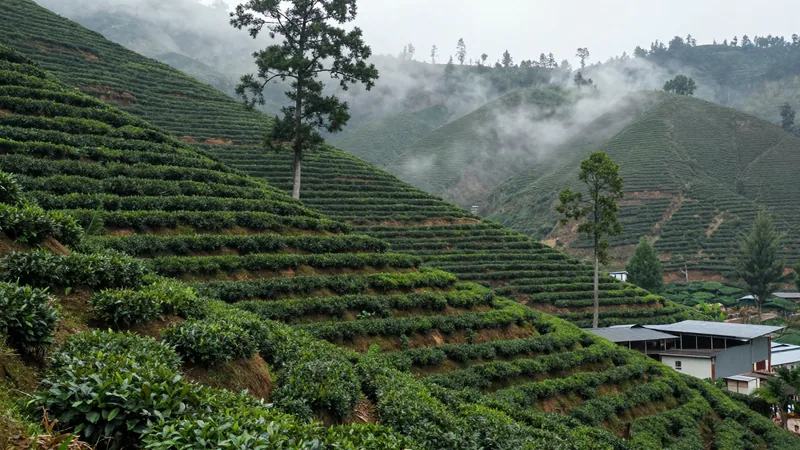
Output has fallen by more than half in 35 years.
| Year | Production (million kg) | Source |
|---|---|---|
| 1990 | 14.49 | Business Standard |
| 2015 | 8.76 | Urban Acres |
| 2017 (strike) | 3.2 | Business Standard |
| 2022 | 6.93 | Urban Acres |
| 2023 | 6.01 | Urban Acres |
| 2024 | 5.71 | Business Standard |
| 2025 | 5.60 | Urban Acres |
The 2025 crop is 61% below 1990. Exports fell from 3.95 million kg in 2015 to 2.13 million kg in 2025.
The causes are measurable:
- Heat. Average March–July temperatures rose 1–1.5°C over seven years.
- Labor. Gardens report 40–50% absenteeism. The industry employs about 55,000 permanent and 15,000 temporary workers.
- Old bushes. About 80–90% of gardens date back over 70 years.
- Low yield. The FAO study put yield at 400–450 kg per hectare, against a national average of 1,800.
- Nepal. Nepal sent about 15 million kg of orthodox tea to India in 2022, up from 10 million kg. After 2017, blenders replaced Darjeeling with Nepal tea and did not switch back.
Prices have not covered costs. The Kolkata auction average was ₹420.89 per kg in 2025, against a production cost of about ₹650. Only 20–25% of Darjeeling sells through auctions; the rest goes by private sale. In early 2024, 11–12 of the 87 gardens were closed.
What a Cup Costs
The Republic of Tea sells its 2026 first flush at $36.00 for an 80 g tin, rated 36+ cups. That works out to about 2.2 g per cup and $1.00 per cup.
At the same 2.2 g per cup:
- Vahdam 2026 Castleton first flush, $29.99 per 100 g: 45 cups, $0.67 per cup.
- Vahdam 2026 Jungpana Muscatel second flush, $22.99 per 100 g: 45 cups, $0.51 per cup.
Auction prices per kilo and retail prices per 100 g are not comparable; retail includes packing, freight and margin. For your own price and dose, use the tea cost calculator. For caffeine in a cup of black tea, see caffeine in tea vs coffee.
Frequently Asked Questions
What is the difference between first flush and second flush Darjeeling?
First flush is plucked from about March to mid-April and gives a pale, floral, delicate cup. Second flush is plucked in late May and June and gives a brighter, fuller cup with the muscatel note. In 2026 Vahdam priced first flush at $29.99 per 100 g and a muscatel second flush at $22.99.
What causes the muscatel flavor in Darjeeling?
Insect feeding is part of it. A 2012 Tocklai study in Plant Molecular Biology reports that jassid and thrips infestation triggers aroma and flavor formation, with aroma genes such as linalool synthase switched on in infested leaf. Second flush leaf, plucked in late May and June, carries the note most often.
How many tea estates make Darjeeling tea?
87 estates hold the right to sell under the Darjeeling geographical indication, registered in 2004 as India's first GI product. They cover about 17,500–17,800 hectares at 200 m to more than 2,000 m. In early 2024, 11–12 of them were closed.
Why is Darjeeling production falling?
Output fell from 14.49 million kg in 1990 to 5.60 million kg in 2025. Producers cite 1–1.5°C warmer growing seasons, 40–50% worker absenteeism, bushes over 70 years old, and cheaper Nepal tea. The 2025 auction average of ₹420.89/kg sits below a production cost of about ₹650/kg.
Which Darjeeling flush is best value?
Goodricke says autumn flush sells below first and second flush. In Vahdam's 2026 range, a $22.99 100 g muscatel second flush works out to $0.51 per cup at 2.2 g, against $0.67 for a $29.99 first flush.