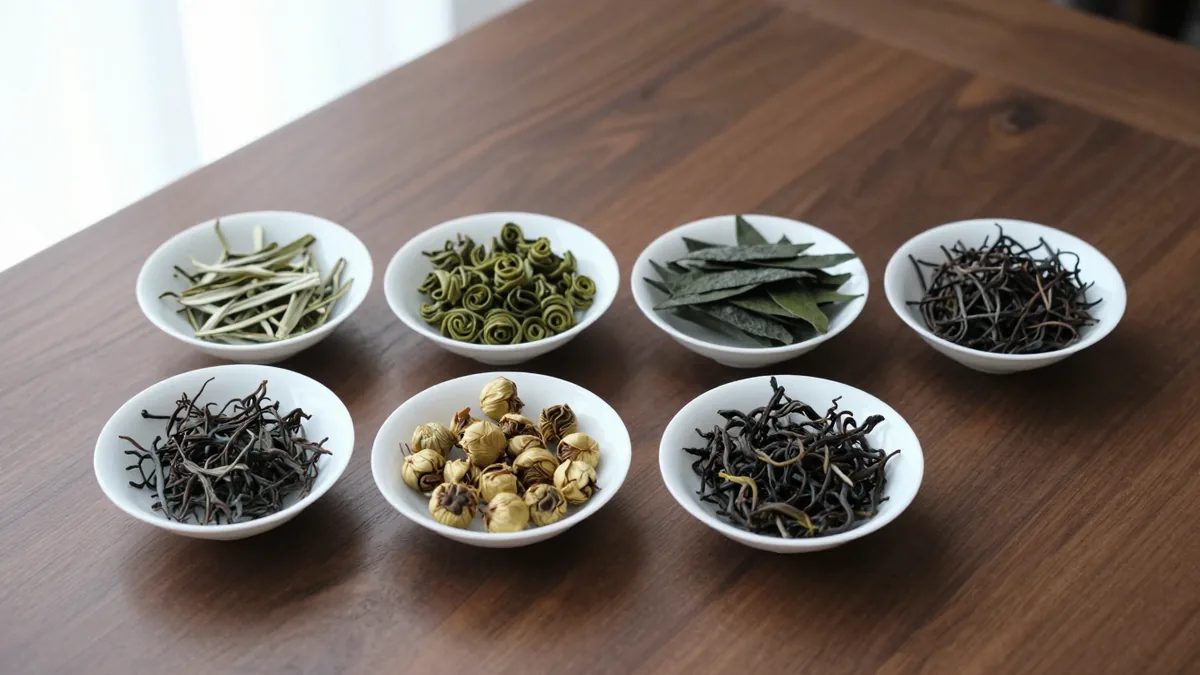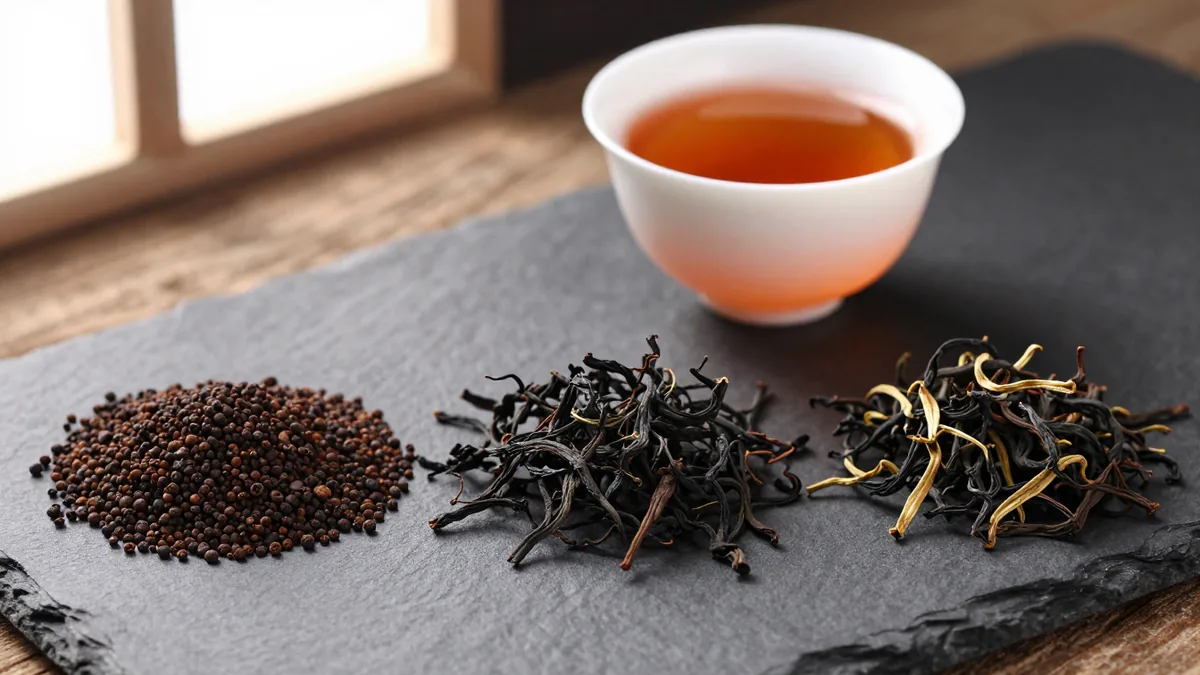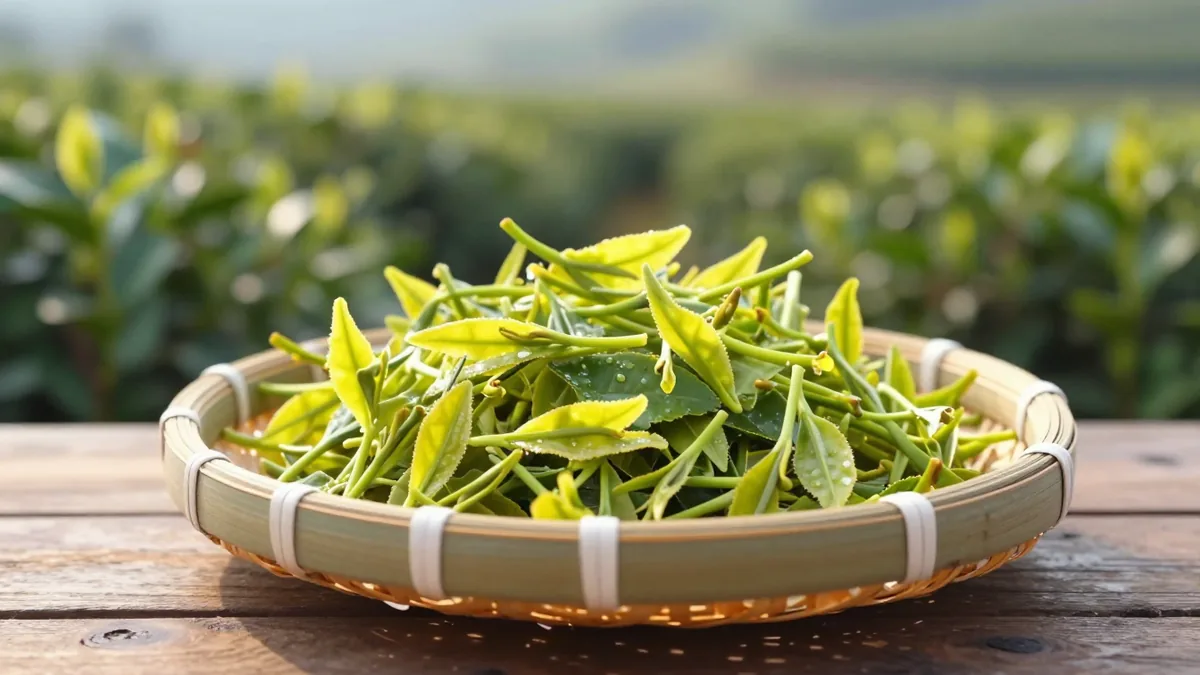
Shincha is the first tea a Japanese field produces in the current spring, picked from late March in the far south to May in the north. In 2025 first-flush sencha averaged ¥2,278/kg as crude tea against ¥1,321/kg for second flush, a 42% drop. In the Tea Explorer catalog, 7,306 teas from 40 vendors, fetched 2026-10-01, in-stock shincha has a median of $0.36/g versus $0.30/g for other sencha.
Japan picks the same bushes up to five times a year. Each pick is a flush, and the first one sets the price for the whole year. This piece covers the calendar, the money and the frost risk. For the tea styles themselves (sencha, gyokuro, kabusecha, bancha), read our Japanese green tea types guide.
What "shincha" means on a Japanese label
The Japan Tea Central Association labeling list defines shincha (新茶) as "tea first produced in the spring of the current year" and kocha (古茶) as tea produced before the current year (JTCA). That is the whole definition. There is no national date and no grade attached.
The flush names (ichibancha, nibancha, sanbancha, yonbancha, akibancha) are defined by "the customary production-period division of the municipality where the tea was produced" (JTCA). A Kagoshima first flush and a Saitama first flush can be a month apart and carry the same word.
The traditional marker is hachijū-hachiya, the 88th night. Count risshun (start of spring, about February 4) as day 1, and day 88 falls on May 2 in a normal year and May 1 in a leap year (Japanese Wikipedia). Shiga's Koka city still timed 2026 shincha to reach shops on May 2 for that reason (GJTEA, April 2026).
Get origin and garden notes
Where tea is grown, how each region makes it, and the next origin explainer. Free, no spam.
No fixed schedule. Unsubscribe anytime.
The flush calendar and what each flush is worth
A bush needs about 40 days after a pick to push new shoots (Global Japanese Tea Association). That spacing sets the calendar. Volumes come from the national growers' federation survey MAFF reprints; prices are 2025 crude-tea (aracha) averages for sencha.
| Flush | Typical start | 2025 output (t) | Share of output | Sencha crude price 2025 (¥/kg) | Price index (first = 100) | Main uses |
|---|---|---|---|---|---|---|
| Ichibancha (first) | early April to mid-May | 25,213 | 34.4% | 2,278 | 100 | shincha, gyokuro, kabusecha, top matcha |
| Nibancha (second) | end of May to end of June | 19,901 | 27.2% | 1,321 | 58 | mid-grade sencha, cooking-grade matcha |
| Sanbancha (third) | end of July to mid-August | 5,511 | 7.5% | 1,378 | 60 | lower-grade sencha |
| Yonbancha, akibancha, shūtō bancha | September onward | 22,614 | 30.9% | 1,807 | 79 | tea bags, bottled tea |
Sources: start windows and uses from GJTEA; output and prices from MAFF, 茶をめぐる情勢, July 2026. Index is our calculation.
Two numbers in that table are unusual. Autumn sencha at ¥1,807/kg sold above second and third flush in 2025, and second flush fetched 58% of the first-flush price. On MAFF's 2008–2024 chart, second-flush sencha stayed below ¥1,000/kg and below half the first-flush price every year, while first flush stayed above ¥1,500/kg (MAFF). The 2025 jump came with the matcha boom: tencha, the leaf ground into matcha, fetched ¥10,030/kg in first flush and ¥4,950/kg in second, and MAFF puts tencha at about 4.9x sencha on average.
The volume mix is moving the other way. First flush made up 43.0% of the flush total in 2008 and 34.4% in 2025, while the cheap fourth-flush and autumn-winter tea rose from 19.5% to 30.9%. MAFF attributes the rise to demand for drink-grade tea (MAFF).
Where the season starts: Tanegashima to Sayama
Shincha moves north with the warmth. The 2026 openings, from GJTEA's monthly reports:
- March 23, Tanegashima (Kagoshima). First field pick in Japan, 180 kg of leaf, three days earlier than 2025 (GJTEA, March 2026).
- April 6, Kagoshima. First auction at the Kagoshima Tea Distribution Center; average prices up 60% on the year, at record highs (GJTEA, April 2026).
- April 9, Shizuoka. Early cultivars picked in Shizuoka and Shimada; 170 kg of Kondo Wase sold from April 11 (GJTEA).
- April 17–27, the middle belt. Higashi-Sonogi (Nagasaki) April 17, Sayama (Saitama) April 21, Koka (Shiga) April 27 (GJTEA).
- May 2, the 88th night. Ceremonial picking of Shizuoka's oldest tea tree in Fujieda (GJTEA, May 2026).
Early cultivars do part of the work. Nio Teas describes its Tanegashima shincha as Kuritawase, a cultivar that "buds earlier than the common yabukita" (Nio Teas).
What first-flush auctions actually pay
Opening-day auction prices are headlines, not the market. In 2025 the Shizuoka Tea Market's first-day average was ¥10,986/kg (GJTEA, April 2025), 4.8x the ¥2,278/kg season average for first-flush sencha nationwide (MAFF). The first lots are small, hand-picked and bid up for publicity.
| Market, 2026 opening | Date | Average | Change | Top lot |
|---|---|---|---|---|
| Kagoshima | April 6 | about ¥6,600/kg (our estimate) | +60%, record | n/a |
| Shizuoka | April 20 | ¥9,019/kg | down from ¥10,986 | ¥1,180,000/kg |
| Uji (Kyoto) | April 24 | ¥20,879/kg | +22.1% from ¥17,098 | ¥500,000/kg gyokuro |
| Koka (Shiga) | May 1 | ¥14,232/kg | about double | ¥180,000/kg |
Sources: GJTEA April 2026, GJTEA May 2026, GJTEA April 2025. Kagoshima estimate = ¥4,137 (2025 opening average) x 1.6.
Shizuoka's average fell for a second year because there were fewer ultra-high bids. The season as a whole went the other way: MAFF reports 2026 first flush trading at about twice the 2025 price in Kagoshima and about 70% higher in Shizuoka (MAFF). In Koka, sencha prices doubled because farmers moved fields to tencha, cutting sencha supply (GJTEA, May 2026).
Frost: the risk before the first pick
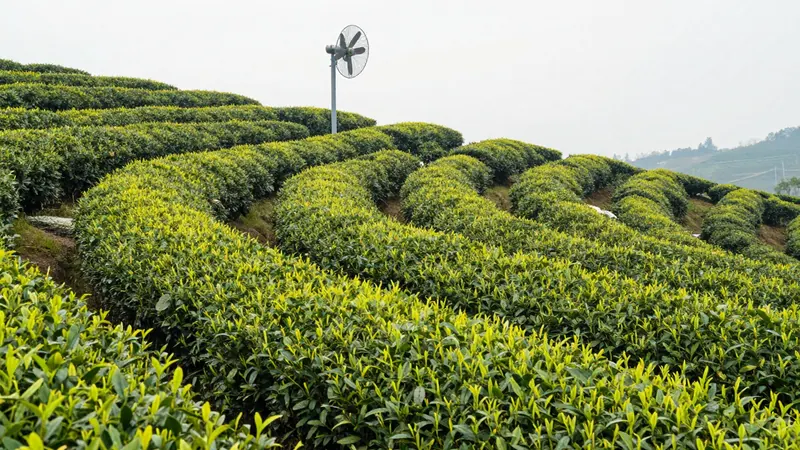
The 88th night is also a frost warning. The proverb "the parting frost of the 88th night" marks the usual end of late frost, and some regions lose new shoots to frost into mid-May (Japanese Wikipedia). A frosted first flush loses most of its value because the tender shoots are the product.
The defense is the tall fan you see over Japanese tea rows:
- How it works. Frost forms under a temperature inversion. A fan on a pole about 5 m tall pushes the warmer air above down into the bushes (Japanese Wikipedia).
- Coverage. One 2 kW fan protects about 800 m², so a hectare needs about 12.5 fans (our arithmetic). Fans cannot stop frost when air 6–9 m up drops below −2 °C.
- Adoption. Of about 50,000 ha of tea in 2001, about 30,000 ha were frost-prone and about 20,000 ha had fans. The design came from Mie's tea research center in 1971.
Fans are not a guarantee. A Wazuka, Kyoto grower quoted in MAFF's report says frost hit his first flush in early April 2019, just before picking, which is why he bought revenue insurance (MAFF). In 2026, Shiga, Uji and Fujieda reported no frost damage (GJTEA April, GJTEA May).
Buying shincha outside Japan
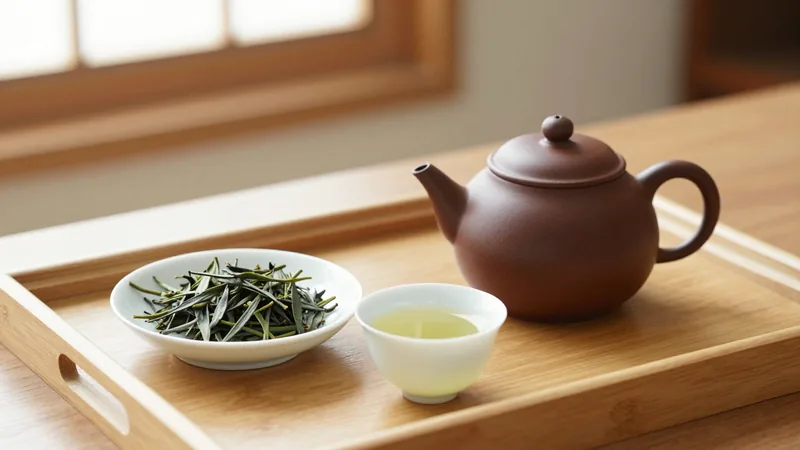
Shincha is a timing claim, not a quality grade, so check the harvest year and the vendor's ship date. In the Tea Explorer catalog, 7,306 teas from 40 vendors, fetched 2026-10-01, 16 listings use "shincha" in the name, from 5 vendors; 10 of them are Rishi.
- Price. In-stock shincha median $0.36/g (n=11) versus $0.30/g for other in-stock sencha (n=55), a 1.2x premium. Across all listings, including sold out: $0.40 vs $0.32.
- Per cup. MAFF's sencha ratio of 2–3 g per 100 mL puts a 200 mL mug at about 5 g: $1.80 for median shincha, $1.50 for median sencha. Use the tea cost calculator for your own numbers.
- Range. Cheapest: Nio Teas Shincha Yakushima Yabukita 2026 at $0.25/g. Highest: Rare Tea Company Japanese Fukamushi Shincha at $0.80/g. Nio's Tanegashima Kuritawase lists $29.90 for 100 g.
- Harvest year. Only 3 of the 16 shincha listings state a harvest year (2026). The rest rely on the word alone.
One product turns the idea around. Kettl's Fall Shincha is spring-picked Yame tea aged six months at −30 °C, a process called jukusei, and ships in early October at $38.00 per 100 g (Kettl). It is a mellowed first flush, not an autumn pick.
Buy what you will finish soon: Ippodo advises using opened tea within about a month (Ippodo). Our tea storage guide covers cold storage and how long to let a chilled bag warm before opening. Brew it at sencha settings from the steeping chart.
Frequently Asked Questions
When does shincha come out?
The first field pick is in late March on Tanegashima; in 2026 it was March 23. Kagoshima auctions open in early April, Shizuoka around April 20 and Uji around April 24. Northern areas such as Sayama follow in late April, and the traditional 88th night falls on May 1 or 2.
Is shincha the same as ichibancha?
Shincha is the first tea of the current year's spring, so it is always first-flush leaf sold fresh. Ichibancha is the flush name for that harvest and stays ichibancha after the season, when the same tea is no longer sold as shincha. The JTCA defines the flush names by each municipality's local custom, not by a national date.
How much cheaper is second-flush tea?
In 2025, second-flush sencha averaged ¥1,321/kg as crude tea, 58% of the ¥2,278/kg first-flush price. Before the matcha boom the gap was wider: from 2008 to 2024 second flush stayed below ¥1,000/kg and below half the first-flush price.
Does shincha cost more in the US?
Yes, by about 20%. In-stock shincha has a median of $0.36/g against $0.30/g for other in-stock sencha in our catalog as of October 1, 2026. That is $1.80 versus $1.50 for a 5 g mug.