Earl Grey is tea scented with oil from the peel of the bergamot orange, a citrus grown almost entirely in Calabria, Italy (more than 90% of world production). Labels range from "natural bergamot oil" to plain "flavor," and US rules let "natural flavor" come from plants other than bergamot. In our catalog, 15 of 29 in-stock loose Earl Greys state natural, first-press or 100% bergamot oil, and the median price is $0.165/g, about $0.41 per 2.5 g cup.
Earl Grey is a method, not a single tea: any base leaf plus bergamot. The base, the kind of bergamot and the add-ins decide what you get. This guide covers what bergamot oil contains, what the label words mean, one documented case of too much Earl Grey, and what 29 loose Earl Greys in our catalog actually declare.
What bergamot is and where it comes from
Bergamot (Citrus bergamia) is a sour citrus grown "almost exclusively along the southern coast of the Calabria region," which supplies "more than 90% of the world production," according to a 2015 review in Frontiers in Pharmacology. The oil is pressed from the peel.
The same review gives the volatile composition of the oil:
| Compound | Share of bergamot essential oil |
|---|---|
| Limonene | 25–53% |
| Linalyl acetate | 15–40% |
| Linalool | 2–20% |
| Bergapten (5-MOP), non-volatile | about 0.2% |
Source: Navarra et al., Front. Pharmacol. 2015.
Linalool and linalyl acetate carry most of the flavor; the review notes limonene and pinene "are not much flavoring." Bergamot oil is on the FDA's list of essential oils generally recognized as safe, 21 CFR 182.20.
Get brewing and teaware notes
Steep times, water temperatures, leaf ratios, and teaware that is worth buying. Free, no spam.
No fixed schedule. Unsubscribe anytime.
Natural oil, "natural flavor" and synthetics
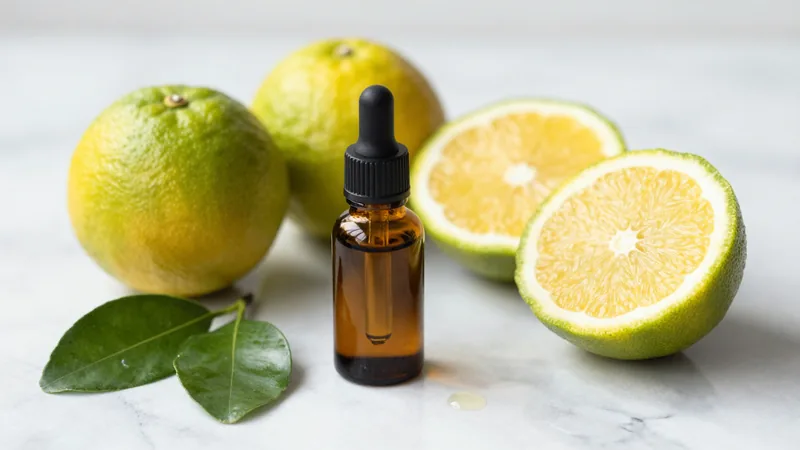
US labeling law draws the lines. Under 21 CFR 101.22:
- Natural flavor is an essential oil, essence or extract "derived from a spice, fruit or fruit juice, vegetable ... herb, bark, bud, root, leaf or similar plant material." It does not have to come from bergamot.
- "With other natural flavor" must follow the name when real bergamot is reinforced by natural flavor from another source.
- Artificial flavor is any flavoring "not derived from" those sources.
So "natural flavor" on an Earl Grey box tells you the flavoring came from plants. It does not tell you the plant was a bergamot. Only "bergamot oil" or "oil of bergamot" names the fruit.
Synthetic shortcuts are documented. A 2021 study in Molecules lists "synthetic linalool and linalyl acetate added to bergamot EO" as a common adulteration. Genuine oil is about 98.6% one mirror-image form of linalool; when the authors spiked oil with synthetic linalool, the other form rose from 0.4% to 24%. Labs use that shift to catch fakes. Red Blossom Tea puts it bluntly on its Superior Earl Grey page: "Earl Grey nowadays is often artificially flavored."
Bergapten and the four-liter case
Bergamot oil contains bergapten, a furanocoumarin. It makes the oil phototoxic on skin, which is why perfumers use a furocoumarin-free oil; vacuum distillation of the peel gives an oil "totally devoid of 5-MOP," per the Frontiers review.
There is one published case of drinking too much. In a 2002 letter in The Lancet, "Earl Grey tea intoxication," Josef Finsterer described a 44-year-old man who had drunk up to 4 L of black tea a day for 25 years, then switched to the same volume of Earl Grey. As summarized in the Frontiers review:
- Muscle cramps began one week after the switch.
- After 5 months he went back to plain black tea and the symptoms disappeared within 1 week.
- Symptoms did not return if he kept Earl Grey to no more than 1 L a day.
The proposed cause is bergapten acting as a potassium channel blocker. Four liters is about 16.9 cups of 8 fl oz; one liter is about 4.2 cups. This is a single case report, not a dose study.
Where the name came from
The name honors Charles Grey, 2nd Earl Grey, British prime minister from 1830 to 1834, but the origin stories are legends. Wikipedia's Earl Grey entry summarizes the main ones:
- The mandarin story: a Chinese mandarin gave the blend to Lord Grey in 1803 after one of Grey's men saved his son from drowning. Wikipedia calls it "apocryphal."
- The Grey family version: a mandarin blended it for Lord Grey "to suit the water at Howick Hall," the family seat.
- Jacksons of Piccadilly says Lord Grey gave the recipe to George Charlton of Robert Jackson & Co. in 1830.
- Twinings credits Lady Grey's London entertaining with making the blend popular enough to sell.
The first known published references to "Earl Grey" tea are advertisements by Charlton & Co. of Jermyn Street in the 1880s, about 50 years after Grey's time in office.
What our catalog sells
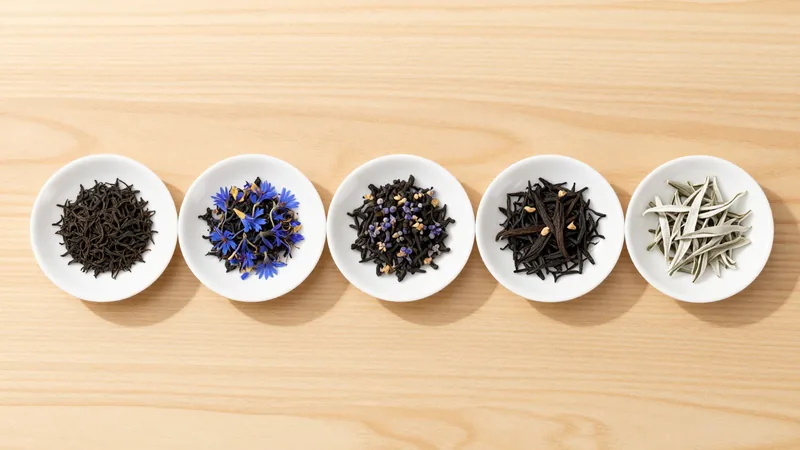
Our catalog (Tea Explorer catalog, 7,306 teas from 40 vendors, fetched 2026-10-01) has 71 products with "Earl Grey" in the name from 15 vendors; Harney & Sons lists 25 of them. Of those, 29 are in-stock loose tea with a weight and price. Their median is $0.1647/g. As of October 1, 2026:
| Style | Listings | Median USD per gram | Range USD per gram | Per 2.5 g cup |
|---|---|---|---|---|
| Classic black | 17 | 0.160 | 0.070–0.306 | $0.40 |
| Cream / crème | 4 | 0.150 | 0.067–0.247 | $0.37 |
| Lavender | 2 | 0.163 | 0.150–0.176 | $0.41 |
| Decaf | 2 | 0.166 | 0.129–0.202 | $0.41 |
| Green or white base | 2 | 0.184 | 0.165–0.203 | $0.46 |
| Other add-ins (smoked, fruit) | 2 | 0.344 | 0.247–0.440 | $0.86 |
Source: Tea Explorer catalog, 7,306 teas from 40 vendors, fetched 2026-10-01 (/tea-price-index); filter: name contains "Earl Grey," in stock, weight at least 20 g.
We read every product description on October 1, 2026 and sorted what each says about its bergamot:
- 15 state natural, first-press or 100% bergamot oil. Ten of the 29 name Italy, Calabria or Sicily as the source; What-Cha's Ceylon Earl Grey names France.
- 7 name bergamot oil or extract without the word natural.
- 6 say only "flavor," "essence" or "bergamot," or nothing about the flavoring.
- 1 uses no bergamot at all. Red Blossom's Superior Earl Grey uses "whole pieces of dried orange peel" on a Qimen base.
The 15 natural-declared teas have a median of $0.1565/g; the other 14 have $0.1855/g. In this sample the stronger claim does not cost more; it is cheaper at the median.
Base tea is named on 15 of 29: Sri Lanka 5, India 3, China 3, multi-origin blends 4. The rest say only "black tea."
How to pick one
- Read the flavoring line first. "Bergamot oil" or "oil of bergamot" names the fruit. "Natural flavor" alone does not.
- Pick the base. Five of the 29 name a Sri Lankan base; our Assam vs Ceylon vs Kenya comparison covers how those bases differ. Harney Viennese Earl Grey uses Darjeeling, "so it is lighter." Rishi Earl Grey uses Thai and Yunnan black tea.
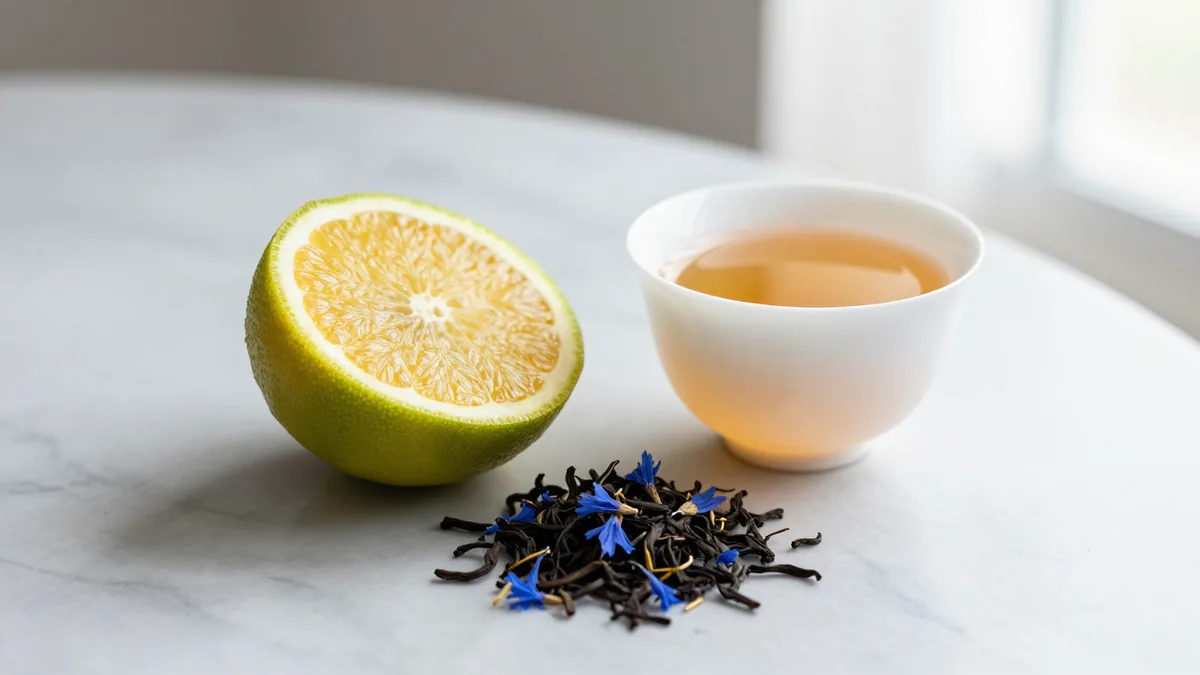
- Decide on add-ins. Earl Grey crème adds flavors such as vanilla, per Wikipedia. Lady Grey, which Wikipedia lists as a Twinings trademark, adds cornflower or Seville orange. A London Fog is a drink: Earl Grey, steamed milk and vanilla syrup. Harney sells a Victorian London Fog blend with bergamot, vanilla and lavender at $0.1058/g.
- Check the price per gram, not the tin. Harney & Sons Fine Teas Earl Grey Imperial at $0.0705/g in a 1 lb bag is $0.18 per 2.5 g cup. BELLOCQ No. 35, The Earl Grey, organic Ceylon with natural Sicilian bergamot, is $0.186/g, or $0.46 per cup.
- Look past the name. Smith Lord Bergamot is an Earl Grey without the name: Ceylon Dimbula, Uva and Assam with "bergamot essential oil from ... Reggio Calabria, Italy," at $0.2114/g.
The cheapest in-stock loose Earl Grey is DAVIDsTEA Organic Cream of Earl Grey Tea 1 KG Bag at $0.067/g in a 1 kg bag. The most expensive is BELLOCQ No. 123, Smokey Earl Grey, built on lapsang souchong, at $0.44/g. Leaf amounts for other cup sizes are in the tea ratio calculator.
Frequently Asked Questions
Where does bergamot for Earl Grey come from?
From the peel of the bergamot orange, Citrus bergamia. More than 90% of world production comes from the southern coast of Calabria, Italy. In our catalog, 10 of 29 in-stock loose Earl Greys name Italian bergamot.
Is "natural flavor" the same as bergamot oil?
No. Under 21 CFR 101.22, natural flavor can be an essential oil or extract from any fruit, herb, bark or similar plant. Only "bergamot oil" or "oil of bergamot" names the fruit. 15 of 29 catalog Earl Greys state natural, first-press or 100% bergamot oil.
Can drinking Earl Grey cause muscle cramps?
One case is published. A man drinking about 4 L of Earl Grey a day, roughly 16.9 cups, developed cramps that stopped within a week of quitting and did not return at 1 L a day or less. The proposed cause is bergapten in bergamot oil.
How much does good loose Earl Grey cost?
The median in-stock loose Earl Grey in our catalog is $0.1647/g, about $0.41 per 2.5 g cup, as of October 1, 2026. Prices run from $0.067/g to $0.44/g.
Who invented Earl Grey?
Nobody knows. The name refers to Charles Grey, 2nd Earl Grey, prime minister from 1830 to 1834. The earliest published "Earl Grey" tea references found are 1880s advertisements by Charlton & Co. of London.