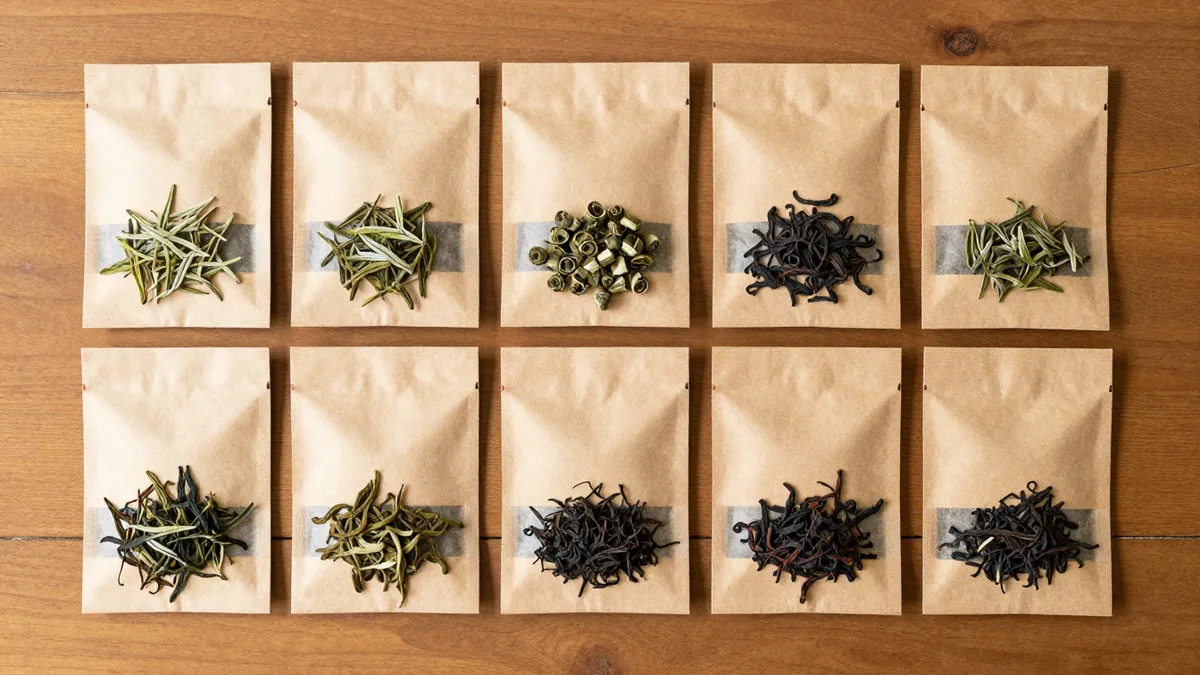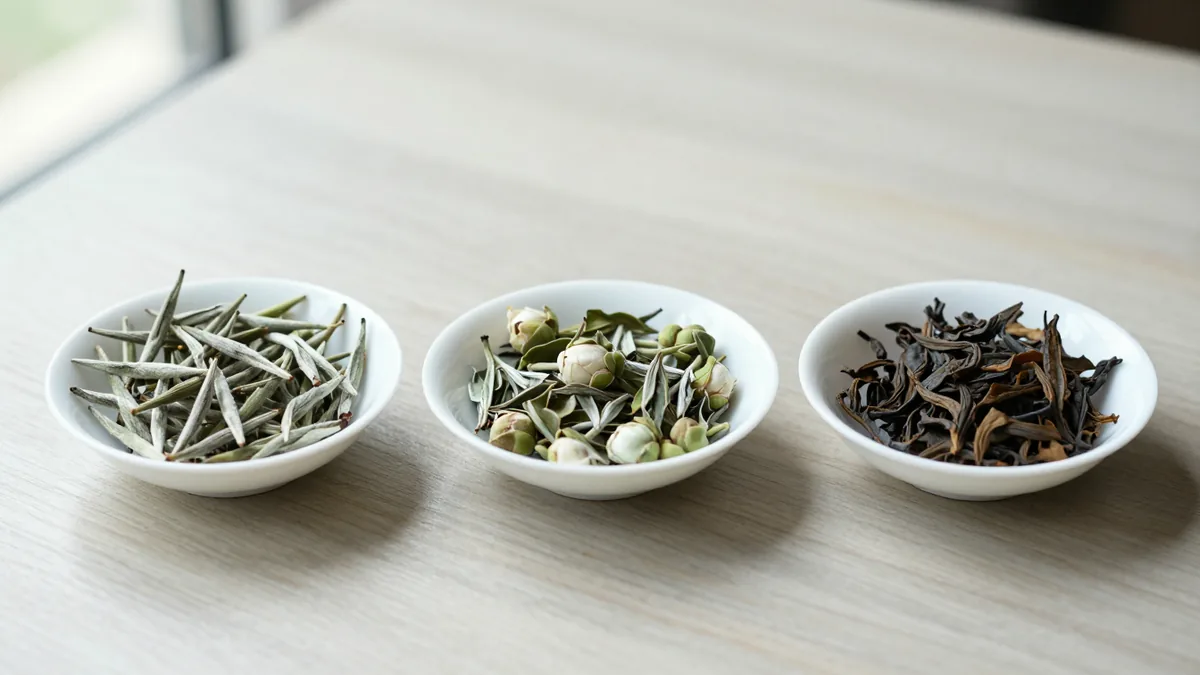
China's white tea standard (GB/T 22291-2017) recognizes four grades by how much leaf is picked: Silver Needle is bud only, Bai Mu Dan is a bud with one or two leaves, Gong Mei is a bud with more than two leaves, and Shou Mei is mostly leaf. In our catalog as of October 1, 2026, the median price is $0.42/g for Silver Needle (37 teas), $0.32/g for Bai Mu Dan (30) and $0.21/g for Shou Mei and Gong Mei (34).
White tea is made in two steps, withering and drying. The grade on the bag tells you which part of the shoot was picked, and that single fact drives most of the price and flavor difference you will see.
This guide covers the four grades, where they come from, how they are made, and what each one actually costs per gram and per session, using Tea Explorer catalog, 7,306 teas from 40 vendors, fetched 2026-10-01.
The four grades in China's white tea standard
China publishes a national standard for white tea, GB/T 22291-2017, issued on November 1, 2017 and in effect since May 1, 2018. Researchers who work with the standard describe four product types, ranked from the most tender pick to the most mature (Food Chemistry: X, 2024):
- Bai Hao Yin Zhen (Silver Needle): tea buds only.
- Bai Mu Dan (White Peony): a bud with one or two leaves.
- Gong Mei (Tribute Eyebrow): a bud with more than two leaves.
- Shou Mei (Longevity Eyebrow): young shoots with more than two leaves.
The grade is a plucking standard, not a quality score. A carefully made Shou Mei can be a better tea than a poorly stored Silver Needle. What changes as you move down the list is the ratio of bud to leaf.
That ratio shows up in the cup. A 2026 study of Fujian white teas across three plucking grades found that the youngest material had "higher sweetness, umami, and aftertaste persistence," while mature leaves showed "increased bitterness and astringency" (Foods, 2026). The same study linked the sweetness of young grades to higher free amino acids and theanine, which fall as the leaf matures.
Get brewing and teaware notes
Steep times, water temperatures, leaf ratios, and teaware that is worth buying. Free, no spam.
No fixed schedule. Unsubscribe anytime.
Where white tea comes from: Fuding, Zhenghe and the Da Bai cultivars
Fujian province is the home of white tea. The two classic producing counties are Fuding and Zhenghe (Food Chemistry: X, 2024). Wikipedia's entry on Silver Needle names Fuding Da Bai and Zhenghe Da Bai as the two major cultivars of these regions, and dates the most sought-after first flush to "late March to early April" (Wikipedia).
Research groups in Fujian work with four main white tea cultivars: Fuding Da Bai, Fuding Da Hao, Zhenghe Da Bai and Fu'an Da Bai (Foods, 2026). All four are large-bud plants with heavy down, which is what gives Silver Needle its silver look.
"Fuding White Tea" is a protected geographical indication. China's former quality inspection agency (AQSIQ) approved it in June 2004 under announcement No. 72. The protected zone is Fuding City, on red and yellow soil hills between 100 and 1,000 meters of altitude (Baidu Baike, Fuding White Tea).
What this means when you shop:
- "Fuding" on the label points to the GI area. It is a claim about origin, not grade.
- "Zhenghe" usually signals a heavier, darker style. Wikipedia describes the Zhenghe style of Silver Needle as "usually a lot darker," with longer piling and a fuller body than the Fuding style (Wikipedia).
- Any other province or country means a white-processed tea from different plants. Our catalog lists Silver Needle-style buds from Yunnan, Kenya, Nepal, Sri Lanka, Rwanda and Thailand.
Two steps: withering and drying
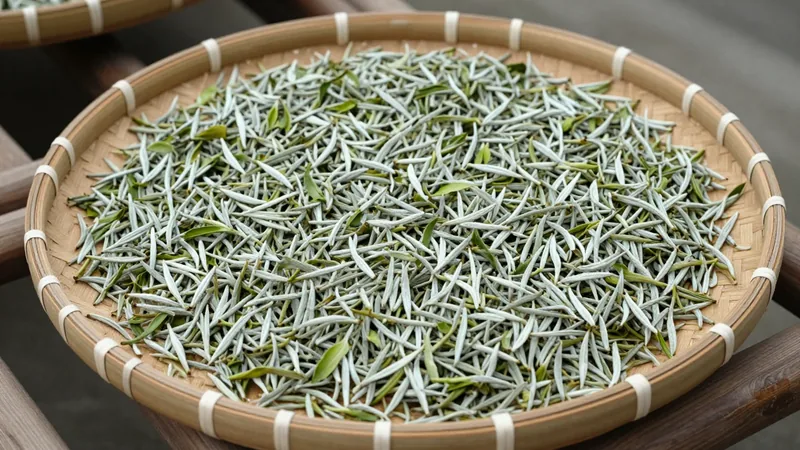
White tea skips the kill-green step used for green tea and the rolling used for oolong and black tea. The process is "gentle withering followed by drying," with limited enzymatic oxidation during the wither (Foods, 2026).
The wither is long. The Fuding GI specification describes natural withering of 40 to 60 hours, or 16 to 24 hours with heated withering (Baidu Baike). In one 2025 lab study, leaves were withered for 45 hours at 24 °C down to 20% moisture, then hot-air dried at 80 °C to 8% moisture (PMC, 2025).
Those long hours are where the flavor forms. The leaf loses water slowly, oxidizes lightly at the edges, and keeps much of its down. Drying then stops the change and makes the tea shelf-stable.
What each grade costs: catalog prices as of October 1, 2026
We pulled every white tea in the catalog whose name matches a grade, then dropped flavored teas, jasmine teas, decaf, samplers, gift sets and teaware. Prices are per gram of the listed package, converted to USD.
| Grade | Leaf standard | Flavor direction | Median $/g | 25th–75th pct $/g | Range $/g | Teas (n) |
|---|---|---|---|---|---|---|
| Silver Needle | Bud only | Sweetest, most umami | $0.42 | $0.38–$0.67 | $0.13–$6.50 | 37 |
| Bai Mu Dan | Bud + 1–2 leaves | Between the two | $0.32 | $0.22–$0.72 | $0.11–$2.19 | 30 |
| Gong Mei / Shou Mei | Bud + more than 2 leaves, or mostly leaf | More bitter and astringent, less sweet | $0.21 | $0.16–$0.31 | $0.08–$1.19 | 34 |
Sources: Tea Explorer catalog, 7,306 teas from 40 vendors, fetched 2026-10-01; leaf standards from Food Chemistry: X, 2024; flavor direction from Foods, 2026.
Three things stand out:
- Silver Needle costs 2.0x Shou Mei at the median, and 1.33x Bai Mu Dan. The gap between the top two grades is smaller than the gap to the leafy grades.
- The range inside each grade is wider than the gap between grades. Silver Needle runs from $0.13/g for Yunnan Sourcing Tea Shop's Feng Qing buds to $6.50/g for a 10 g tin of hand-picked Fujian buds at Kettl.
- Origin moves the price. Silver Needle rows that list Fujian as origin have a median of $0.78/g (11 teas), against $0.40/g for the other 26, most of which are Yunnan, African or South Asian buds.
Harvest years tell the rest of the story. Of the Silver Needles that print a year, the median year is 2026. For Shou Mei and Gong Mei it is 2016, with vintages back to 2005. The leafy grades are the ones vendors sell aged.
Cost per session: the math
Grams per session matter more than price per gram. We use 5 g per session as a working figure for a small gaiwan (see our gongfu brewing guide for ratios). At that dose, the median tea in each grade costs:
| Grade | Median $/g | Cost per 5 g session | Cost per 100 g |
|---|---|---|---|
| Silver Needle | $0.42 | $2.10 | $41.95 |
| Bai Mu Dan | $0.32 | $1.58 | $31.64 |
| Shou Mei / Gong Mei | $0.21 | $1.05 | $20.92 |
Source: medians from the Tea Explorer catalog, 7,306 teas from 40 vendors, fetched 2026-10-01; session cost = median $/g x 5 g.
White tea takes several infusions, so the per-cup figure falls with every re-steep. Plug your own grams and package price into the tea cost calculator to compare a specific bag.
Pressed cakes and aged white tea
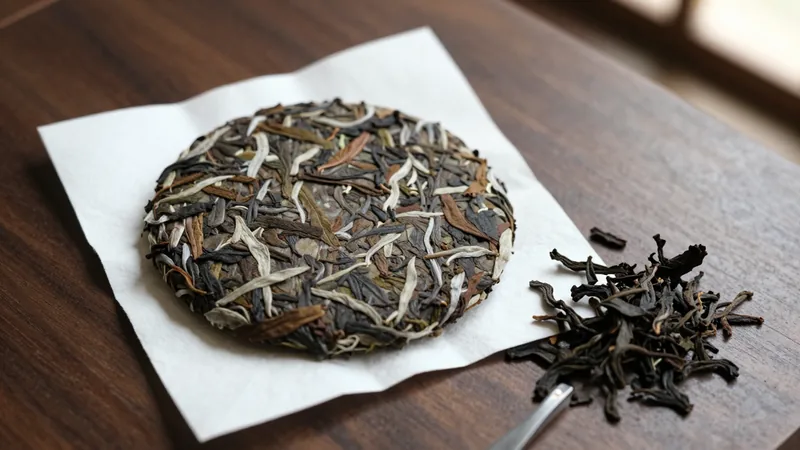
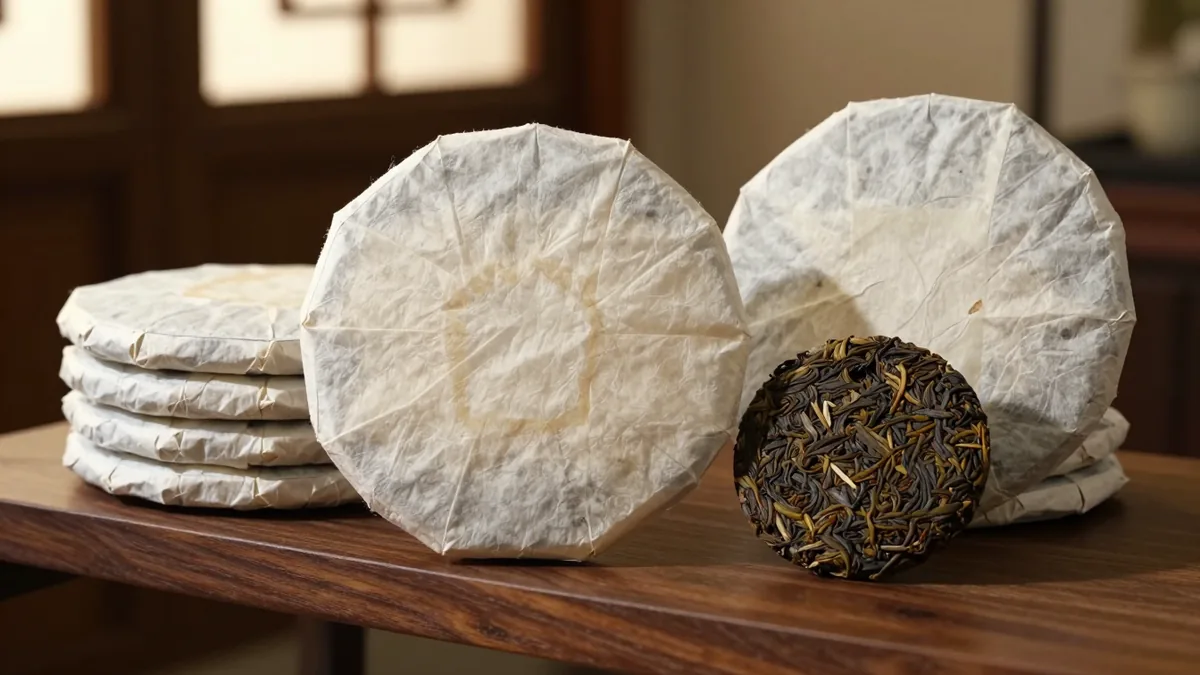
The leafy grades are the ones sold pressed and dated. In our catalog, 29 of the 34 Shou Mei and Gong Mei rows carry a harvest year, and 19 are named as cakes, bricks, mini cakes, wafers or "dragon balls".
The trade has a saying for this: "one year tea, three years medicine, seven years treasure." Researchers quote it as a proverb, not as a finding (Food Chemistry: X, 2024). Treat it as a description of how the market prices age, not a health claim.
What the lab work does show is chemical change. A 2025 study of Yunnan large-leaf white tea stored for up to seven years found polyphenols and amino acids declined while soluble sugars, flavonoids and gallic acid rose. Aflatoxins were not detected in any sample, aged 1 year or 7 years (PMC, 2025).
Aging only works if storage is dry, dark and free of odors. Our guide on how to store tea covers humidity and containers.
White tea outside Fujian: Yunnan Moonlight White
Yue Guang Bai, sold as Moonlight White, is a Yunnan white tea. Seven Cups traces it to Ming Le village in Jinggu county, Yunnan, made from the Jinggu Da Bai Cha variety (Seven Cups).
It is processed differently. The leaves wither indoors or at night, out of direct sun, "usually within 24 hours, as opposed to the 36-hours-plus required for a natural wither in Fujian," and they are fully air-dried with no oven finish (Seven Cups).
Moonlight White sits outside the GB/T grade names, so we priced it separately. The catalog has 26 Moonlight White teas with a median of $0.18/g, range $0.11–$0.44/g (Tea Explorer catalog). That is cheaper than the median Bai Mu Dan and close to Shou Mei.
How to choose a grade
Pick by what you want in the cup, then by budget:
- You want the lightest, sweetest cup: Silver Needle. Budget about $2.10 per 5 g session at the median.
- You want more body at a lower price: Bai Mu Dan. It is the best value per session for most first-time buyers at $1.58.
- You want a stronger cup and something to age: Shou Mei or Gong Mei, ideally a pressed cake with a printed harvest year, at $1.05 per session.
- You want a non-Fujian style: Moonlight White from Yunnan, at a median of $0.18/g.
Check the label for three things: grade name, origin (Fuding, Zhenghe or elsewhere) and harvest year. A white tea with no year and no origin is priced on grade alone, and you cannot check that.
Frequently Asked Questions
What is the difference between Silver Needle and Bai Mu Dan?
Silver Needle is made from buds only. Bai Mu Dan is a bud with one or two leaves, which gives a fuller cup with more leaf character. In our catalog as of October 1, 2026, the median Silver Needle costs $0.42/g and the median Bai Mu Dan $0.32/g.
Is Shou Mei a low-quality white tea?
Shou Mei is the most mature pick in China's white tea standard, made from shoots with more than two leaves. That makes it stronger, less sweet and more astringent, not worse. It is also the grade most often pressed and aged; the median harvest year of Shou Mei and Gong Mei in our catalog is 2016.
Does white tea really get better with age?
The saying "one year tea, three years medicine, seven years treasure" is a trade proverb. Lab work shows real change: in one study, polyphenols and amino acids fell and soluble sugars rose over seven years of storage. The taste is a personal call, so buy a small cake before committing.
How much does a session of white tea cost?
At 5 g per session and median catalog prices, Silver Needle costs $2.10, Bai Mu Dan $1.58 and Shou Mei or Gong Mei $1.05. Each session yields several infusions, so the cost per cup is lower.
Is white tea only made in Fuding?
No. Fuding and Zhenghe in Fujian are the classic origins, and "Fuding White Tea" is a protected geographical indication since 2004. Our catalog also lists white teas from Yunnan, Kenya, Nepal, Sri Lanka, Rwanda and Thailand; Yunnan Moonlight White has a median of $0.18/g across 26 teas.