Taste tea the way labs do: brew every sample at the same weight, water and time in a lidded cup, pour into a white bowl, then judge the dry leaf, the aroma hot, warm and cold, the liquor, the taste and the infused leaf. China's GB/T 23776-2018 method uses 3 g in 150 ml of boiling water for 5 minutes. Score each attribute on a 0–15 scale, as trained panels do. A three-tea flight at 3 g each costs about $3.00 at catalog median prices.
What professional tasters use
Professional tea tasting is a controlled comparison, not a nice cup. Two published methods set the rules.
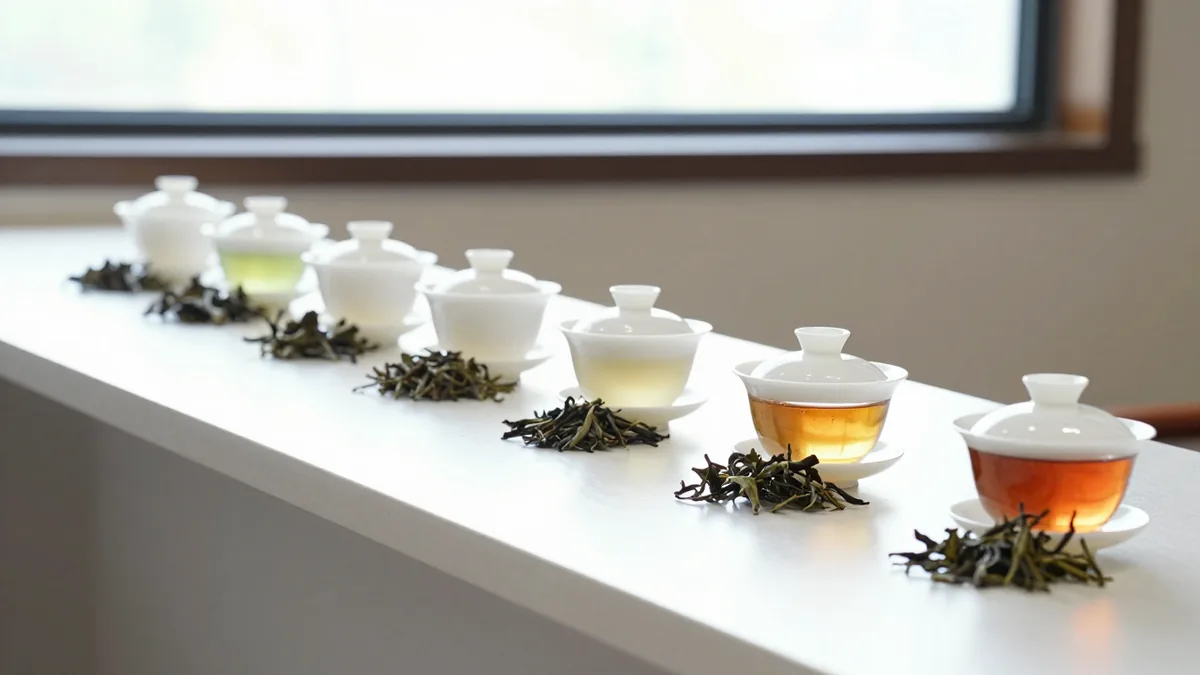
ISO 3103:2019. The international method uses a white porcelain or glazed earthenware pot with a partly serrated rim and a loose lid, plus a matching white bowl. The taster holds the lid down, pours through the serrations into the bowl, then turns the lid over and puts the wet leaf on it so the infused leaf can be inspected (ISO 3103:2019). The ratio and steep times are in our grams-per-cup guide.
ISO allows milk for black tea: about 5 ml in the large bowl, added when the liquor is 65–80 °C. The standard says milk is not essential but "sometimes helps to accentuate differences in flavour and colour" (ISO 3103:2019).
GB/T 23776-2018. China's sensory method, as used in a 2026 black tea study, infuses 3.0 g of tea in 150 ml of boiling water in a covered tasting cup for 5 minutes. Tasters smell the leaf hot, warm and cold, keep the liquor at 60 °C for tasting, drink purified water between samples and rest 10 minutes before the next one (Sichuan black tea study, Scientific Reports 2026).
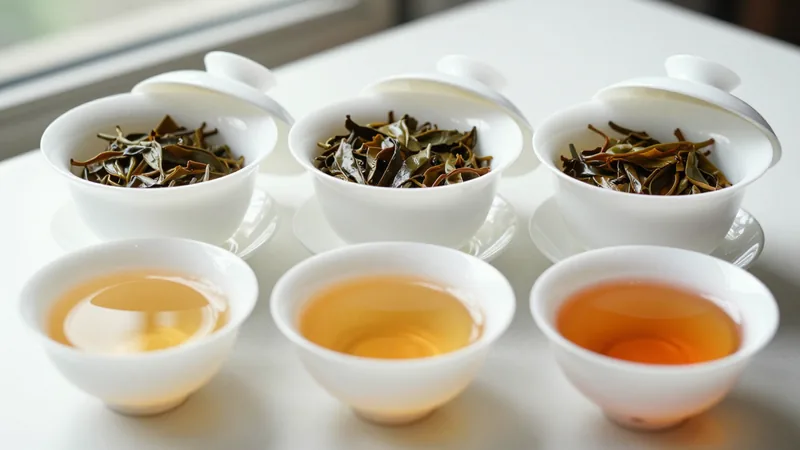
Neither method suits every tea. Boiling water and 5–6 minute steeps are not recommended for most green teas, so working tasters often brew to the producer's recommendation instead (Wikipedia: Tea tasting). The rule that matters is the same in both: identical weight, water, temperature and time for every cup in the flight.
Get tasting and processing notes
Oxidation, rolling, roasting oolong, aging pu-erh, and how to taste tea side by side at home. Free, no spam.
No fixed schedule. Unsubscribe anytime.
Set up a home flight
Three teas keeps a first flight manageable and costs little.
- Weigh. 3 g per cup on a 0.1 g scale. Spoons vary too much by leaf shape.
- Same water. One kettle, one water source. Water chemistry changes taste; see our water guide.
- Code the cups. Write A, B, C under each cup and have someone else fill them, so you taste blind. Price does not predict flavor: a Kansas State panel found the prices of 138 green teas "did not differentiate the flavors of the samples" (Lee, Chambers & Chambers 2014).
- Same clock. Start the timers 30 seconds apart so each cup gets the same steep.
- Order. Taste lightest to darkest: green, then oolong, then black.
- Reset between cups. Panels use water and unsalted crackers (Kim et al. 2018).
Cost, using median prices per gram from the Tea Explorer catalog, 7,306 teas from 40 vendors, fetched 2026-10-01, as of October 1, 2026 (price index):
| Cup | Type | Median $/g | Priced listings | Cost at 3 g |
|---|---|---|---|---|
| A | Green | $0.30 | 380 | $0.90 |
| B | Oolong | $0.44 | 490 | $1.32 |
| C | Black | $0.26 | 552 | $0.78 |
| Flight total | $3.00 |
Repeating the flight once to check your scores brings it to $6.01.
The six things to assess
Each step has its own sense and its own words. The vocabulary column draws on the published lexicons cited in the next section.
| Step | When | How | Words to use |
|---|---|---|---|
| Dry leaf | Before brewing | Look and smell a pinch on white paper | twisted, rolled, broken, even, dusty; grassy, roasted, floral |
| Aroma (hot) | Right after pouring | Lift the lid, sniff 2–3 seconds per sniff (Kun et al. 2025) | floral/perfumy, citrus, fruity, roasted, smoky |
| Aroma (warm, cold) | As the leaf cools | Sniff the leaf again as it cools | sweet aromatics, nutty, woody, musty |
| Liquor | In the bowl | Color and clarity against white | pale, golden, amber, copper; clear or cloudy |
| Taste and mouthfeel | Liquor near 60 °C | Slurp from a spoon, hold, spit | sweet, bitter, umami, sour; astringent, tooth-etching, thin or full |
| Infused leaf | On the lid | Spread it out, smell, look at the color | even or mixed color, whole or broken, bud count |
Two professional habits are worth copying. Tasters slurp noisily from a large spoon so air and liquid cover the tongue, then spit into a spittoon before the next cup (Wikipedia: Tea tasting). And they smell the empty cup: in a 2025 Phoenix oolong study, panelists waited 1 minute for steam to clear before judging the cup aroma, because water vapor masks floral and honey notes (Kun et al. 2025).
Caffeine changes what you smell. A 2025 study of three Phoenix oolongs found that adding caffeine to water lowered the odor thresholds of four key aroma compounds, strengthening sweet, flowery and fruity notes (Song et al. 2025). Keep decaf and regular teas in separate flights.
Flavor wheels: published tea lexicons
A lexicon is a fixed list of descriptors, each with a definition and a reference sample. A flavor wheel groups them. You do not need the reference samples at home, but borrowing the categories keeps your notes consistent.
The main green tea lexicon came from Kansas State University: a trained panel defined 31 flavor attributes across 138 green teas from 9 countries (Lee & Chambers 2007, Journal of Sensory Studies). Its categories:
| Category | Descriptors |
|---|---|
| Green | asparagus, beany, Brussels sprout, celery, parsley, spinach, green beans, green herb-like |
| Brown | ashy/sooty, brown spice, burnt/scorched, nutty, tobacco |
| Fruity/Floral | fruity, floral/perfumy, citrus, fermented |
| Mouthfeel | astringent, tooth-etching |
| Basic tastes | overall sweet, bitter |
| Other | almond, animalic, grain, musty/new leather, mint, seaweed, straw-like |
Source: Lee & Chambers 2007.
Other published tools cover other teas:
| Lexicon or wheel | Tea | Samples | Terms |
|---|---|---|---|
| Lee & Chambers 2007 | Green | 138 | 31 attributes |
| Koch et al. 2012 | Rooibos | 69 | 121 descriptors generated, 27 on the wheel, 14 in the lexicon |
| Jolley et al. 2017 | Rooibos (revised aroma wheel) | 208 | "hay/dried grass" found in 99% of samples |
| Kim et al. 2018 | Fermented and blended tea | 12 | 37 (24 flavor, 13 aroma) |
| Yang et al. 2025 | Oolong (Shuixian, Rougui) | 2 types | 48 compounds, 20 key, 8 odour descriptors |
| Sichuan black tea, 2026 | Black | 7 | 18 (10 aroma, 8 taste) |
The black tea lexicon is useful because it names defects as well as positives. Its aroma side lists durability, flowery, sweet, tobacco, woody, chestnut, baked and sweet potato, with pungent and green as defects; its taste side lists sweet, umami and concentration, with bitter, sour, astringent, thick and dry as defects (Scientific Reports 2026).
If bitterness dominates your notes, check the brew before blaming the tea: why green tea tastes bitter.
Score it
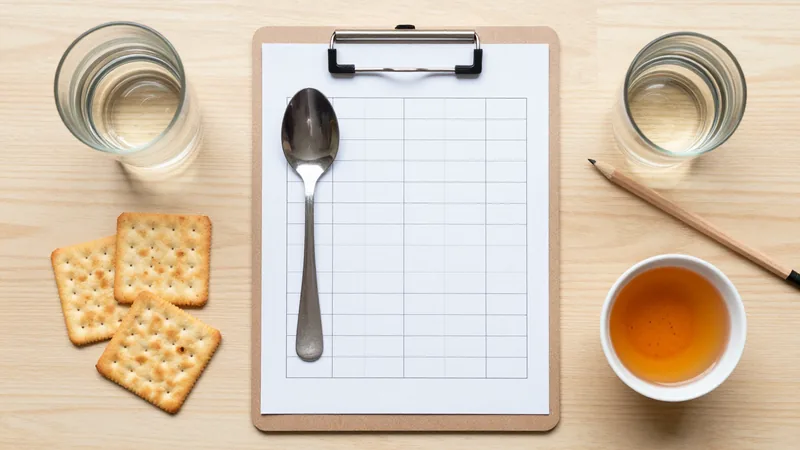
Trained panels score intensity on a 0–15 scale in 0.5 steps, where 0 means none (Lee, Chambers & Chambers 2013; Kim et al. 2018). The Kansas State panel behind those scores had 120 hours of general training and at least 1,200 hours of sensory testing (Lee et al. 2013). You will not match that. A fixed sheet still makes your second session comparable with your first.
A home sheet, one column per coded cup:
| Attribute | Cup A | Cup B | Cup C |
|---|---|---|---|
| Aroma intensity (0–15) | |||
| Main aroma words (2–3) | |||
| Sweet (0–15) | |||
| Bitter (0–15) | |||
| Astringent (0–15) | |||
| Body (0–15) | |||
| Finish length, seconds | |||
| Cup aroma after 1 min | |||
| Would buy again (yes/no) |
Use words from the lexicon tables, not "nice" or "smooth." Record intensity separately from liking: a very bitter tea can still be the one you prefer.
Taste the re-steeps too
One infusion tells you little about a tea meant for multiple steeps. In the Kansas State study, the first two brews of six green teas had similar flavor intensity; the third and fourth were milder, with less bitterness and astringency, and the authors concluded green tea in leaf form "may be brewed up to four times" (Lee et al. 2013). For two oolongs brewed seven times gongfu style, color and aroma declined steadily, most noticeably after the fourth brew (Yang et al. 2025).
So for a fair comparison, score infusions 1, 2 and 4 of each tea, not just the first. For high-aroma oolongs, our dancong guide lists the named aroma types worth tasting side by side.
Frequently Asked Questions
What is the standard way to taste tea?
ISO 3103:2019 sets the international method: a lidded, serrated white pot, a white bowl, and inspection of the infused leaf on the inverted lid. China's GB/T 23776-2018 uses 3 g of tea in 150 ml of boiling water for 5 minutes in a covered cup. Both keep weight, water and time identical across samples.
Should you slurp and spit when tasting tea?
Professional tasters slurp from a large spoon so air and liquid cover the tongue, then spit before the next sample. At home, spitting keeps your caffeine intake down when you taste several teas. Rinse with water and an unsalted cracker between cups.
What words describe tea flavor?
The Kansas State green tea lexicon defines 31 attributes in six groups: green, brown, fruity/floral, mouthfeel, basic tastes and other. A 2026 black tea lexicon uses 18 terms, including defects such as pungent, green, sour and dry.
How much does a home tasting flight cost?
Three teas at 3 g each cost $3.00 at median catalog prices of $0.30/g for green, $0.44/g for oolong and $0.26/g for black, as of October 1, 2026. Running it twice costs $6.01.