Most L-theanine trials paired 50–250 mg of theanine with 40–160 mg of caffeine, gave it to 20–44 people, and found better accuracy on attention-switching tasks and higher self-rated alertness for 1–2 hours. A 200 ml cup of bagged black tea holds about 24 mg of theanine, so a 100 mg trial dose is about 4 cups. The newest review (50 trials) rated none at low risk of bias, and in 2011 EFSA found no established cause-and-effect link to cognitive function.
L-theanine is an amino acid found in tea leaves. It is also sold as an isolated supplement ingredient. This page lists what the controlled trials actually gave people, what they measured, and how those doses compare with a normal cup of tea. It reports findings. It is not dosing advice.
For caffeine per cup by tea type, see caffeine in tea vs coffee. This article does not repeat those numbers.
How much theanine is in a cup of tea
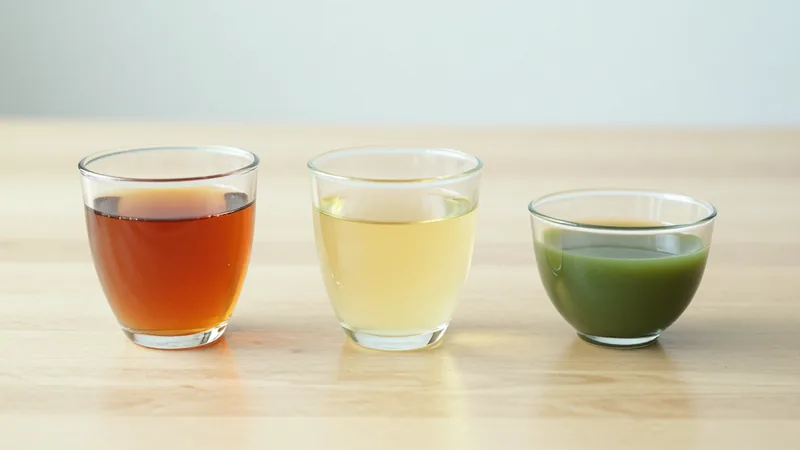
A cup of tea from a tea bag holds roughly 8–24 mg of theanine. Shaded Japanese green tea brewed the traditional way holds several times more.
The best-known measurement is Keenan et al. 2011 (Food Chemistry). They brewed 27 commercial UK teas in 200 ml of freshly boiled water for 2 minutes and measured theanine by HPLC.
| Tea, as brewed in the study | Theanine per serving | Source |
|---|---|---|
| Black tea bags (17 products), 200 ml, 2 min | 24.2 ± 5.7 mg | Keenan 2011 |
| White tea (2 products), 200 ml, 2 min | 11.5 ± 2.1 mg | Keenan 2011 |
| Speciality black tea (5 products), 200 ml, 2 min | 10.9 ± 1.6 mg | Keenan 2011 |
| Green tea (3 products), 200 ml, 2 min | 7.9 ± 3.8 mg | Keenan 2011 |
| Standard sencha, 6 g leaf, 260 ml at 90 °C, 1 min | 57 mg | Unno 2025 (218.41 mg/L) |
| Superior sencha, 6 g leaf, 170 ml at 70 °C, 1 min | 44 mg | Unno 2025 (256.14 mg/L) |
| Gyokuro, 10 g leaf, 60 ml at 60 °C, 2 min | up to 168 mg | Unno 2025 (2,806.81 mg/L) |
Sencha and gyokuro rows are our arithmetic: the published concentration times the water volume. The gyokuro figure is a ceiling, because wet leaves keep part of the 60 ml.
Three points from the data:
- Bagged green tea scored lowest in the UK study. Keenan's authors called that result surprising and "contrary to previous research".
- Shading and leaf grade matter more than color. The Shizuoka University study measured 30.84 mg of theanine per gram of gyokuro leaf versus 18.91 mg/g for standard sencha. Gyokuro is shaded before harvest; see Japanese green tea types.
- The first two infusions carry most of it. The same study found most amino acids eluted in the first and second cups.
A second HPLC study, Ayakdaş and Ağagündüz 2025, reported 12.3 mg per 200 ml for black tea and 12.5 mg for green. Results swing with leaf, brand and steep time. Keenan found brew time was "a major determinant" and that small amounts of milk and sugar made no significant difference.
Get caffeine and decaf notes
How much caffeine each tea type carries, how decaf tea is made, and caffeine-free alternatives. Free, no spam.
No fixed schedule. Unsubscribe anytime.
What the trials gave people and what they found
Most acute trials used a crossover design: each volunteer took every treatment on separate days, then did computer attention tests 20–90 minutes later.
| Study | n | Theanine | Caffeine | Main result |
|---|---|---|---|---|
| Haskell 2008 | 24 | 250 mg | 150 mg | Combination: faster simple reaction time and working memory, better RVIP accuracy, higher alertness. Theanine alone raised "headache" ratings. |
| Owen 2008 | 27 | 100 mg | 50 mg | Combination improved speed and accuracy on attention switching at 60 min. |
| Einöther 2010 | 29 | 97 mg | 40 mg | Better attention switching. No significant change in subjective alertness or intersensory attention. |
| Giesbrecht 2010 | 44 | 97 mg | 40 mg | Better task-switching accuracy and alertness (P < 0.01). No effect on visual search, choice reaction time or mental rotation. |
| Foxe 2012 | 27 | 100 mg | 50 mg | Both compounds alone cut errors over a 2-hour vigilance task. The combination added nothing over either alone. |
| Dodd 2015 | 24 | 50 mg | 75 mg | Caffeine alone improved attention and mood. Adding theanine erased those effects. |
| Kahathuduwa 2017 | 20 | 200 mg | 160 mg | Theanine, caffeine and the combination each sped recognition reaction time. One cup of black tea did not. |
| Dassanayake 2023 | 32 | 100, 200, 400 mg | none | After placebo correction, only simple reaction time improved, by about 16 ms at 100 and 200 mg. |
| Hidese 2019 | 30 | 200 mg/day for 4 weeks | none | Lower depression, trait-anxiety and sleep-quality scores; better verbal fluency and executive function scores. |
The single most repeated finding is better accuracy on attention-switching tasks, reported by Owen, Einöther and Giesbrecht. Alertness results are mixed: Giesbrecht found an effect, Einöther did not. Dodd 2015 is the clearest negative: at doses close to one to two cups of tea, the authors wrote that theanine "eliminated the vasoconstrictive effect and behavioural effects of caffeine".
Note the sample sizes. The largest acute trial above had 44 people.
What the reviews conclude
Two meta-analyses pooled these trials.
- Camfield 2014 (Nutrition Reviews) pooled 11 placebo-controlled studies. It found "moderate effect sizes" for theanine plus caffeine on alertness and attention-switching accuracy in the first 2 hours. Caffeine dose explained more of the effect than theanine dose.
- Payne 2025 (Nutrition Reviews) included 50 randomized trials; 15 fed at least one meta-analysis. Theanine plus caffeine beat placebo on attention-switching accuracy in hour 2 (SMD 0.33; 95% CI 0.13 to 0.54). Theanine alone improved choice reaction time in hour 1 (SMD −0.35). The authors wrote that the confidence intervals "frequently highlighted the uncertainty".
Payne's bias assessment is the key limit: "zero studies were judged to be at low risk of bias", 12 had "some concerns" and 25 were at high risk.
A separate 2020 systematic review of 9 trials on stress concluded that 200–400 mg/day "may assist" in reducing stress and anxiety, and called for "longer-term and larger cohort clinical studies".
How many cups match a trial dose
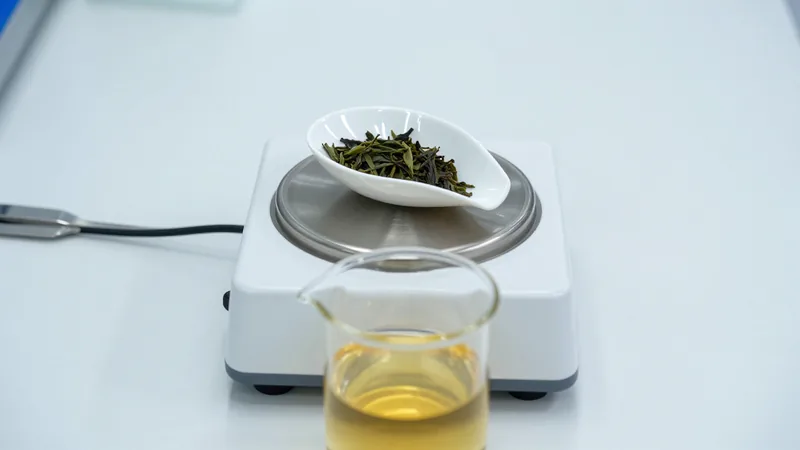
Here is the dose arithmetic, using the measured values above. Each cell is trial dose divided by theanine per serving.
| Trial dose | Black tea bags (24.2 mg / 200 ml) | Green tea bags (7.9 mg / 200 ml) | Standard sencha (57 mg / 260 ml) | Gyokuro (up to 168 mg / 60 ml) |
|---|---|---|---|---|
| 100 mg (Owen 2008 / Foxe 2012) | 4.1 | 12.7 | 1.8 | 0.6 |
| 200 mg (Hidese 2019, per day) | 8.3 | 25.3 | 3.5 | 1.2 |
| 250 mg (Haskell 2008) | 10.3 | 31.6 | 4.4 | 1.5 |
What the table shows:
- Bagged black tea: 4 cups reach the 100 mg dose used by Owen and Foxe.
- Bagged green tea: 12.7 cups for the same dose, about 2.5 liters of tea.
- Gyokuro: one small traditional serving can exceed the 100 mg trial dose, at the upper-bound estimate. The same 60 ml also carries up to 136 mg of caffeine (2,261.25 mg/L in the same study).
The trial doses are larger than one cup on purpose. Kahathuduwa 2017 described its 200 mg dose as "equivalent of eight cups of back [sic] tea". An earlier paper, Nobre 2008, put a cup of black tea at "approximately 20mg".
The theanine-to-caffeine ratio also differs. Owen used 2:1. Gyokuro in the Shizuoka data runs about 1.2:1. Dodd 2015 tested 50 mg theanine with 75 mg caffeine, a ratio under 1:1, and found no benefit.
Who paid for the research
Funding matters here because many of the positive trials came from tea and theanine companies.
- Owen 2008, Einöther 2010 and Giesbrecht 2010: the authors list Unilever R&D as their affiliation.
- Payne 2025: "funded by Lipton Teas and Infusions"; two co-authors worked for Lipton or Unilever.
- Hidese 2019: the same trial's conference abstract states it was funded by Taiyo Kagaku, which makes the Suntheanine ingredient.
Industry funding does not make a result wrong. It is a reason to give extra weight to university-led trials, such as Haskell 2008, whose listed affiliation is Northumbria University.
What regulators decided
United States. FDA filed GRAS notice 209 from Taiyo International in August 2006 for L-theanine as an ingredient "up to 250 milligrams per serving". FDA answered on February 5, 2007, that it had no questions. That is a food-safety finding for that use, not an approval of any health claim.
European Union. In 2011 the EFSA NDA panel reviewed claims that theanine from tea improves cognitive function, relieves psychological stress, supports normal sleep and reduces menstrual discomfort. For cognitive function, it concluded that a cause-and-effect relationship had not been established.
Limits of the evidence
- Small samples. Acute trials in the table ran 20–44 people.
- Short windows. Most measured 20–120 minutes after one dose. Only Hidese ran 4 weeks.
- Capsules and drinks, not tea. Most used isolated compounds in water or a flavored drink. Kahathuduwa 2017 included one cup of black tea; it did not move reaction time.
- Mixed direction. Dodd 2015 found the combination canceled caffeine's measured benefits.
- Bias ratings. The 2025 meta-analysis rated no included study at low risk of bias.
If you want to see where your own tea sits, start with the leaf: shaded Japanese greens and first-flush leaf sit at the high end. Browse the catalog by type.
Frequently Asked Questions
How much L-theanine is in one cup of tea?
A 200 ml cup from a black tea bag brewed 2 minutes held 24.2 mg on average in Keenan 2011, and bagged green tea held 7.9 mg. Standard Japanese sencha brewed loose held about 57 mg per 260 ml in a 2025 Shizuoka study. Gyokuro reached up to 168 mg in a 60 ml serving.
What doses did the L-theanine and caffeine studies use?
The acute trials in this article used 50–250 mg of theanine with 40–160 mg of caffeine. The 2025 Payne meta-analysis reported a median of 82 mg theanine and 88.74 mg caffeine across its combination trials. The 4-week Hidese trial used 200 mg of theanine per day with no caffeine.
Does L-theanine with caffeine improve focus?
Several trials of 24–44 people found better accuracy on attention-switching tasks for 1–2 hours, and two meta-analyses found small-to-moderate pooled effects. Dodd 2015 found the opposite at tea-like doses, and the 2025 meta-analysis rated no included trial at low risk of bias. In 2011 EFSA found no established cause-and-effect link to cognitive function.
How many cups of tea equal a 200 mg theanine capsule?
About 8.3 cups of bagged black tea at 24.2 mg per cup, or 25.3 cups of bagged green tea at 7.9 mg. With standard sencha at about 57 mg per cup it is 3.5 cups. Those cups also carry caffeine that a pure theanine capsule does not.
Is L-theanine approved by the FDA?
FDA raised no questions in 2007 about Taiyo's GRAS notice 209 for L-theanine as a food ingredient at up to 250 mg per serving. That letter covers safety for the stated food uses. It is not an approval of any health or cognitive claim.