GABA tea is tea whose fresh leaves are held without oxygen, in nitrogen, carbon dioxide or a vacuum, for several hours so that glutamic acid in the leaf turns into gamma-aminobutyric acid (GABA). The method comes from a 1987 study at Japan's National Research Institute of Tea that reached 150 mg of GABA per 100 g of finished tea. Human studies of drinking it are small: a 30-person trial saw similar changes after regular oolong, and a 38-person trial had no control group. As of October 1, 2026, our catalog lists 12 GABA teas, all oolong, at a median $0.31/g.
This article reports what the studies measured, with sample sizes and doses. It is not medical advice.
Where GABA tea came from
GABA tea started as a lab result. In 1987, Tsushida and colleagues at Japan's agriculture ministry's National Research Institute of Tea put fresh tea leaves in nitrogen or carbon dioxide gas. GABA and alanine went up; glutamic acid and aspartic acid went down. Theanine, caffeine and tannin did not change.
They then made green tea from nitrogen-treated leaf. First-, second- and third-flush teas all reached at least 150 mg of GABA per 100 g. For oolong and black tea, treating the leaf with nitrogen after withering gave more GABA than treating it before withering.
The team also noted a side effect every GABA tea drinker meets: the treated tea had a distinctive aroma. Gas chromatography found more methyl and ethyl esters of fatty acids, though those compounds did not smell like the tea itself. A companion English paper by Tsushida and Murai traced the GABA to glutamic acid, using nitrogen-15 labeling, and purified the enzyme that does the conversion, glutamate decarboxylase, which works best at pH 5.8.
The tea is also studied under the name gabaron: a 2024 Food Chemistry paper analyzes "gabaron green tea." Taiwanese makers later applied the step to oolong. Eco-Cha, a Taiwan tea seller, says Japan invented the tea and that Taiwanese oolong processing made it known for flavor.
Get tasting and processing notes
Oxidation, rolling, roasting oolong, aging pu-erh, and how to taste tea side by side at home. Free, no spam.
No fixed schedule. Unsubscribe anytime.
How the oxygen-free step works
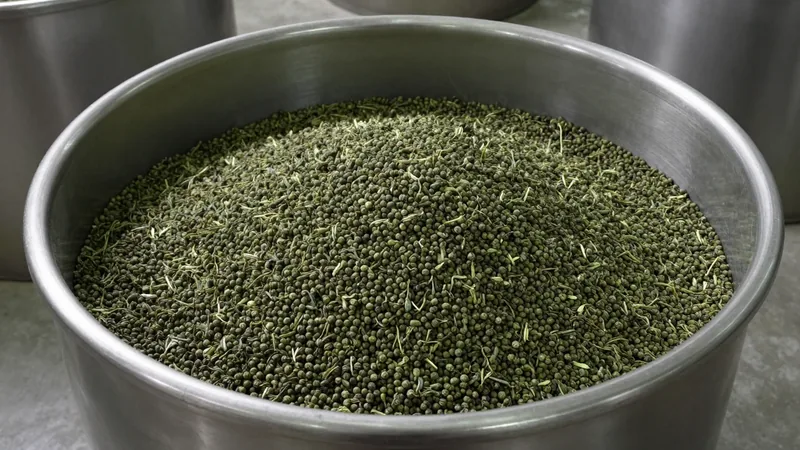
Cut off a leaf's oxygen and its cells turn acidic. In a 2024 study of purple-leaf tea, the authors explain that the drop in pH activates glutamate decarboxylase, which strips a carbon dioxide group off glutamate and leaves GABA. A second route, breaking down polyamines, supplied about 37–47% of the GABA formed under low oxygen in four cultivars, per Wu et al. 2018.
The gas matters. A 2018 metabolomics study found GABA accumulated faster under carbon dioxide than under nitrogen, while nitrogen disturbed a wider range of the leaf's other compounds.
| Processing step | What happens | Example from the sources |
|---|---|---|
| Plucking and spreading | Fresh leaf is collected and laid out | GABA white tea: leaves spread, then sealed (Su et al. 2025) |
| Oxygen-free hold | Leaf sealed in nitrogen, CO2 or vacuum; glutamate converts to GABA | 6 h at nitrogen of 98% or more for GABA white tea (Su et al. 2025); 8 h of vacuum for purple-leaf tea (Yang et al. 2024) |
| Alternating with air (oolong) | Leaf tumbled between sealed sessions | 8–10 h sealed sessions in nitrogen cylinders, alternating with 2–3 h of tumbling (Eco-Cha) |
| Withering, rolling, drying | Normal processing for the tea type | Withering then drying for GABA white tea (Su et al. 2025) |
Two by-products show up in the cup. Yang's team measured lactic acid rising from undetectable to 3.56 mg/g after 8 hours, and linked the sharp, acidic note of anaerobic teas to lactic and L-malic acid. Most catechins stayed about the same.
How much GABA is in the leaf and the cup
GABA tea is defined by a threshold, and the numbers vary widely across samples. Note the units: 150 mg/100 g is the same as 1.5 mg/g.
| Sample | GABA | Source |
|---|---|---|
| Purple-leaf tea before anaerobic treatment | 0.02 mg/g | Yang et al. 2024 |
| Same leaf after 8 h of vacuum | 1.72 mg/g | Yang et al. 2024 |
| Requirement for "GABA tea" cited in that study | 1.50 mg/g or more | Yang et al. 2024 |
| Nitrogen-treated Japanese green tea, 1987 | 150 mg/100 g or more | Tsushida et al. 1987 |
| Taiwanese GABA oolong used in a 2023 trial | 187 mg/100 g | Lin et al. 2023 |
| Three regular Taiwanese teas in the same lab | below 1 mg/100 g | Lin et al. 2023 |
| GABA oolong used in a 2019 Australian trial | 40.2 mg/100 g | Hinton et al. 2019 |
A 2020 review in Neurochemistry International puts the gain from anaerobic processing at 10 to 20 times. Yang's purple leaf went from 0.02 to 1.72 mg/g, about 86 times, because it started unusually low.
The leaf number is not the cup number. The 2019 trial measured the brewed cup directly: 5 g of leaf in 200 mL of 90 °C water gave 2.01 mg of GABA. GABA supplement studies use far more. A 2012 trial in 63 adults gave 100 mg capsules, the GABA in about 50 of those cups.
The 2023 Taiwanese trial gave people two 4 g bags a day. At 187 mg/100 g, that is 15 mg of GABA in the leaf per day, before any of it is left behind in the bag.
What the human studies measured
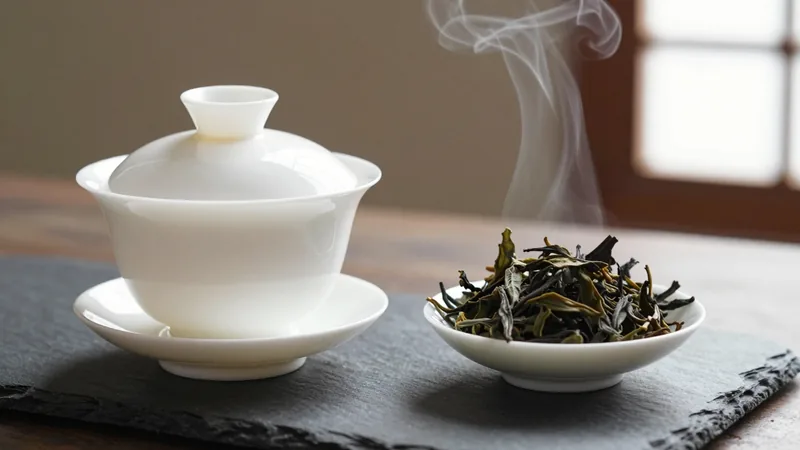
Two trials have tested GABA tea itself in people. Both are small.
| Study | Who | What they drank | What changed |
|---|---|---|---|
| Hinton et al. 2019 | 30 students in Sydney, 15 per group | One cup (5 g, 200 mL) of GABA oolong or regular oolong, blinded | Stress score fell and heart rate variability rose after both teas; the one tea-specific interaction was in RR interval |
| Lin et al. 2023 | 38 adults in Taiwan, mean age 55.4, 33 women | Two 4 g bags of GABA oolong a day for 28 days, no control group | Systolic 120.0 to 114.5 mmHg at day 21; diastolic 77.5 to 73.5 mmHg at day 28 |
Read the 2019 result carefully. The significant finding was a main effect of time: stress scores and heart rate variability improved after a cup of either tea. The paper's discussion says both teas raised the average RR interval. That is evidence that sitting quietly with a cup of oolong changed these measures, not clean evidence that GABA did.
The 2023 study had no placebo or regular-tea arm, so the drop could come from the tea, from being in a study, or from regression to the mean. In the 17 people with pre-hypertension, systolic and diastolic pressure fell by 11.8 and 8.4 mmHg after 28 days. The authors themselves call for "large-scale, randomized, placebo-controlled trials."
The blood pressure idea comes mostly from animals. In Abe et al. 1995, 11-month-old salt-sensitive rats on a 4% salt diet drank GABA-rich tea, regular tea or water for 4 weeks (21 rats). Blood pressure ended at 176 mmHg with GABA tea, 193 with regular tea and 207 with water, at a GABA intake of 4.0 mg per rat per day.
The blood-brain barrier question
Calming claims for GABA run into a basic problem. GABA is the brain's main inhibitory neurotransmitter, but for decades researchers thought swallowed GABA could not cross the blood-brain barrier. A 2015 review by Boonstra and colleagues found the studies on that question "often contradictory" and wide-ranging in method, and said it was unclear whether GABA supplements give benefits beyond placebo.
The 2019 tea trial's authors were blunter: "there are no data on GABA blood-brain-barrier permeability in humans." The 2020 review says there is considerable evidence that GABA from these teas acts on GABA receptors outside the brain, and "rather less evidence" that it acts directly in the brain.
That review adds a second complication. Anaerobic processing also changes EGCG, caffeine and theanine levels, and these can interact with GABA, so "there is more to the action of GABA-enriched teas than GABA itself." GABA tea is also not a low-caffeine tea: the 1987 study found caffeine unchanged by the nitrogen step in its samples. For evening drinking, see tea and sleep.
Buying GABA tea: what the catalog shows
As of October 1, 2026, the Tea Explorer catalog (7,306 teas from 40 vendors, fetched 2026-10-01) has 12 listings with GABA in the name from 6 vendors. Every one is an oolong. 9 list Taiwan as origin; the others come from Thailand, Vietnam, or do not say.
10 are in stock in sizes of 20 g or more. Their median price is $0.308/g, against $0.440/g for 477 other in-stock oolongs and $0.347/g for 129 other Taiwanese oolongs. 7 of the 10 cost less per gram than the Taiwanese oolong median.
| Tea | Vendor | Origin | Size | Price | $/g |
|---|---|---|---|---|---|
| Eco-Farmed GABA Oolong Tea | Eco-Cha Teas | Taiwan | 75 g | $14.00 | $0.187 |
| Taiwan GABA Oolong Tea | What-Cha | Taiwan | 100 g | $27.40 | $0.274 |
| Taiwan Amber GABA Oolong Tea | What-Cha | Taiwan | 100 g | $28.22 | $0.282 |
| Vietnam GABA High Mountain Oolong Tea | What-Cha | Vietnam | 100 g | $28.22 | $0.282 |
| Organic Jade Mountain GABA | Mountain Stream Teas | Taiwan | 100 g | $30.00 | $0.300 |
| GABA Oolong | Floating Leaves Tea | not listed | 75 g | $23.75 | $0.317 |
| Alishan GABA Oolong | Mountain Stream Teas | Taiwan | 100 g | $32.00 | $0.320 |
| 2013 GABA Oolong | Mountain Stream Teas | Taiwan | 50 g | $19.00 | $0.380 |
| GABA Oolong Tea (Thailand) | Path of Cha | Thailand | 100 g | $49.00 | $0.490 |
| GABA Taiwanese Oolong | Rare Tea Company | Taiwan | 50 g | $77.06 | $1.541 |
Source: Tea Explorer catalog, 7,306 teas from 40 vendors, fetched 2026-10-01; prices as of October 1, 2026. See the tea price index for all oolongs.
The Rare Tea Company listing at $1.54/g is more than three times the next most expensive. The cheapest is Eco-Farmed GABA Oolong Tea from Eco-Cha Teas at $0.187/g, or $0.93 for the 5 g used per cup in the 2019 trial.
The three vendor pages we checked on October 1, 2026 (Eco-Cha, What-Cha and Mountain Stream Teas) list no measured GABA content, so the label alone does not tell you whether a tea meets the 150 mg/100 g mark. Brew GABA oolong like other rolled oolongs; our gongfu guide and steeping chart cover leaf ratios and times.
Frequently Asked Questions
What is GABA tea?
It is tea made from fresh leaves held without oxygen, in nitrogen, carbon dioxide or a vacuum, for hours before normal processing. The leaf converts glutamic acid into GABA. The 1987 Japanese study that introduced it reached at least 150 mg of GABA per 100 g of tea.
How much GABA is in a cup of GABA tea?
The one trial that measured a brewed cup found 2.01 mg of GABA in 200 mL made from 5 g of leaf. Supplement studies use doses such as 100 mg, about 50 of those cups. Leaf content varies from about 40 to 187 mg per 100 g across the studies above.
Does GABA tea lower blood pressure?
Rats given GABA-rich tea had lower blood pressure (176 vs 207 mmHg on water) in a 1995 study. In people, the only blood pressure trial we found was a 38-person study with no control group, where systolic pressure fell from 120.0 to 114.5 mmHg at day 21. That is not enough to say GABA tea lowers blood pressure.
Does GABA tea have caffeine?
Yes. The 1987 study found caffeine levels unchanged by the nitrogen treatment, so GABA oolong carries roughly the caffeine of the oolong it is made from.
Is GABA tea more expensive than regular oolong?
Not in our catalog. As of October 1, 2026, the median in-stock GABA tea costs $0.308/g, about 30% below the $0.440/g median for other oolongs, though one listing costs $1.54/g.